

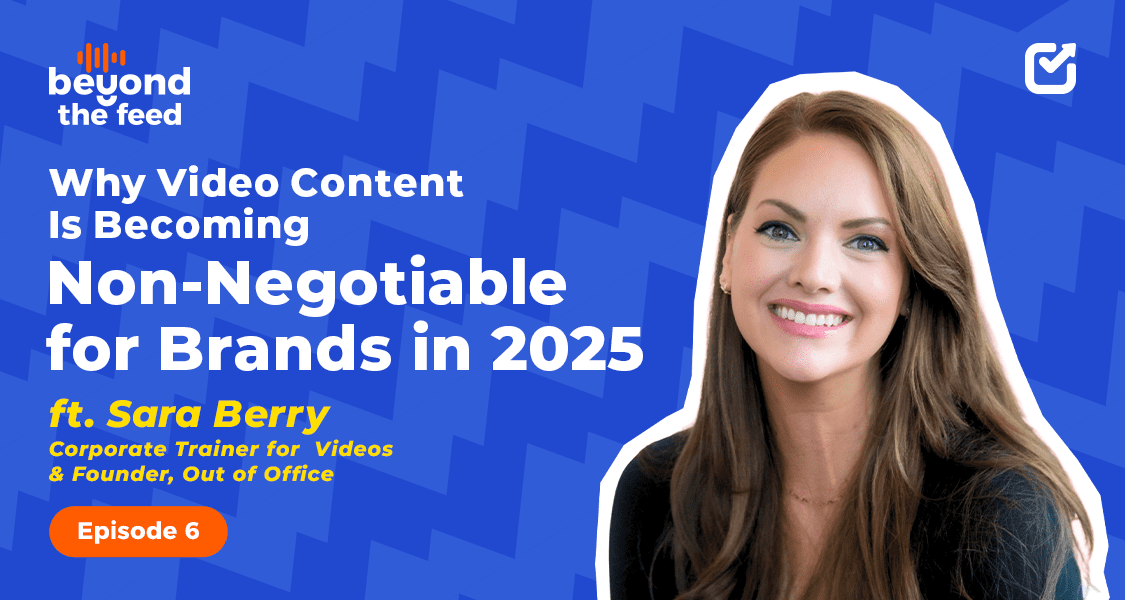
I recently sat down with Sara Barry, a specialist in helping founders and leaders build camera confidence through video content, on Beyond the Feed by Social Champ. The conversation turned into an exploration of how video has become an indispensable tool for brands of all sizes, not just for entertainment or trends, but for connection, trust, and long-term growth.
Here are some insights from our chat and how brands can make video work for them, even if they’ve been hesitant to jump in.
But if you want to listen to the whole podcast, you can check it out here:
When Did Video Become a Must-Have for Brands?
I asked Sara about the moment she realized how important video was becoming for brands. For her, the shift wasn’t about technology; it was about accessibility.
She explained that the game changed when video became social, when anyone could create it without needing a videographer or fancy equipment. With Instagram Reels and TikTok’s rise, video was no longer optional. It became a way to really connect with audiences using nothing more than a smartphone.
“Everyone has a mini video studio in their pocket,” she said.
Can Serious or B2B Brands Use Video Too?
One of the biggest hesitations Sara sees among brands, especially B2B or more “serious” businesses, is that video might make them look less professional.
Her response is that brands don’t need to be flashy; they just need to be authentic and expert-led.
Talking-head videos, employee introductions, and behind-the-scenes clips can all be tailored to maintain professionalism while still building trust and connection.
Is AI Killing the Human Element in Video?
While AI video tools are everywhere, Sara thinks they have a limited role. She believes that while AI can be fun or gimmicky, audiences are already craving real human connection.
In fact, she’s seeing fatigue around AI-generated content, especially on Instagram, where users voice frustration in the comments when something feels too artificial.
The Biggest Misconception About Video
Many brands focus on going viral, expecting one perfect video to change everything.
Sara calls this a myth. There’s no guaranteed formula for virality, and waiting for that moment often leads brands to give up before they even get started.
Instead, she recommends focusing on consistency and connection, using video to build trust over time rather than chase a quick hit.
How Often Should You Post Video?
Sara believes there isn’t a single solution to all of these queries. Instead, she broke it down by the platform:
- YouTube: One well-produced long-form video per week is a solid rhythm.
- LinkedIn: Even one video per month keeps you visible and remembered.
- Instagram/TikTok: Frequent posts help, but consistency matters more than sheer volume.
The key idea is that you mustn’t disappear after one post. You should build a cadence you can maintain.
Short vs. Long Form: What Should Brands Focus On?
Short-form content has made video accessible, but Sara stresses the value of starting with long-form content, like workshops, webinars, or in-depth talks, then slicing them into smaller clips.
This approach allows brands to:
- Create many pieces of content from one recording
- Stay consistent without burning out
- Reinforce their expertise in multiple formats
Low-Tech Ways to Start Video Content
Not every brand has a studio, and most don’t need one. Sara recommends simple, low-pressure approaches like:
- Recording Zoom conversations with team members
- Filming a guided product tour or workspace walk-through
- Making talking-head clips about industry topics
These formats show authority and give audiences a personal connection to the brand.
Overcoming Camera Shyness
If being on camera feels intimidating, you’re not alone.
Sara said it’s much like public speaking, but with practice and the right mindset, it gets easier. She suggests:
- Looking for existing footage you already have
- Recording yourself with someone else
- Starting with very simple, no-pressure clips
Her advice is to just start. Once you’ve posted one video, everything else feels slightly less scary.
Balancing Promotional and Authentic Content
Sara stresses that value comes first. Promotional messaging should come after you’ve given real insight or help.
For example, deliver value in your video first, then end with a natural call-to-action, whether that’s inviting people to learn more, join a workshop, or download a resource.
Hooks, CTAs, and Trends
Hooks help you capture attention in fast-scrolling feeds, but they don’t need to be gimmicky. Think of hooks as teasers that give viewers a reason to stop and listen.
CTAs guide your audience on what to do next, and you can test different ones in the beginning to see what works best.
Are Memes and Humor Enough?
Fun content can be powerful, but only when it still reflects who you are and what your brand stands for.
Sara warns against confusing entertainment with identity. Humor works when it’s tied to a purpose and a person behind the brand.
Repurposing Video Content for Maximum Value
Sara shared a practical workflow, which eases burnout and scales your content, without you having to reinvent the wheel:
- Create a long-form piece (webinar, interview, workshop)
- Break it into short clips
- Use transcripts to make text posts, email content, and more
- Schedule content in batches to stay consistent
Cross-Posting vs Tailoring Content
If you’re a smaller brand, don’t stress about tailoring content for every platform separately.
Cross-posting the same video across LinkedIn, Instagram, and TikTok is totally fine, especially if it helps you stay consistent. Bigger teams can customize, but showing up matters more than perfect platform-specific content.
Final Advice from Sara
To wrap up our chat, I asked Sara what she’d say to brands just starting video content:
“Be human. Show up. Be yourself.”
She reminded us that audiences crave authentic human connection more than polished perfection.
So a reminder to every brand out there: Authenticity will always win over overproduction.