If you’ve spent any time on LinkedIn or in a marketing Slack channel lately, you’ve probably seen the AI fatigue setting in.
For the past couple of years, we’ve all been playing the same game: feed a prompt into a chatbot, pray it doesn’t hallucinate too wildly, and then spend an hour humanizing the robotic fluff it spits out.
I’ll be honest, I’m over it. And more importantly, so is Google.
Short Summary
- The era of simple AI writing is ending because it produces generic content that fails Google’s 2026 Information Gain and E-E-A-T standards.
- Agentic workflows move beyond single prompts by creating systems that can reason, plan, use tools, and self-correct like a human team.
- A successful system relies on four pillars: multi-step planning, real-time tool integration, self-reflection, and multi-agent collaboration.
- To rank in 2026, you must stop treating AI as a typewriter and start treating it as a structured department that researches and verifies its own work.
I’ve realized that the problem isn’t the AI itself; it’s the linear way we’re using it. We’ve been treating AI like a faster typewriter when we should be treating it like a specialized department.
That is where agentic workflows come in. This isn’t just a fancy new buzzword; it’s a fundamental shift from a single prompt to a multi-step system that can reason, research, and, most importantly, self-correct.
In this post, I want to share why I’m moving my entire content strategy away from “prompting” and toward “orchestrating,” and how you can do the same to stay relevant in an increasingly autonomous world.
Ditch the Manual Grind!
Why Traditional AI Writing Is Failing the SEO Test
I’ll be the first to admit it: back in 2023, we all felt like we’d discovered a superpower. You could hammer out a comprehensive guide in thirty seconds, and for a while, it actually worked.
But if you’ve looked at your Google Search Console lately, you’ve probably seen the great decoupling, that painful trend where your impressions might be holding steady, but your clicks are falling off a cliff.
-
The Homogenization Problem
Here’s the thing I’ve noticed: when everyone uses the same base models (like GPT-4 or Gemini Pro) with the same basic prompts, we end up with a sea of sameness. Google’s latest systems are designed to identify semantic noise, content that is grammatically perfect but offers absolutely zero new information.
If your blog post is just a rehash of the top 5 results already on page one, Google has no reason to rank you. In fact, in search visibility, Google clears out the low-value clutter.
-
Lack of Real-World Grounding
I used to think AI was smart, but really, it’s just a world-class mimic. AI lacks the first-hand experience that Google now weighs more heavily than ever in its E-E-A-T (Experience, Expertise, Authoritativeness, Trustworthiness) evaluations.
A simple prompt can’t tell you how a specific software felt to use during a 2:00 AM server crash or share a photo of a product being unboxed in a real living room. Without this grounding in reality, AI writing feels like a book report written by someone who never read the book.
-
The Human-in-the-Loop Gap
The biggest mistake I see (and I’ve made it too) is treating AI like a vending machine: Input Prompt → Output Blog. This linear workflow is missing a critical self-reflection phase. Now, the content that wins is content that has been challenged.
Traditional AI writing doesn’t pause to ask, “Is this factually true?” or “Does this match the brand’s unique tone?” It just finishes the task. Without a system that critiques and iterates on its own work, you’re essentially publishing a first draft every single time.
Featured Article: 25 AI Marketing Tools You Should Use
What Are Agentic Workflows?
To understand where we’re headed, we first need to look at where we’ve been. Most of us have been using AI on a surface level.
An agentic workflow flips this on its head. Instead of a single ask, you build a system of agents that can reason, plan, and use tools to achieve a goal.
To visualize the difference, compare a vending machine to a smart assistant:
- Traditional AI (The Vending Machine): You press B7, and you get chips. It’s a direct transaction. But if the chips get stuck, the machine just sits there. It can’t fix itself or realize you’re still hungry; it just fails the task.
- Agentic AI (The Smart Assistant): You say, “Get me a snack.” The assistant goes to the machine, sees the chips are stuck, doesn’t give up, and instead walks to the store to buy you something even better.
One follows a rigid command; the other solves a problem.
The Agent vs. Prompt Comparison
To visualize this, think about the difference in approach:
- Traditional: You ask an AI, “Write a 1,000-word blog about SEO.” It pulls from its training data and gives you a generic summary.
- Agentic: An agent breaks the goal into tasks:
- Search Agent: Browses the latest 2026 Google documentation.
- Analyst Agent: Scans the top 10 competitors for content gaps.
- Writer Agent: Drafts the sections based on the research.
- Critic Agent: Reviews the draft for tone and factual accuracy.
- Final Polish: The human (you!) gives the final “okay.”
I recently saw this in action at my own company, and it changed how I look at productivity forever. My CEO, Sameer Ahmed Khan, recently ran a fascinating experiment that essentially turned our entire office into a laboratory for agentic thinking.
He wanted to see what happens when you stop thinking in “silos” (Writer vs. Designer) and start thinking in “systems.”
-
The Setup (The Input)
Sameer broke the office into teams of two. These weren’t “expert” pairings; a customer success rep might be paired with a developer, a designed with a community manager, and so on.
Every team was given the same baseline training and assigned the same goal: Build a high-impact project (like a landing page or campaign) from scratch. However, they had to use AI to bridge the gap in their own skills.
-
The Agentic Process (The “How”)
This is where the “Agentic” shift happened. All teams had access to the same LLMs, but they didn’t all use them the same way:
- The “Prompt” Teams: These teams used AI as a typewriter. They asked for a headline, then asked for a layout, then asked for an image. The results were “okay,” but generic.
- The “Workflow” Teams: The standout teams treated the AI as a specialized department. They created prompts that forced the AI to “reason.” One team might set up a “Researcher” prompt to find content gaps, then feed that into a “Creative Director” prompt to critique the visuals.
-
The Result (The Standouts)
The teams that won didn’t have “better” AI; they had better workflows.
Because the workflow included a “Self-Correction” step (where the AI was told to find flaws in its own first draft), the final output actually offered unique insights instead of “AI fluff.”
We saw people with zero design background producing professional-grade hero images because they orchestrated the AI to handle the technical execution while they focused on the high-level strategy.
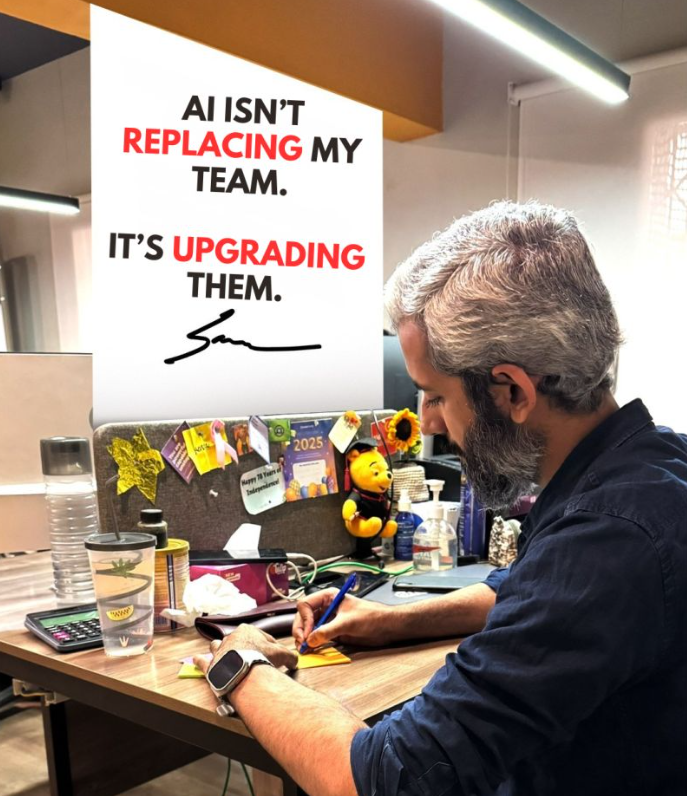
Sameer Ahmed Khan’s LinkedIn Post
Featured Article: Top AI Content Creation Tools for Smarter Workflows
The 4 Pillars of an Agentic Writing Workflow
If my CEO’s experiment taught us anything, it’s that the magic doesn’t happen in the prompt; it happens in the process. To move from a basic AI writer to a full-blown agentic system, I’ve found that you need to build your workflow on four specific pillars.
-
Multi-Step Planning
Before a single sentence is written, an agent creates a comprehensive roadmap. It looks at the search intent, identifies the necessary sub-topics, and decides which tools it needs to fetch the best info.
I’ve started insisting on a planning phase where the AI presents me with an outline and a strategy before it starts writing. If the plan is flawed, the content will be too.
-
Tool Integration (RAG and Web Search)
This is where we leave standard AI in the dust. In 2026, an agent shouldn’t just rely on what it learned in 2023. It needs eyes and ears.
- Web Search: The agent should live-crawl the current Google SERPs (Search Engine Results Pages) to see what’s ranking right now.
- RAG (Retrieval-Augmented Generation): This is my favorite part. It’s how I feed the agent my own brand DNA, past successful blogs, Sameer’s LinkedIn insights, or internal case studies. This ensures the output isn’t just accurate; it’s ours.
-
Reflection and Self-Correction
This is the pillar that saves me the most time. In a linear workflow, the AI gives you a draft and says, “Done!” In an agentic workflow, we introduce a critic agent. This agent’s entire job is to be a hater. It reviews the first draft, and the AI then rewrites its own work based on that critique. It’s like having an editor who never sleeps and doesn’t get offended when you ask for a fifth revision.
-
Collaboration (Multi-Agent Systems)
The test in our company showed us that two heads are better than one, and the same applies to AI. Instead of one generalist AI, I use a multi-agent system. I assign specific personas to different parts of the process:
- The Researcher: Digs for stats and sources.
- The Creative Writer: Focuses on hooks, metaphors, and flow.
- The SEO Specialist: Ensures the technical structure is perfect.
- The Fact-Checker: Verifies every claim against a trusted database
Step-by-Step: Building Your First Agentic Content Workflow
I know what you’re thinking: This sounds great in theory, but I’m not a developer. How do I actually build this?
You don’t need to worry about that. Here is exactly how I’ve been structuring my workflows to move beyond the single prompt.
Phase 1: The Discovery Agent (Research)
The first step isn’t writing; it’s listening. I set up a research agent using an MCP (Model Context Protocol) connection to a search tool.
- The Task: Instead of asking for a blog post, I tell the agent: “Crawl the top 10 Google results for [Target Keyword], find the common talking points, and—most importantly—list 3 things none of them are talking about.”
- The Goal: This creates the information gain I mentioned earlier. It ensures your starting point is already better than what’s currently ranking.
Pro Tip: Go Hands-Free with Voice-to-Agent Workflows
To truly 10x your output, pair a high-fidelity voice tool like Whisper Flow with an agentic coder. Instead of typing out complex logic, you can simply dictate your strategy. Whisper Flow captures the nuances of your ‘thinking out loud,’ and the agent translates that speech into a functional Python script or research loop. This is the ultimate ‘hands-free’ content engine.
Phase 2: The Architect Agent (Structuring)
Once the research is in, a second agent takes over to build the skeleton.
- The Task: It looks at the research data and my internal voice guide (a document I uploaded that describes how I write). Then it produces a detailed outline with H2s, H3s, and specific expert notes for each section.
- The Pivot: At this stage, I step in. I review the outline, add my personal anecdotes and experiences, and hit “Approve.” This human-in-the-loop moment is non-negotiable if you want content that actually resonates.
Phase 3: The Production Loop (The Writing Pair)
Now, the heavy lifting happens. I use a sequential pipeline where two agents work together:
- The Drafter: Writes the section based on the architect’s outline.
- The Editor: Immediately reviews that section. If it uses “AI-isms” (words like delve, tapestry, or unleash), it sends it back for a rewrite before I ever see it.
Phase 4: The Optimization and Fact-Check Agent
Before the post is done, it runs through a final gauntlet.
- Fact-Checking: This agent uses a reasoning Loop to verify any statistics or links. In 2026, hallucinating a stat is an instant SEO death sentence.
- E-E-A-T Scoring: For this, I use a specific agent that grades the draft against Google’s Quality Rater Guidelines. It asks: “Is the experience clear? Is the author’s expertise obvious?” If the score is below an 8/10, the workflow flags it for a manual rewrite.
Here’s a video that helped me create my own agentic workflow; hope it helps you too!
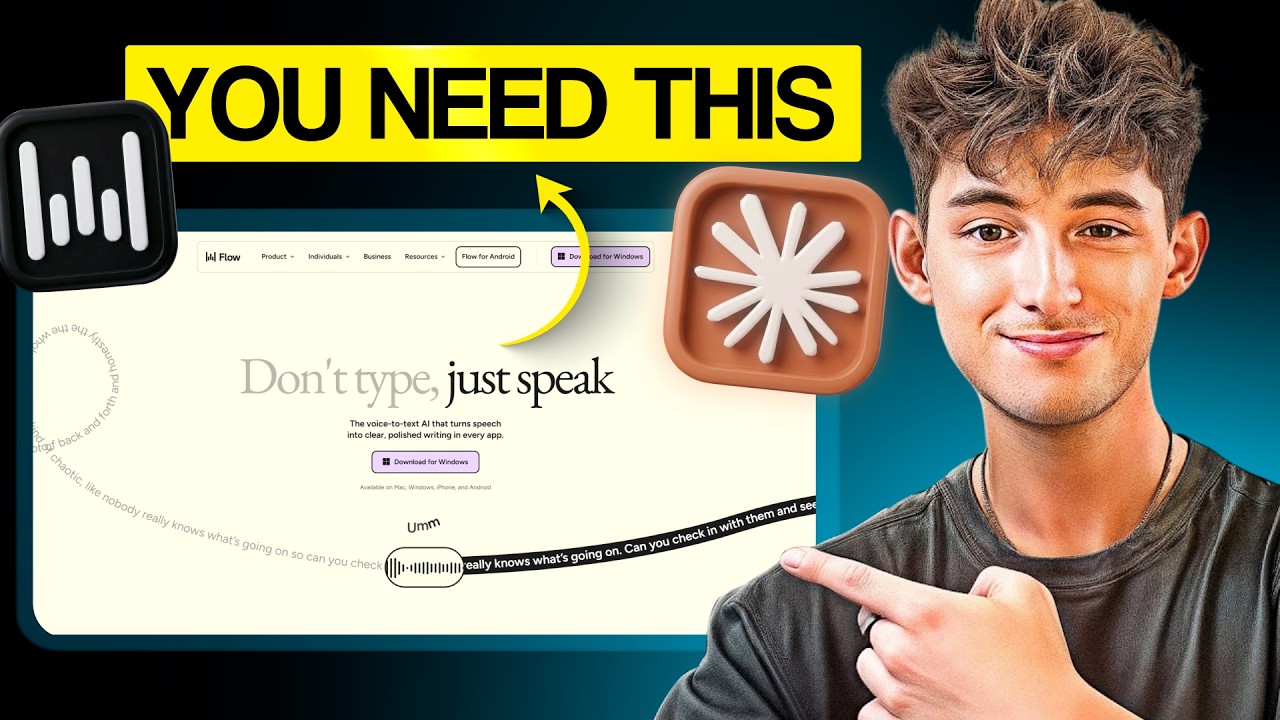
The Agentic Blueprint: Your 30-Minute Setup
If you’re wondering how to bridge the gap between “prompting” and “orchestrating” without hiring a developer, here is your starter kit. You can build a functioning agentic loop in under 30 minutes by following these three steps.
-
Define Your Stack
You don’t need to write code to build an agent. In 2026, the “low-code” barrier has dropped significantly.
- For Beginners: Use Zapier Central. It allows you to create “Bots” (Agents) that have access to your live Google Docs, Slack, and Social Champ data.
- For Intermediate Users: Use CrewAI or MindStudio. These platforms allow you to drag and drop different “AI Personas” into a sequence.
- The Engine: Power these tools with GPT-4o or Gemini 1.5 Pro via an API key for the highest reasoning capabilities.
-
Deploy a “Critic” Agent (The Self-Correction Logic)
The biggest mistake is accepting the first draft. You need to create a second “Agent” whose only job is to be your toughest editor.
Copy and paste this System Instruction into your Editor Agent:
“Your role is a Senior Content Editor. Review the provided draft specifically for ‘AI-isms’ (e.g., words like tapestry, delve, unleash, or vibrant). Highlight any claim that lacks a specific source or personal anecdote. Suggest exactly one way to add ‘Information Gain’—a unique angle or data point that isn’t already appearing in the top 5 Google search results for this topic.”
-
Force a “Reasoning Step”
The secret to the agentic shift is making the AI plan before it acts. Most people skip this, which is why their content feels hollow. In your workflow (whether in Zapier or a Custom GPT), insert a mandatory “Pause” step with this instruction:
“Before you begin writing the blog, analyze the target keyword and create a list of 5 specific questions a reader would have that are currently unanswered by the top-ranking competitors. Do not proceed with the draft until I have reviewed and approved this list.”
Level Up Your Social Game!
Conclusion
We are officially moving out of the copy-paste era of AI writing.
I’ve found that when I stop asking AI to write a blog and start asking it to execute a research-driven content strategy, the quality doesn’t just improve, it transforms. It becomes something that Google actually wants to rank and, more importantly, something that humans actually want to read.
So, here is my challenge to you: Take your next blog post and don’t just prompt it, use agentic workflows. Break it down. Assign a “Researcher,” a “Writer,” and a “Critic.” See what happens when you give the AI the space to reason before it speaks.