We’ve officially entered an era where consumers don’t just buy products; they vibe-check the entities behind them.
It’s 2026, and brand behaviors (personalities a company shows the world) are in a microscopic lens. People are tired of the polished, AI-generated “corporate speak” and are craving something that feels, well, human.
And trust me when I say, I have seen companies trying both, and I’ve also seen the results. (hint: they’re jaw-dropping)
Short Summary
- Brand behavior is the sum of a company’s actions and micro-interactions, proving far more critical in 2026 than visual identity or logos alone.
- Radical transparency is the ultimate antidote, requiring brands to own their mistakes publicly before they are exposed by social media tea accounts.
- Micro-niche engagement allows brands to build deep loyalty by speaking directly to their ride-or-die fans rather than trying to please everyone with generic content.
- Strategic automation via tools like Social Champ helps maintain consistent brand behavior without burnout, using a Social Inbox to ensure no community member is ever ghosted.
- Human-centric AI should be used for logistics and data, but a human-in-the-loop is mandatory for any content requiring heart, humor, or a sincere apology.
And it’s not just me who’s saying this. According to a study, 97% of consumers prioritize authenticity when choosing to support a brand.
I’m sharing this because I’ve seen how easy it is for a brand to slip into cringe territory without even realizing it. It usually starts with a well-intentioned marketing plan and ends with a “Please delete this” comment from a loyal fan.
To help you stay on the right side of history, I’ve put together a “Cringe Audit” of the behaviors we absolutely need to leave behind this year.
Here’s exactly what we’re breaking down in this audit:
- A deep dive into what brand behaviors actually are and why the vibe is now more important than the logo.
- The five specific, high-cringe habits that are actively driving your customers toward your competitors.
- Latest data on why faking it is a billion-dollar mistake in today’s economy.
- A practical guide to pivoting from corporate-coded to actually human without losing your professional edge.
What Exactly Is Brand Behavior?
Think about a recent interaction that you had at a party. Did people there cut you off when you were speaking, or were they bragging about themselves, and what did that make you feel about them?
It wasn’t a good experience, was it?
This happens to customers as well! Consumers today have a BS detector that is more finely tuned than ever.
Automate the Busywork, Not the Soul.
They aren’t just looking at what you sell; they are auditing how you exist in the digital and physical space. If your actions don’t match your marketing, you aren’t just losing a sale, you’re losing your image, and in this economy, image is currency.
Pro Tip
Conduct a tone audit every quarter. Review your top 20 most engaged social media comments and your customer support logs. If your brand sounds like two different people, you have a behavior consistency problem.
Featured Article: Social Media Crisis Management: Strategies, Tools & Recovery
5 Behaviors to Retire Immediately
Here are 5 brand behaviors that need to retire immediately!
-
The Relatable Bot Syndrome
We’ve all seen it: a 40-year-old insurance firm or a legacy bank trying to use Gen Alpha slang like “skibidi,” “rizz,” or “cooked” in a LinkedIn caption. It’s the digital equivalent of a dad wearing a backward cap to a high school party.

Source: GIPHY - The Deep Dive: This happens when marketing teams try to hack the algorithm by chasing linguistic trends they don’t actually participate in. In 2026, the internet moves so fast that by the time a corporate legal team approves the use of a meme, that meme is already dead and buried.
- The Vibe: It’s giving fellow kids. It feels forced, unearned, and honestly, a little desperate for attention. It signals that your brand doesn’t have its own voice, so it’s stealing someone else’s.
- The Fix: You don’t have to speak the slang of the week to be relevant. Institutional dignity is actually a vibe. Speak like a human who knows their stuff, not like an algorithm trying to pass a Turing test.
-
Performative Activism (Without Receipts)
In 2026, the era of empty gestures is officially over. If you’re posting a rainbow logo in June or a “Green Earth” badge on Earth Day, but your board of directors looks like a 1950s country club and your supply chain is a mystery, the internet will find the receipts.
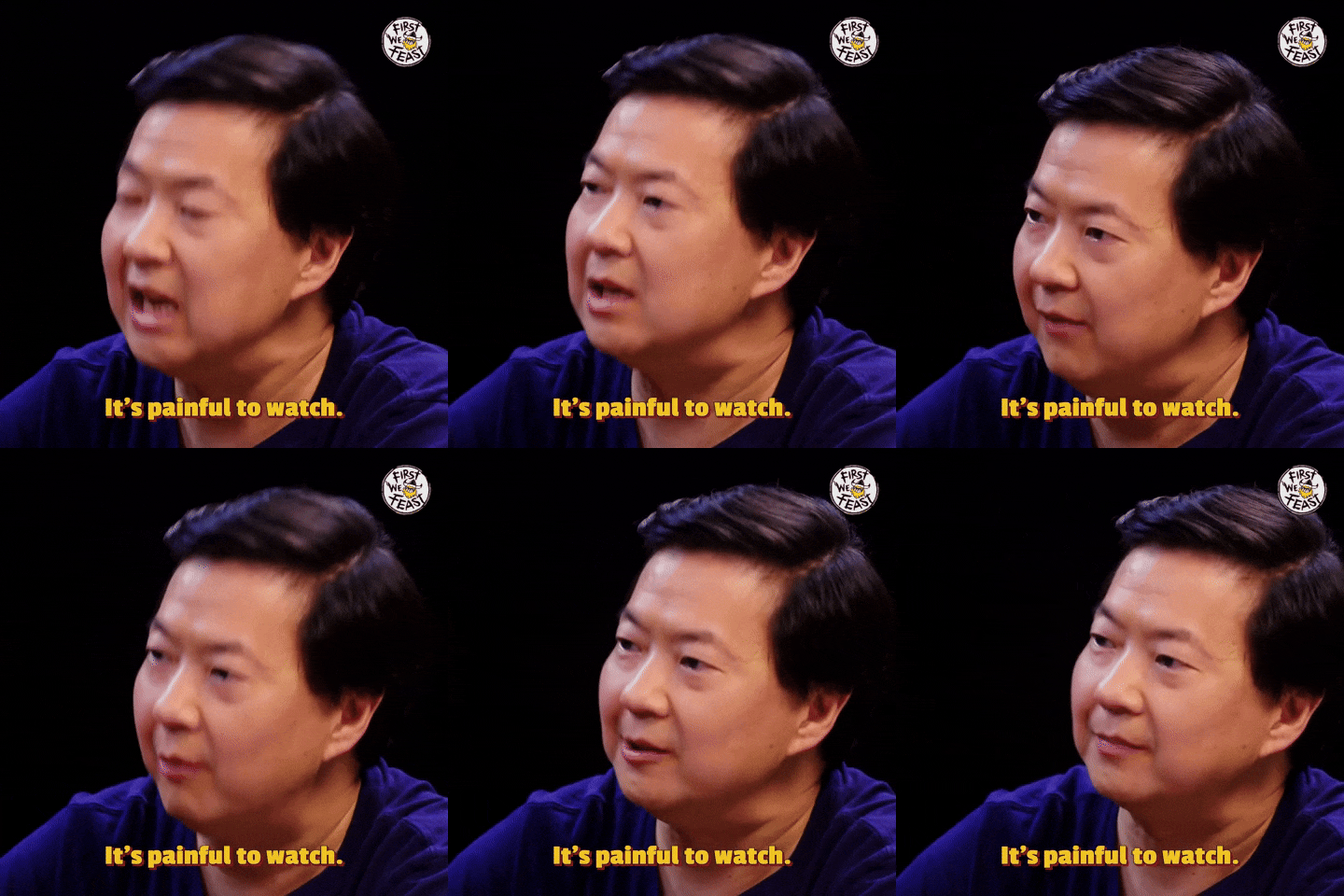
Source: GIPHY - The Deep Dive: Audiences now have access to real-time transparency tools and AI-driven databases that track corporate political donations and carbon footprints. When a brand posts about a social cause without having the internal infrastructure to back it up, it’s seen as a cynical attempt to monetize morality.
- The Vibe: It feels like using someone else’s struggle as a marketing aesthetic. It’s virtue signaling in its purest, most annoying form.
- The Fix: Don’t post about the cause unless you can show the internal work. Instead of a PR statement, share a progress report. Authenticity in 2026 is about being better, not perfect.
-
The Main Character Complexity
Some brands treat every global event as a content opportunity. Whether it’s a celebrity breakup, a major sporting event, or heaven forbid, a national tragedy, these brands rush to find a clever angle to insert themselves into the conversation.
- The Deep Dive: This behavior stems from a fear of being left out of the current thing. But not every conversation needs a brand’s input. When a shoe company tweets a tribute to a deceased icon that just happens to feature their new sneaker in the background, it’s a total main character move.
- The Vibe: Narcissistic and tone-deaf. It tells your audience that you value clout over genuine human connection.
- The Fix: Practice the art of silence. If the event doesn’t align with your core mission or industry, sit this one out.
Pro Tip
Use a tool like Social Champ to monitor these conversations before you jump in. It’s social listening lets you see the response of a trending topic in real-time, so you can decide if your brand actually has something valuable to add, or if it’s better to stay quiet.
-
Over-Automated Empathy
We’ve all been trapped in a support loop with a chatbot that repeatedly says, “I truly understand your frustration, [User_Name]! Let me help you with that,” while doing absolutely nothing to solve the problem.
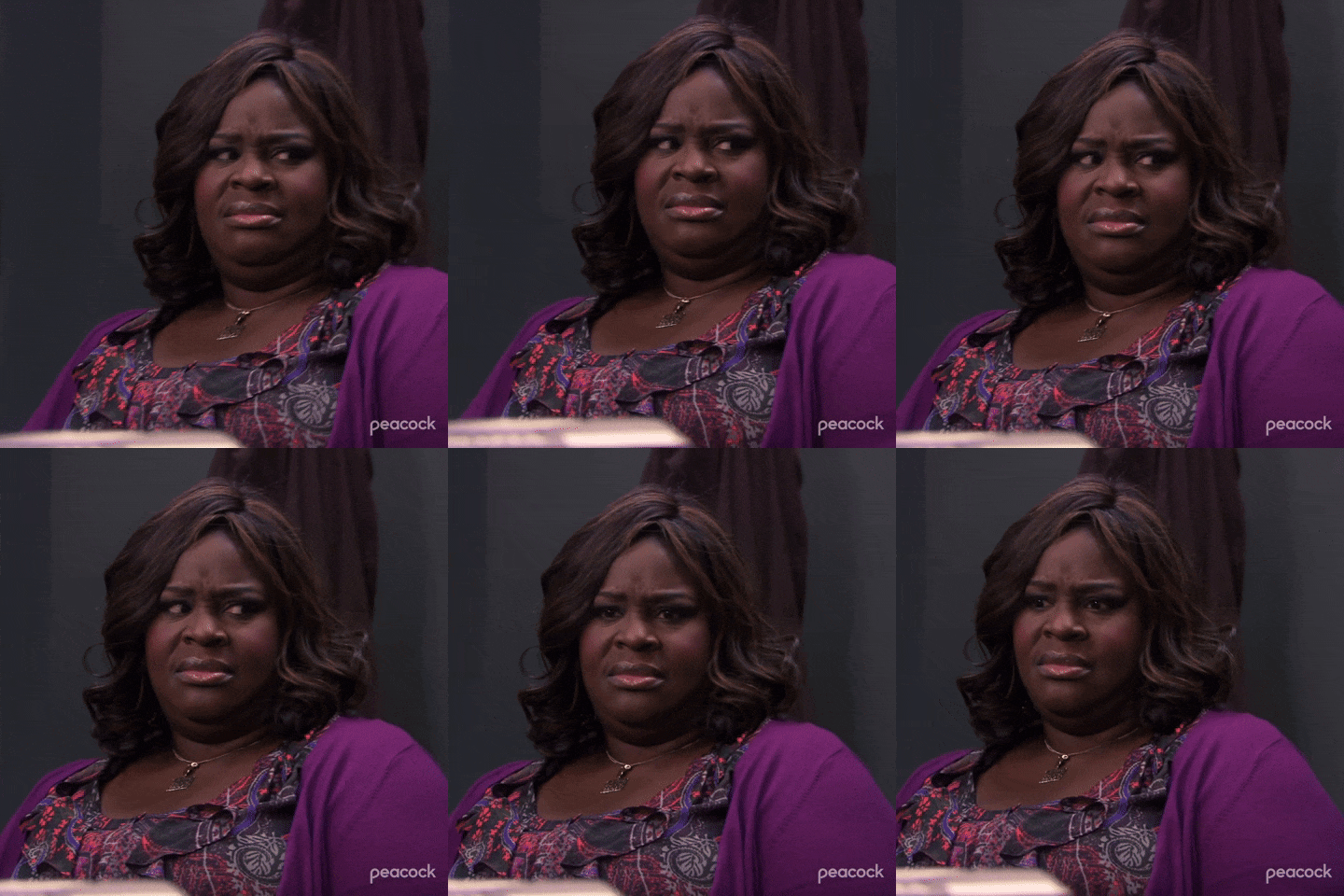
Source: GIPHY - The Deep Dive: In 2026, we’ve reached AI fatigue. While generative AI is great for logistics, using it to simulate empathy is a massive turn-off. When a customer is genuinely upset, they don’t want a model to mirror their emotions; they want a solution.
- The Vibe: It feels like being patted on the head by a toaster. It’s condescending and highlights the uncanny valley of corporate customer service.
- The Fix: Use AI for the data-heavy lifting, but keep a human kill switch. If a customer’s sentiment score hits a certain level of frustration, get a real person on the line immediately.
-
Ghosting the Feedback Loop
The delete-and-block strategy is the ultimate brand-behavior ick. If a customer leaves a valid critique on your Instagram post and your first instinct is to hide the comment, you’ve already lost.
- The Deep Dive: This behavior signals a lack of accountability and a fragile ego. In a world of decentralized reviews, trying to scrub your image manually is like trying to hold back the tide with a plastic bucket. It actually makes the scandal grow because people will take screenshots.
- The Vibe: Weak, untrustworthy, and guilty.
- The Fix: Lean into the friction. Address the criticism publicly, fix the problem in the comments for everyone to see, and show that you’re big enough to handle the heat.
Featured Article: How to Do Meme Marketing Without Being Cringe?
How to Pivot to True North Branding
If you’ve realized your brand is currently the one everyone is whispering about at every dinner party, don’t panic. You can pivot. True North branding is about aligning your internal values with your external actions so perfectly that cringe doesn’t even have room to grow.
Radical Transparency (The Own It Strategy)
In the age of the internet sleuth, secrets have a shelf life of about five minutes. Radical transparency isn’t just about being honest when things are going well; it’s about being the first one to speak up when they aren’t.
- The Move: If a product launch fails or a social post misses the mark, don’t wait for a tea account to expose the blunder. Own it immediately.
- Why it Works: People don’t expect brands to be perfect, but they do expect them to be honest. Vulnerability is a high-level brand behavior that builds a trust moat around your reputation.
- Pro Tip: Create a “Crisis Response Sandbox.” Draft templates for common mistakes so you can respond with human-first language in minutes, rather than days.
Micro-Niche Engagement
The days of trying to be everything to everyone are over. If you try to talk to the whole world, you end up sounding like a generic greeting card.
- The Move: Identify your ride or dies, the 10% of your audience that comments on everything, and talk only to them for a while. Use their inside jokes, answer their specific questions, and make them feel like they’re part of an exclusive club.
- The Result: This creates a ripple effect. When outsiders see a brand having genuine, non-scripted fun with its community, they naturally want to join in.
Sustainable Consistency via Automation
The biggest reason brands fall into cringe behavior? Burnout.
When you’re tired and rushed, you reach for that lazy AI prompt or that dated meme just to get something out.
- The Tool: This is where I genuinely lean on Social Champ. You can’t be human 24/7 if you’re bogged down by the manual labor of posting. You can use this tool to schedule your content in advance, which can free up your mental bandwidth to actually talk to people.
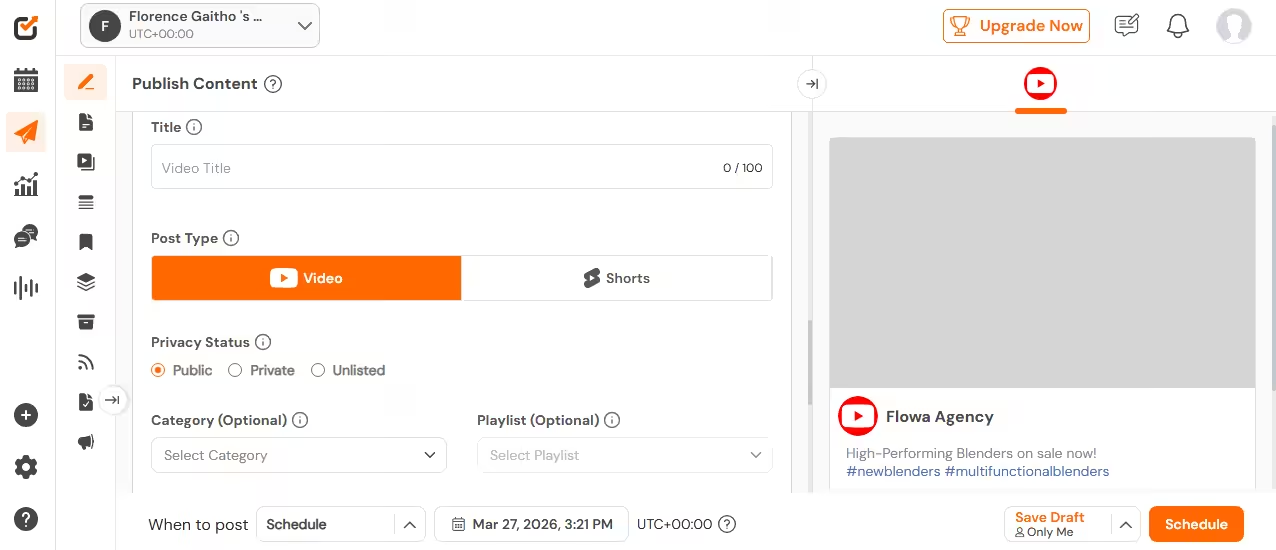
Social Champ’s Dashboard for YouTube - The Social Inbox Advantage: The ghosting behavior we talked about usually happens because comments are scattered across five different platforms. Social Champ’s Social Inbox pulls every spicy critique and glowing review into one place. It allows you to stay responsive and keep your brand behavior consistent without losing your mind.
Stop Leaving Your Community on Read!
Conclusion
In this transparent economy, you can’t market your way out of poor behavior. You have to live your values through every DM, every caption, and every customer support ticket.
Trends will inevitably change. By this time next year, we’ll probably be laughing at the things we think are peak right now, but a consistent, respectful, and self-aware brand behavior never goes out of style.
Ask yourself one final question before you post today: “If my brand were a person, would I actually want to be friends with it?” If the answer is “only if they were paying me,” it’s time to put the audit into practice and start building a reputation that’s actually future-proof.
Frequently Asked Questions
1. What Is the Difference Between Brand Identity and Brand Behavior?|=While brand identity is the visual and verbal costume a company wears (think logos, colors, and slogans), brand behavior is how the company actually acts in the real world. Identity is what you say you are; behavior is what you actually do.
2. Why Is Brand Behavior Important for Customer Loyalty?
3. How Does AI Impact Brand Behavior in 2026?