


Did you know that nearly three-quarters of S&P 100 companies went through a rebrand within their first seven years? This is according to a 10-year study by Landor.
So, why do brands rebrand in the first place?
Well, sometimes it’s because the market has shifted or their visuals feel outdated. Or maybe they may have had a few PR hiccups, or they’ve gone through mergers and acquisitions that call for a fresh, unified brand identity.
There are plenty of reasons, and you probably have one yourself.
Short Summary
- Rebranding requires a clear plan to stay organized and on track.
- Updating assets and maintaining consistency ensures your new identity resonates.
- Planning a multi-platform launch builds excitement and engages your audience.
- Monitoring reactions and engagement helps you refine messaging post-launch.
- Using tools like Social Champ makes scheduling, tracking, and managing your rebrand effortless.
Whatever your reasons for rebranding, the goal is the same: to create a brand that feels relevant, resonates with your audience, and sets you up for long-term success.
Unsure where to start? That’s why we created this guide.
Inside, you’ll find actionable steps to plan, execute, and monitor your rebrand, along with the right tools to support a seamless relaunch.
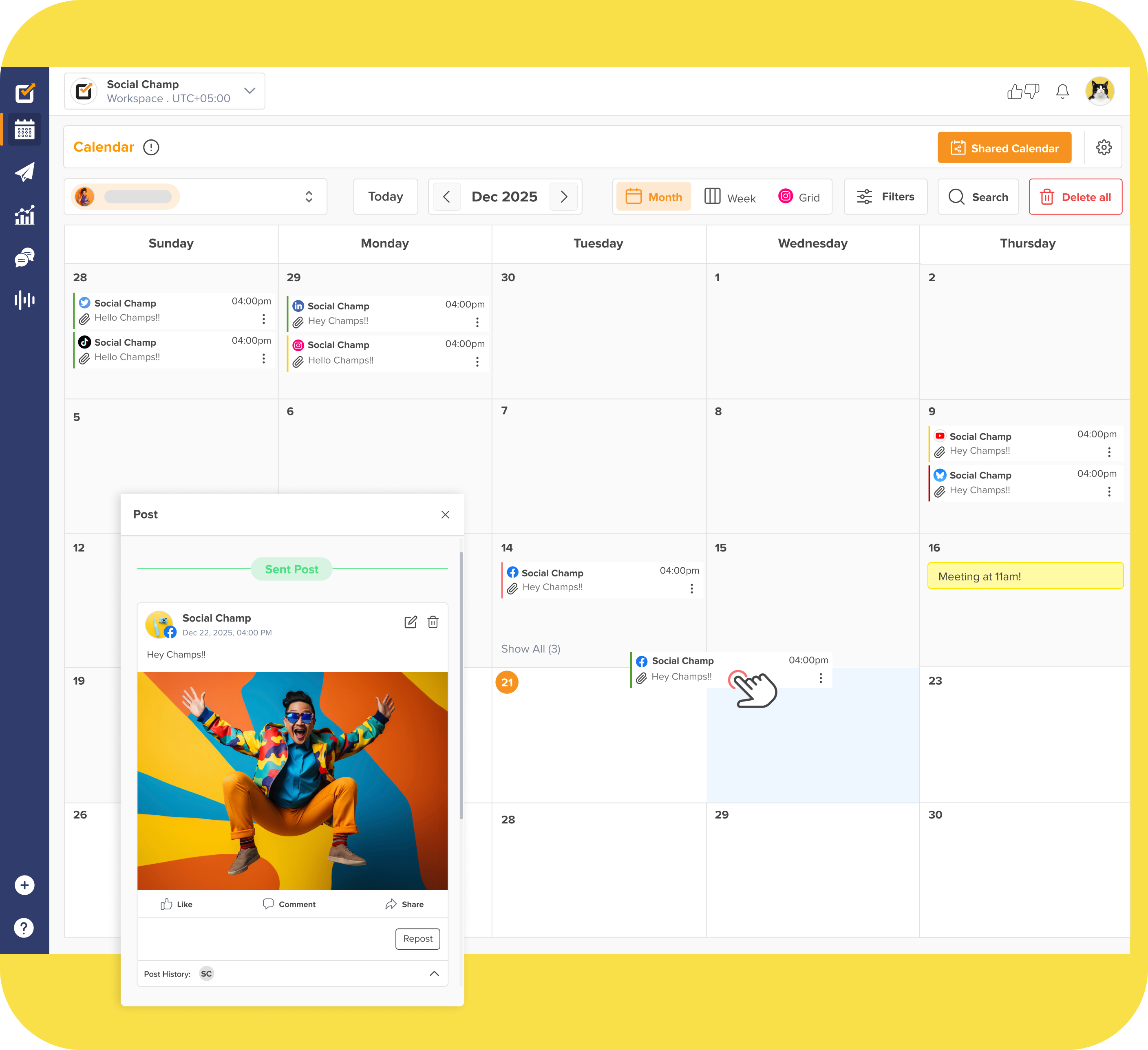
Schedule, track, and manage every post so your new identity shines everywhere.
Understanding What Rebranding Actually Means
Before you toss away everything you’ve built so far, you should know that rebranding is not always about starting from scratch.
So, first things first: know the difference between a brand refresh and a full rebrand.
-
Brand Refresh vs. Full Rebrand
A brand refresh is more of a tune-up. Most of the time, it is about adjusting how your brand looks, feels, or communicates so it still makes sense for where you are now. Think updated colors, refined visuals, or a clearer tone of voice.
A full rebrand, on the other hand, goes deeper and may change your name, logo, messaging, and overall positioning.
Ask yourself a simple question here. Do you need a small polish or a complete reset?
-
Internal vs. External Rebranding
Internal rebranding focuses on how your team understands and represents the brand. Are employees aligned with the mission and values?
External rebranding is what your audience or customers see, including visuals, messaging, and public perception.
Ideally, both sides should work together so nothing feels disconnected.
Finally, you should clarify your expectations before you begin. What problem are you trying to solve? Are you aiming to attract a new audience or reconnect with your current one?
Setting clear goals early keeps the process focused and avoids surprises later.
Rebranding works best when everyone knows why the change is happening and what success should look like.
Pre-Rebrand Preparation Checklist
Once you understand what rebranding really involves, the next logical step is preparation.
A rebrand without groundwork often leads to confusion, wasted effort, and results that feel off. You don’t want that.
So, before jumping into new visuals or messaging, take time to walk through these essentials.
-
Conduct an Internal Brand Audit
If your brand feels inconsistent, outdated, or disconnected from your audience, you need what? That’s right – an internal brand audit.
Essentially, it helps you to take stock of what’s working and what’s not before diving into a rebrand.
As part of the audit, consider three key areas:
-
Review Mission, Vision, Values
Do your current mission, vision, and values still reflect who you are and where you want to go? If not, it’s time to revisit them. And I mean now!
Clear and relevant guiding statements keep your brand aligned and purposeful. It also ensures every decision supports your overall identity.
-
Evaluate Brand Positioning
Where does your brand sit in the market compared to competitors? Your positioning defines how people perceive you, so ask yourself: are we standing out or blending in?
Adjusting your positioning can help clarify your unique value and attract the right audience.
-
Analyze Outdated Elements
Are there visuals, messaging, or formats that feel stuck in the past? Identify what no longer serves your goals and what confuses your audience.
Removing or updating these elements makes your brand feel fresh, modern, and in sync with your current vision.
Taking a close look at these three areas gives you a clear picture of your current brand. Once you know what’s working and what needs to change, the rebranding process becomes much smoother and more intentional.
-
-
Understand Your Audience’s Current Perception
Once you’ve audited your brand internally, the next step is to see how the outside world actually sees you. After all, your brand isn’t just what you say it is; it’s what people think it is.
To get a clear picture, you can use a few practical approaches:
-
Surveys, Polls, Feedback
Ask your customers directly what they think about your brand. Simple surveys or polls can reveal insights about how people perceive your messaging, visuals, and products.
-
Social Listening
Keep an ear on social media conversations to understand what people are saying about your brand online. This helps spot trends, complaints, or praises you might not hear otherwise.
-
Competitor Analysis
Check out how competitors are perceived and what works for them. This can highlight gaps, opportunities, and ways to differentiate your brand in the eyes of your audience.
-
-
Set Clear Rebranding Goals
Before you start changing logos or colors, ask yourself some key questions, such as:
- Do you want to increase relevance in your market?
- Are you trying to appeal to new demographics or reach a different audience?
- Is the goal to repair your brand reputation or modernize your visual identity?
Clarifying these goals upfront makes the rebranding process much more focused. It ensures every decision, from messaging to visuals, supports a clear purpose rather than leaving you guessing.
When you know exactly what you want to achieve, your rebrand has a much better chance of hitting the mark.
Featured Article: Guide to Social Media Competitor Analysis
Combining these methods gives you a solid understanding of how your audience currently sees your brand, which makes it easier to plan a rebrand that truly resonates.
Visual Identity Rebranding Checklist
Once you’ve completed your pre-rebrand preparation and set clear goals, it’s time to focus on the visual side of your brand.
Your visuals are often the first thing people notice, so updating them thoughtfully is key to a successful rebrand.
Here are some essential steps to guide your visual identity rebranding checklist:
-
Update Your Logo and Typography
Your logo is the face of your brand, and it needs to clearly represent who you are today.
Typography, on the other hand, sets the tone for your messaging and ensures readability across platforms.
So, you should decide whether your logo needs a small evolution or a full overhaul. Make sure it works well on websites, social media, emails, and marketing materials.
At the same time, choose typography that complements your logo, maintains consistency across all touchpoints, and reflects your brand personality.
Consistent typography helps reinforce your brand personality and keeps all your content looking cohesive.

Pepsi’s Logo Evolution As you think about that, take a look at this picture of Pepsi’s evolution of its logo over the decades.
-
Choose a New Color Palette
Colors have a powerful influence on how people perceive your brand, which is why understanding the psychology of color in branding is essential.
Each hue conveys emotions and signals certain values, for example:
- Red: Sparks excitement and grabs attention instantly.
- Blue: Inspires trust, calm, and professionalism.
- Green: Evokes growth, health, and balance.
- Yellow: Brings optimism, energy, and draws attention.
- Purple: Suggests luxury and creativity.
- Orange: Feels friendly, playful, and confident.
Selecting the right palette helps communicate your brand personality clearly.
For example, Coca-Cola’s signature red instantly conveys energy, excitement, and passion, making it one of the most recognizable brand colors in the world.
Coca-Cola’s Branding At the same time, your colors need to remain consistent across all digital touchpoints, from social media and websites to emails and ads.
Maintaining consistency helps to strengthen recognition and maintain a cohesive visual identity. That no matter where your audience encounters your brand, it feels familiar, professional, and intentional.
-
Refresh Brand Imagery Style
Your brand imagery sets the visual tone for how people perceive your business, so refreshing it can make a big difference.
Think about your photo style, illustrations, and icons. Do they feel modern and aligned with your updated brand personality?
Updating these elements ensures every visual communicates the right message.
One creative way to keep all these visuals working together is to create a consistent brand mood board. It serves as a central reference where colors, textures, photo styles, illustrations, and icons come together in perfect harmony.
Whenever you or your team create new content, you can refer to it to make sure everything fits the same vibe. This helps keep your brand instantly recognizable and polished across every platform.
-
Redesign Key Collateral
Key brand collateral refers to all the materials and assets your brand uses to communicate visually and verbally with your audience.
These are the tangible and digital items that showcase your brand’s identity and help people recognize and engage with it.
Here are the examples of key brand collateral and what to do:
- Business Cards: Update your cards with your new logo, colors, and typography to leave a strong, lasting impression in person.
- Website Elements: Refresh headers, buttons, icons, and other visual components so your site aligns with your new brand look and feels modern.
- Packaging: Redesign product packaging to match your updated color palette, typography, and imagery to make it instantly recognizable on shelves or online.
- Social Media Templates: Update templates for posts, stories, and ads to ensure consistent brand identity across all platforms and save time when creating content.
Refreshing your key collateral ties together your rebrand and ensures that every interaction with your brand feels intentional, cohesive, and professional.


Messaging and Tone of Voice Checklist
Once your visual identity is refreshed, it’s equally important to update your messaging and tone of voice. After all, how your brand speaks should match how it looks, creating a cohesive and recognizable personality.
Here are some key steps to guide your messaging and tone of voice checklist:
-
Rework Your Brand Story
Start by explaining why the rebrand is happening, as this brand did on their Instagram Post:
Rebranding Announcement on Instagram Making such an announcement helps your audience understand the changes and feel included in your journey.
When making the announcement, ensure your story aligns with your current values, reflecting who your brand is today and ensuring consistency across all communications.
-
Update Brand Voice Guidelines
Now that your brand story is polished, it’s time to give your voice a little makeover too. Nail down your tone, language rules, and personality so every post, email, or website blurb sounds unmistakably like you.
Having clear voice guidelines keeps everything consistent across social media, emails, website copy, and marketing materials.
Consistent voice makes your brand more recognizable, builds trust with your audience, and reinforces the personality you’ve carefully crafted during the rebrand.
-
Rewrite Tagline, Slogans, and Key Messages
Do you remember when KFC temporarily changed its famous “Finger Lickin’ Good” tagline to “So Good”?
KFC’s Changed Slogan The company made the switch because public health advice emphasized hand hygiene, and licking fingers didn’t send the right message at the time.
Now back to you! If your current messaging feels outdated, disconnected, or no longer reflects your brand’s personality, it’s time to give your tagline, slogans, and key messages a fresh update.
It’s time to give your tagline, slogans, and key messages a fresh update. Aim for phrases that are crisp, modern, and memorable, so they stick in your audience’s mind.
Well-crafted messaging makes your brand instantly recognizable, conveys your personality, and ensures every communication feels aligned with your refreshed identity.


Digital Presence Rebranding Checklist
Once your visuals and messaging are refreshed, it’s time to make sure your digital footprint matches your new brand.
Your online presence should feel just as polished, cohesive, and unmistakably you as your refreshed logo and voice.
Here’s a checklist to keep your digital presence rebrand on track:
-
Website and Landing Pages
Give your website a little glow-up with your new colors, fonts, and layout, so it really shows off your refreshed identity.
While you’re at it, tweak the copy so it matches your updated voice and personality. And don’t forget to plan your SEO moves. Your search rankings will thank you later.
-
Social Media Profiles
Time to swap in those shiny new profile pics, update your bios, banners, and story highlights.
Keeping your visuals consistent across all platforms makes your brand instantly recognizable, so followers know it’s you the moment they scroll by.
-
Email and Newsletters
Freshen up your email templates and signature so every message feels on-brand. Then, send a fun rebrand announcement email to let your audience in on the exciting changes.
-
Online Listings and Directories
Give your Google Business Profile, app directories, and review platforms a makeover, too. Making sure your brand is consistent everywhere keeps your brand professional, polished, and easy to find.
Tackling these digital touchpoints ensures your audience sees a cohesive, polished brand across every corner of the internet.
Marketing and Content Rebranding Checklist
After updating your visuals, messaging, and digital presence, it’s time to tackle your marketing and content.
Ensuring all your materials reflect your refreshed brand helps create a consistent experience for your audience.
Let’s take a look at the essential steps to guide your marketing and content rebranding checklist:
-
Update All Existing Assets
Take a close look at your blog posts, ebooks, lead magnets, social templates, and ads, and make sure they reflect your new brand colors, voice, and style.
Refreshing these materials not only keeps everything on-brand but also prevents any mixed messages from reaching your audience.
-
Prepare New Launch Content
Roll up your sleeves and create engaging teasers, behind-the-scenes posts, announcement content, a brand reveal video, and a press release.
This helps build excitement, introduces your refreshed identity, and ensures your audience feels part of the journey.
-
Align Influencer and Creator Partnerships
You don’t want your partners to be caught off guard. So, you should brief them about your updated brand identity and provide them with the new assets.
This way, any collaborations or sponsored content will consistently reflect your refreshed brand across all channels, keeping your messaging cohesive and strong.
Featured Article: B2B Influencer Marketing: A Comprehensive Guide
How to Announce and Launch Your Rebrand Successfully
The last thing you want is to try to relaunch your brand with big fanfare, only to end up with a logo that looks like it was designed during a coffee break.
That’s why planning every step carefully and making sure your message lands just right is key to a launch that actually wows your audience.
To make your launch feel seamless and impactful, follow these tips:
-
Choose the Right Launch Day
Picking the perfect day for your launch can make all the difference. You want a day when your audience is most active and likely to notice your updates.
Consider any industry events, holidays, or big announcements that could compete for attention, and choose a moment that gives your rebrand the spotlight it deserves.
-
Create a Multi-Platform Launch Plan
Once you have the date locked in, the next step is to plan how your rebrand will appear across different channels. This ensures your audience sees a consistent message no matter where they follow you.
Here are a few suggestions:
-
Instagram Reveal Post
Share a post that tempts your audience to engage, like how this brand did on their Instagram page:
Relaunch Announcement Post on Instagram by @itsthebianca
It won’t hurt if you include a caption that tells your story and invites followers to celebrate the change with you.
-
LinkedIn Announcement
LinkedIn isn’t just for finding talent. Use it to introduce your rebrand in a polished, professional way and explain why this change reflects your growth and vision.
That’s what DKI – Halifax did when they rebranded from DKI – Proper Care.
DKI Halifax’s Rebranding Announcement Post on LinkedIn -
TikTok Teaser
Since TikTok is all about short, snappy videos, share a playful clip that sparks curiosity. Give viewers little glimpses of your new brand or a behind-the-scenes sneak peek.
Here’s an example from TikTok:
Rebranding Announcement on TikTok by D&FCreative
-
Press kit
Prepare a press kit with your logo, brand story, and key visuals. This makes it easy for journalists and partners to share your news accurately.
-
Email blast
Send an email to your subscribers announcing the rebrand. Make it personal and engaging so they feel included in the journey.
Planning a multi-platform launch gives your rebrand a bigger impact and helps your audience connect with your new identity in ways that feel natural and exciting.
-
-
Monitor Audience Reactions
Once your rebrand is live, the real fun begins: seeing how your audience responds. Keeping an eye on reactions can tell you if your message is landing or if people are scratching their heads.
Here are a few ways to stay on top of things:
-
Engage in comments
Did you know that brands that actively respond to comments see up to a 22% increase in customer loyalty?
So, don’t just scroll past! Jump into the conversation, reply to questions, and celebrate the positive reactions.
-
Address confusion
Confusion is an enemy of trust and engagement. So, if someone seems puzzled by your new look or messaging, clear it up quickly.
Doing so not only keeps your audience confident in your brand but also turns potential doubts into opportunities to strengthen connections.
-
Clarify messaging
Make sure your audience isn’t left guessing. Use follow-up posts or stories to explain your vision and reinforce why this change matters.
Keeping your finger on the pulse makes your audience feel included, and it can even turn skeptics into fans.
-

Featured Article: Effective Social Media Marketing Strategy
Using Social Champ to Support Your Rebrand
Once your rebrand is ready to roll, Social Champ can be your best friend in making sure everything lands perfectly.
With the right tools, you can stay organized, keep your messaging consistent, and actually enjoy the launch instead of stressing over it.
Here’s what you can do with Social Champ to make your rebrand shine:
- Create a Full Rebrand Launch Calendar: Social Champ puts your entire rebrand plan on one dashboard, from the first teaser to the final follow-up. You can adjust timing without the hassle and clearly see how each piece of content fits into the bigger launch story.
- Schedule Content: With Social Champ, you can line up teasers, big reveals, and post-launch posts ahead of time. So, your rebrand will unfold smoothly while you sit back and enjoy the buzz.
- Create Consistent Visuals and Captions: Champ AI Suite allows you to generate on-brand captions and visuals that actually sound like you. This makes sure your brand looks polished and perfectly in sync across all channels, no matter where your audience finds you.
- Post Variations for Each Platform: Another advantage of using Social Champ is that you can make post variations for Instagram, Facebook, LinkedIn, and TikTok. This ensures each platform gets content that feels native and natural.
- Track Reactions: Social Champ also allows you to track reactions and comments in one place. You can spot patterns quickly and tell whether your audience is cheering, curious, or asking for more.
- Identify Best Performers: Through its analytics tool, you can compare performance and identify the images and designs that spark engagement. As such, you’ll know what to double down on and avoid spending time on the ones that don’t get much engagement.
- Compare Engagement Pre- and Post-Rebrand: With insights readily available, you’ll be able to compare engagement before and after your rebrand. It will give a clear proof of what worked, what needs adjusting, and where your new brand is already winning hearts.
It’s clear as day that managing your rebrand with Social Champ is smooth, organized, and even a little fun.
You get all the tools you need to plan, schedule, and track your launch while keeping your brand consistent across every channel.
Streamline your entire launch with Social Champ. Schedule, track, and manage every post while keeping your brand on point.
Post-Launch Rebranding Checklist
Now that your rebrand is live and Social Champ has helped you nail the planning and scheduling, the work doesn’t stop there.
Keeping the momentum going and paying attention to how your audience reacts is just as important as the launch itself.
Here’s how to stay on top of things after the big reveal:
-
Maintain Momentum
Keep the excitement alive by continuing to post rebrand-related content. Share stories about your brand’s evolution, behind-the-scenes moments, or highlights of what’s new.
Doing that helps your audience feel part of the journey and keeps your brand top of mind.
-
Monitor Brand Mentions and Sentiment
Once you’ve got people talking, make sure you’re listening. Track feedback and watch for confusion or concerns.
Thankfully, Social Champ’s social listening tools make it easy to keep tabs on what people are saying. So, you can leverage the tool’s social inbox to respond quickly and keep your messaging clear.
-
Consistency Check
Make sure none of your old assets are still floating around. Refresh any outdated materials so everything from visuals to messaging screams your new identity loud and clear.
Use Social Champ and watch your refreshed brand make a lasting impact across all platforms.
Featured Article: Twitter Activity Before & After Musk
Conclusion
Rebranding can feel like a huge undertaking, but with a clear plan and the right tools, it doesn’t have to be overwhelming.
With a thoughtful strategy and consistent execution, you can transform your brand into something that truly connects with your audience.
As you’ve already established, you don’t have to do everything manually. Social Champ promises a smooth and efficient way to plan, schedule, and track every post so your rebrand shines across all platforms.
And it’s not just an empty promise. The tool truly delivers on what it’s advertised for. Companies like The Startup Nerds, Suit Agency, and Presult, among others, can attest to this.
You can see the results for yourself in Social Champ’s case studies, which highlight how real businesses achieve impressive growth using the platform.


