

TikTok has come a long way from lip-sync videos and viral dances.
Now it’s one of the most influential platforms on the internet with numbers that marketers, creators, and brands can’t afford to ignore.
But beyond user counts, what’s really happening on TikTok this year?
How long are people watching?
What kind of content is performing best?
And is TikTok still worth the investment for your time, budget, or marketing strategy?
In this post, we’ll break down the most useful, up-to-date TikTok stats you need to know in 2025.
And the best way to use these stats to your advantage? Use a pro TikTok scheduler to post smarter and stay consistent.
Short Summary
- TikTok has reached 1.99 billion monthly active users as of early 2026.
- While Gen Z remains the most active, the 25–34 age group has become the largest single cohort on the platform, representing roughly 35.3% of the user base.
- TikTok Shop is projected to generate between $20 billion and $23.4 billion in US sales in 2026, driven by a merchant ecosystem of over 15 million sellers.
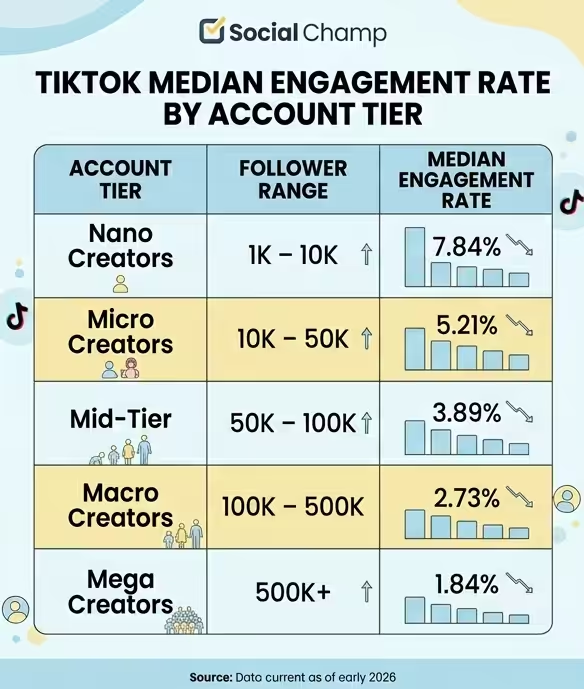
- Nano-creators (1K–10K followers) boast the highest engagement at 7.84%, while mega-influencers (500K+) average around 1.84%.
- Leveraging tools like Social Champ allows brands to schedule posts for peak times, analyze deeper metrics like shares and saves, and scale content pillars using data-driven insights.
Key TikTok Stats: The Most Important Numbers at a Glance
If you are looking to understand the platform’s current scale, these foundational metrics tell the story of its unprecedented growth.
- User Base: As of early 2026, TikTok has reached 1.99 billion monthly active users globally, making it the fifth-largest social platform in the world.
- Engagement: The platform remains incredibly sticky, with 1.12 billion daily active users logging in every single day—a retention rate of over 50%.
- Time Spent: Users are more immersed than ever, spending an average of 95 minutes per day on the app, which is significantly higher than competitors like Instagram or Facebook.
- Market Penetration: While global, the platform is particularly dominant in specific regions; for instance, Indonesia leads with 180.1 million users, followed by the United States at 153.1 million.
- App Downloads: TikTok has officially surpassed 5.48 billion total downloads since its launch, maintaining its position as a top-downloaded app year after year.
- Ad Revenue: Brands are following the attention, with global ad revenue projected to hit $34.8 billion in 2026, reflecting a massive shift in digital marketing budgets.
- Social Commerce: The shopping revolution is here; TikTok Shop US sales are estimated to reach between $20 billion and $23.4 billion this year alone.
- Search Behavior: The platform is increasingly becoming a search engine, with 49% of Gen Z users now using TikTok for product discovery rather than traditional search engines.
Ready to Champ-ion Your TikTok Game?
TikTok Demographic Stats
The latest TikTok statistics reveal a platform that has successfully matured beyond its origins as a niche app for teenagers. While the youth remain its core engine, the 2026 data shows a significant shift toward an older, more diverse global audience.
Global Audience Breakdown
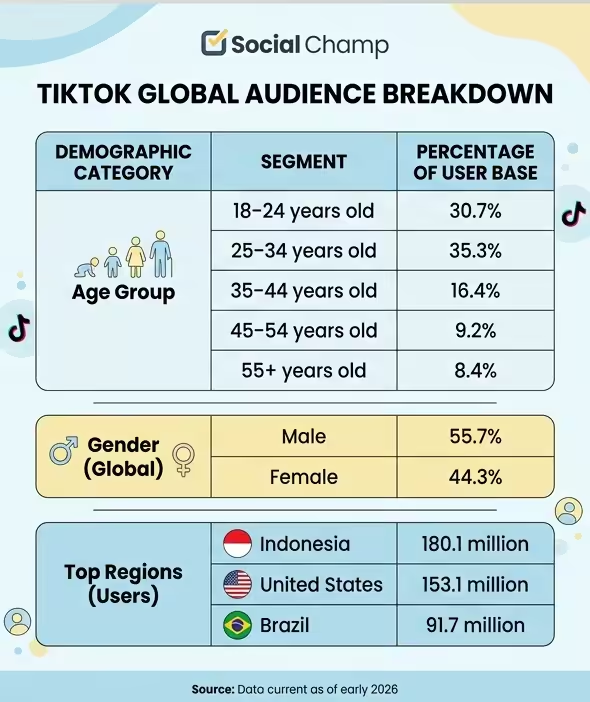
The following image outlines the current distribution of stats for TikTok across key demographics.
Key Audience Segments
- The Gen Z Powerhouse: This group remains the most active on the platform. In fact, 72% of Gen Z social media users have a TikTok account. They are not just passive viewers; they are the primary drivers of trends and viral challenges.
- The Rising Millennial Majority: Contrary to popular belief, users aged 25–34 now represent the largest single age cohort on the app. This shift has turned TikTok into a major hub for career advice, home DIY, and parenting content.
- The Silver Surge: The fastest-growing demographic is older adults. Users aged 50 and above have seen a 240% increase in adoption since 2023, largely driven by news consumption and family-oriented content.
What These Demographics Mean for Targeting
The evolution of these TikTok statistics suggests that brands must move away from a one-size-fits-all approach. Because 38% of the audience is now over age 30, there is a massive opportunity for high-ticket industries like real estate, automotive, and financial services that previously ignored the app.
Furthermore, the regional data highlights that growth is peaking in Southeast Asia and Latin America. If you are targeting the US market, keep in mind that the gender split is different than the global average; in the United States, roughly 60% of users are female, which significantly influences the performance of beauty, fashion, and wellness content.
TikTok Usage Statistics
Understanding how users spend their time on the app is crucial for grasping its impact. The latest data reveals an incredibly immersive and active user base.
- Frequent Sessions: TikTok is a habit-forming experience, with the average user opening the app about 10 times per day, making it one of the most frequently accessed apps globally.
- Session Length: When users open the app, they stay for a while; the average TikTok session lasts 9 minutes and 42 seconds.
- Global Screen Time: This high engagement adds up to massive monthly usage, with the average user spending 29 hours per month on the platform.
User Behavior: Beyond the Scroll
The way users interact with TikTok goes beyond passive viewing, shaping modern discovery and connection. These TikTok facts illustrate an active and exploratory audience.
- The Search Revolution: The platform has transformed into a primary information source. Currently, 49% of U.S. consumers use TikTok as a search engine to find everything from recipes to product reviews.
- Gen Z Search Preference: For younger demographics, the shift is even more dramatic; 64% of Gen Z users have used TikTok as an online search engine.
- Discovery-First Mindset: Users open the app with the intent to explore; 56% of users state they open TikTok specifically to discover something new.
- High Completion Rates: Content on the platform is highly sticky, with an average video completion rate of 89% across the app.
- Creative Participation: TikTok encourages a culture of creation rather than just consumption, as 41% of users have uploaded a video reacting to another video.
- Organic Interaction: Users are highly likely to spread content they enjoy; approximately 12% of all videos watched result in a share.
Every Scroll Is a Missed Chance!
TikTok Engagement Stats
Engagement on TikTok is often described as the gold standard for social media because it measures active participation rather than just passive scrolling. In 2026, the platform continues to outperform competitors by a significant margin, though the nature of that engagement is shifting toward deeper metrics like watch time and shares.
- Benchmark Rates: The average engagement rate across the platform has stabilized at approximately 4.25% in 2026, which is roughly 8.8 times higher than Instagram’s current average.
- Watch Time and Retention: TikTok’s algorithm now prioritizes sustained attention over quick clicks; currently, viewers watch about 55% of videos to the end.
- The Share Factor: Shares have become a dominant signal for the algorithm, seeing a 13% year-over-year increase as users increasingly treat the app as a messaging and discovery tool.
- Likes and Comments: While likes remain a primary metric, comments have seen a slight 24% decline in frequency, suggesting that users are moving toward more private sharing or passive consumption.
Engagement by Account Size
A common misconception is that larger accounts automatically enjoy higher engagement. In reality, TikTok often operates on a reverse curve where smaller, more focused communities see the highest levels of interaction.
Why TikTok Engagement Differs from Other Platforms
TikTok’s engagement feels different because its algorithm is interest-based rather than follower-based. On most platforms, you see what the people you follow post. On TikTok, the For You Page delivers content based on revealed behavior, what you actually watch, not just what you say you like. This creates a frictionless discovery loop where 56% of users report opening the app specifically to find something new, leading to much higher interaction with accounts they don’t yet follow.
Practical Takeaway: What Should You Aim For?
If you are a creator or a brand, your goal should be to beat the median for your specific tier. For instance, breaking 8% engagement as a micro-creator puts you in the top 25% of all accounts. To achieve this, focus on the first three seconds; content that front-loads emotional or visual payoff helps maintain the high completion rates the 2026 algorithm demands.
TikTok Advertising and Marketing Statistics
The shift in 2026 is clear: TikTok has moved from an experimental ad channel to a core component of global paid media strategies. As the platform matures, marketers are prioritizing cost-efficiency and high-intent discovery features to drive measurable business outcomes.
- Ad Efficiency: TikTok remains one of the most cost-effective platforms for reach, with an average CPM of $9.16, which is significantly lower than Meta’s average Facebook CPM of $14.91.
- Click-Through Performance: The average click-through rate (CTR) on TikTok ads is 0.84%, though this number often doubles when brands utilize native-looking, creator-style content instead of traditional commercials.
- Format-Specific Success: High-impact formats like TopView ads dominate visibility with CTRs ranging from 12% to 16%, while In-Feed videos typically see a CTR of around 5%.
- Global Revenue Growth: Brands are heavily investing in the platform, with global TikTok advertising revenue projected to reach $34.8 billion by the end of 2026.
- TikTok Shop Conversion: The integration of commerce is yielding massive results; while standard campaigns average a 0.46% to 2.4% conversion rate, TikTok Shop campaigns can hit 10% or higher thanks to seamless in-app checkouts.
- Search Ad Opportunity: In 2026, 45% of brands using TikTok’s new search ads report a significant lift in brand search impressions, showing the platform’s power as a discovery engine.
Brand Adoption and Advertiser Growth
Advertiser adoption is no longer limited to small DTC brands; the platform has seen a massive influx of established global players.
- Market Dominance: Currently, 57% of marketers have integrated TikTok into their primary strategy, up from previous years.
- ROI Perception: TikTok has solidified its value, with 32% of marketers naming it the platform that consistently offers the highest return on investment (ROI).
- Ad Spend Intent: Looking ahead, TikTok leads the industry with the #1 planned ad spend increase among social media professionals for the coming year.
- Business Adoption: In the United States alone, there are now approximately 475,000 active TikTok Shops operating on the platform, representing a massive shift toward social commerce.
TikTok’s Role in Paid Media Strategies
In 2026, TikTok is less about “interrupting” and more about “integrating.” The most successful paid media strategies now prioritize the first three seconds of a video, as this window determines 71% of viewer retention decisions.
Furthermore, the platform’s role in the marketing funnel has expanded; it is no longer just for top-of-funnel awareness. With 81% of users stating that the platform provides a view into real-life product usage, TikTok has become a vital “validation” step where consumers compare and verify products before committing to a purchase. This has led many brands to adopt a 70/20/10 content rule: 70% entertainment/education, 20% engagement-focused, and 10% direct selling.
Are You Missing Cheap Reach?
TikTok Shop Statistics
TikTok Shop has officially graduated from a social media feature to a global retail powerhouse. By blurring the lines between entertainment and commerce, the platform has created a frictionless shopping environment where users move from discovery to checkout in seconds.
- Massive GMV Growth: Global TikTok Shop Gross Merchandise Value (GMV) is projected to reach $112.2 billion in 2026, a staggering leap that positions it as a direct competitor to traditional e-commerce giants.
- US Market Surge: In the United States, TikTok Shop sales are estimated to hit between $20 billion and $23.4 billion this year, following a record-breaking 120% growth in previous cycles.
- Merchant Ecosystem: The platform now hosts over 15 million merchants globally, with approximately 475,000 active shops operating in the U.S. alone.
- Buyer Demographics: While Gen Z leads the charge, the audience is aging up; currently, 25.4% of TikTok shoppers are between the ages of 35 and 54.
How TikTok Drives Discovery and Impulse Buying
TikTok’s secret weapon is its ability to trigger spontaneous purchases through highly relevant, algorithmically served content. Unlike traditional search-based shopping, TikTok stats show that users don’t always know what they want until the “For You” feed shows it to them.
- Impulse Power: Roughly 25% of users admit to regular impulse buying on the app, driven by the convenience of the one-tap checkout process.
- The Trust Factor: Social proof is the primary driver of conversion; 78% of shoppers discover new products via influencers, and users spend an average of $95 per product when it comes from a trusted creator recommendation.
- Discovery Routes: Engagement isn’t just through videos; 23% of buyers find products by actively browsing the TikTok Shop marketplace tab, while 25% are converted via targeted ads.
- Livestream Dominance: Sellers who utilize live shopping see 84% more sales compared to those relying solely on static video uploads.
Top Performing Industries and Products
While almost any visual product can find a home on the app, certain industries are seeing disproportionate success due to their highly shoppable nature.
- Beauty and Personal Care: This remains the undisputed king of the platform, accounting for 18.65% of total sales.
- Womenswear and Underwear: This is the most populated category in terms of storefronts, with nearly 15,000 active shops dedicated to fashion.
- Home and Lifestyle: Driven by the “Restock” and “Organization” trends, products like minimalist storage boxes and smart home gadgets are seeing massive volume.
- Wellness and Mental Health: Gen Z’s focus on self-care has led to a 22% annual increase in spending on stress-relief products like weighted plushies and sensory tools.
- Sustainable Goods: Ethical consumption is a major trend for 2026, with 78% of TikTok shoppers prioritizing brands that offer plastic-free or refillable options.
TikTok for Business Stats
For businesses in 2026, TikTok has moved from an optional experiment to an essential pillar of the digital marketing mix. The platform’s unique ability to blend organic storytelling with high-intent commerce has fundamentally changed how brands interact with their customers.
- Massive Business Adoption: The platform’s utility for commerce is undeniable, with 89% of small businesses reporting that TikTok is vital for their visibility and overall success.
- Merchant Growth: TikTok now supports a massive merchant ecosystem, hosting over 15 million active sellers worldwide as of early 2026.
- Rapid US Expansion: In the United States, the number of active TikTok Shops has exploded from just 4,450 in 2023 to over 475,000 in 2025.
- High ROI Perception: Advertisers are seeing significant returns, with 50% of marketers stating that TikTok offers the best ROI for short-form video content compared to other social platforms.
- Discovery and Action: TikTok isn’t just for entertainment; 61% of users discover new brands and products on the platform, and 92% of users take some form of action (sharing, liking, or following) after watching a video.
- Direct Sales Influence: The “TikTok Made Me Buy It” phenomenon remains potent, with 78% of users purchasing a product after seeing it featured in creator content.
- Ad Receptivity: Users on TikTok are more open to commercial messages than on other platforms; 38% of respondents are willing to tolerate ads in exchange for free content, which is 4% higher than the average for adults on the general internet.
- Creative Effectiveness: Speed is key for business success, as 63% of the most successful ads on the platform communicate their core message within the first few seconds.
- Conversion Benchmarks: TikTok Shop ads are proving highly efficient for e-commerce, delivering an average cost-per-purchase of just $7.83.
- Revenue Contribution: Advertising remains the lifeblood for the platform’s ecosystem, accounting for roughly 77% of TikTok’s total revenue as of 2026.
What If Your Ads Converted Faster?
TikTok Influencer Stats
The creator economy on TikTok has matured into a sophisticated ecosystem where influence is measured by community depth rather than just celebrity status. In 2026, creators have moved beyond being just entertainers, functioning as full-scale media brands and essential retail partners for global businesses.
TikTok Creator Tiers & Engagement Benchmarks
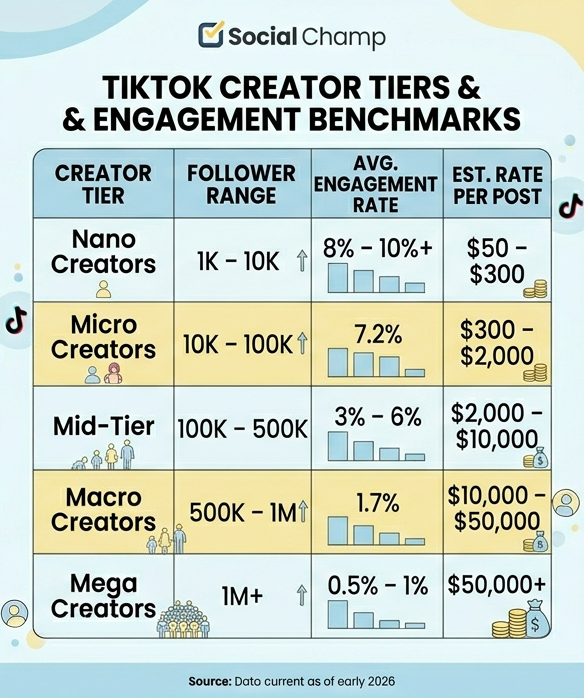
The 2026 TikTok statistics show a clear inverse relationship between follower count and engagement. While mega-influencers offer massive reach, smaller creators hold the keys to high-intent conversion.
The Power of the Micro-Creator
In 2026, stats for TikTok prove that bigger isn’t always better for brands. Micro-influencers (10K–100K followers) currently deliver 60% higher engagement rates than mega-influencers at roughly 1/10th the cost.
- Authenticity Wins: 61% of consumers believe micro-creators produce more trustworthy content than celebrities.
- Conversion Efficiency: Campaigns featuring nano and micro-influencers see 3x higher conversion rates than those relying solely on macro-influencers.
- Consumer Trust: An incredible 94% of Gen Z consumers trust influencers more than traditional advertisements.
Monetization & Creator Earnings
The monetization landscape has shifted from simple ad-revenue sharing to a multi-stream business model.
- The Reward Program: Under the new Creator Rewards Program, TikTok pays between $0.40 and $1.00 per 1,000 views for original videos longer than 60 seconds.
- TikTok Shop Affiliates: Creators now earn 5% to 30% commissions by tagging products in their videos, making it a primary income source for micro-creators.
- Live Gifting: For highly engaged communities, live stream gifting remains lucrative, with TikTok taking a 50% commission on virtual gifts sent by fans.
How to Use TikTok Stats to Optimize Strategy With Social Champ
While the global TikTok statistics provide a baseline, your specific account data is what truly moves the needle. Social Champ serves as a centralized hub to turn these numbers into an actionable roadmap, helping you align your content with what your unique audience actually wants to see.
-
Schedule TikTok Posts Based on Performance Insights
Consistency is the backbone of the TikTok algorithm, but posting just for the sake of it can lead to burnout. By using Social Champ to schedule TikTok posts, you can maintain a steady presence without being tethered to your phone. The platform allows you to plan your content weeks in advance, ensuring that you hit your ideal publishing frequency of 3–5 videos per week to keep your engagement momentum high.
-
Analyze Engagement Trends
Raw numbers like views can be distracting. To truly grow, you need to understand the quality of your reach. Social Champ’s analytics dashboard helps you dive deeper into stats for TikTok. By identifying which videos result in the most saves or profile visits, you can spot emerging patterns in your content.
-
Find Your Best Time to Post
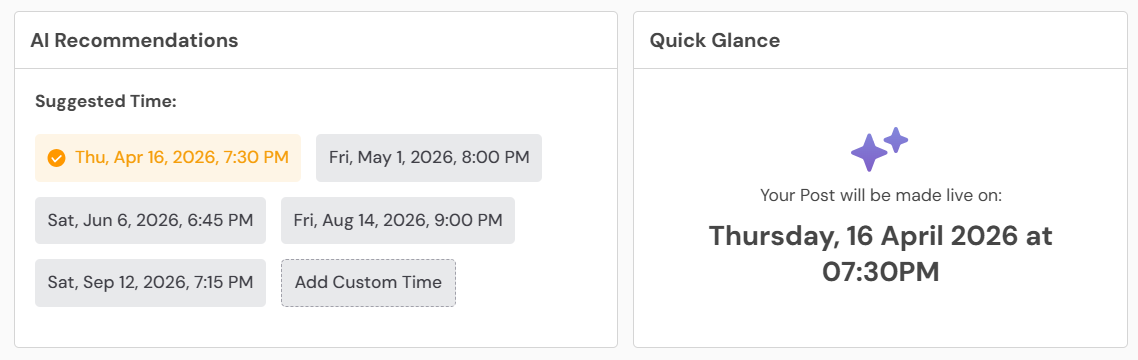
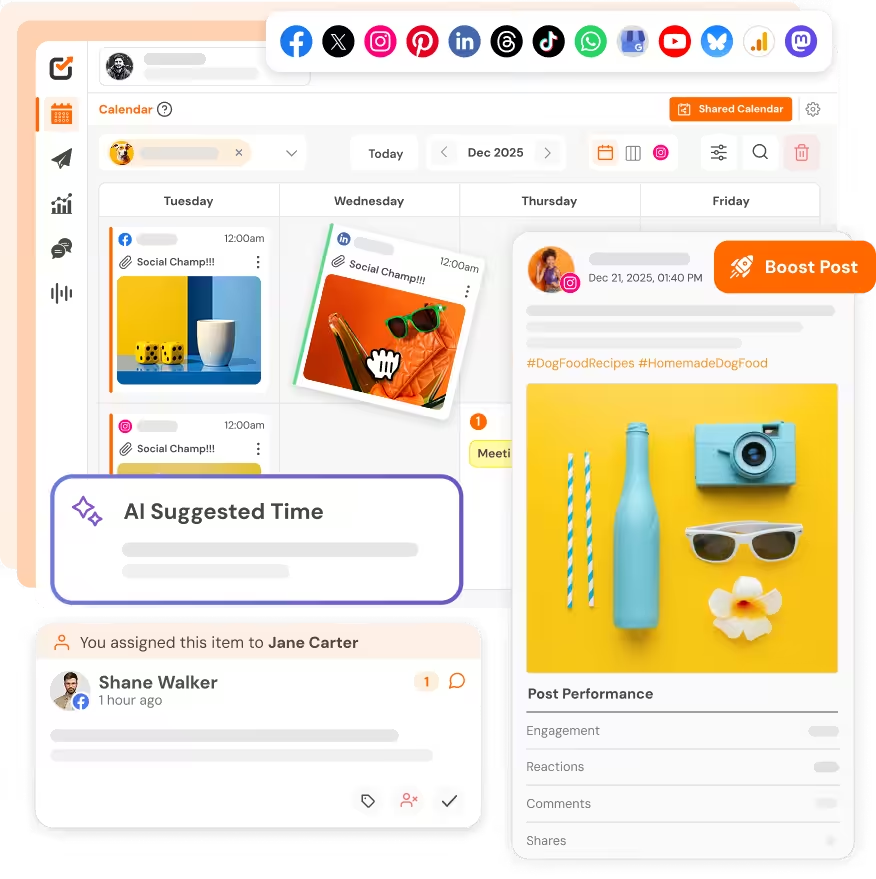
Timing on TikTok is about catching your audience when they are in a discovery mindset. While general data suggests peak engagement often happens between 2 p.m. and 6 p.m. local time, your specific followers may have different habits. Social Champ simplifies this by providing an AI-powered best time to post feature, which analyzes your historical performance to suggest the exact windows when your audience is most likely to interact with your videos.
Social Champ’s Best Time to Post
Ready to Own the FYP?
Emerging TikTok Trends Hidden in the Data
By analyzing current performance shifts, we can identify several forward-looking trends that are already reshaping how users interact with content.
-
The Evidence Economy: Intent Over Impulse
In 2026, the era of pure impulse buying is cooling. Data shows that 81% of users now use TikTok to compare and validate products through real-life usage videos before committing to a purchase.
- The Shift: Users are moving from “I want that” to “Prove to me this works.”
- Insight: Brands that prioritize unfiltered demos and long-term result videos over flashy 5-second ads will see higher conversion. Intent-based shopping is replacing pure discovery.
-
Radical Honesty and #TheGreatLockIn
TikTok’s own 2026 forecast highlights a surge in #TheGreatLockIn (with over 648,000 posts), a trend where users publicly commit to disciplined self-improvement goals.
- The Shift: Influencers are moving away from “Main Character Energy” (which feels performative) toward “Lock-In” content that focuses on productivity, hygiene rituals, and career transparency.
- Insight: There is a growing demand for “Reali-TEA”, radical honesty where creators share the “loud cracking” of their boundaries and the messy reality of their daily routines.
-
Search as a Curiosity Detour
Discovery on TikTok is no longer a straight line. Users are increasingly hopping out of their For You feeds to explore the comments and search bar, treating TikTok as a journey of discovery rather than a destination for answers.
- The Shift: TikTok search is evolving into “Curiosity Detours,” where one video leads to a search query that leads to a deep dive into a niche subculture.
- Insight: SEO for TikTok is no longer just about keywords; it’s about providing “unexpected answers” that keep a user down a rabbit hole of your brand’s ecosystem.
-
AI as a Creative Amplifier, Not a Replacement
While AI content is everywhere, the 2026 data indicates a pushback against uncanny valley perfection. TikTok now emphasizes that AI should fuel the data while human instinct sets the direction.
- The Shift: Tools like TikTok’s Symphony Creative Studio are being used to scale human-led ideas rather than replace them.
- Insight: Successful creators in 2026 use AI to automate the boring parts of production (like resizing or subtitling) but keep their specific, quirky human “tastemaker” voice as the primary draw.
Common Mistakes When Using TikTok Stats (And How to Avoid Them)
Data is a powerful tool, but it can also be a massive distraction if you are looking at the wrong numbers. In 2026, the biggest mistake marketers make isn’t ignoring the data; it is misinterpreting it. Here is how to avoid the common traps that lead to stagnant growth and wasted ad spend.
-
Misinterpreting Engagement: The Vanity Metric Trap
Many brands still treat views and likes as the ultimate indicators of success. However, on TikTok, these are often just vanity metrics. A video can go viral with 1 million views, but result in zero profile visits or shares.
Look at the save-to-view and share-to-view ratios. In 2026, a share is worth ten likes because it signals that your content is valuable enough to be used as a social currency.
-
Ignoring Niche Data in Favor of Global Averages
Relying on global TikTok statistics for your specific strategy is a recipe for mediocrity. Just because the best time to post globally is 2 p.m. to 6 p.m. doesn’t mean your specific community of late-night gamers or early-morning fitness enthusiasts is online then.
Stop benchmarking against the entire world and start benchmarking against your subculture. Use tools like Social Champ to isolate your specific audience demographics.
-
Copying Trends Blindly Without Context
The fastest way to look out of touch is to jump on a trend three days late or without a unique angle. Data shows that creative fatigue sets in faster on TikTok than on any other platform.
Don’t just look at what is trending; look at why it is trending. Use the data to identify the underlying sentiment. If a specific audio is peaking, check the TikTok Creative Center to see if the trend is already on the decline. If you can’t add a perspective that is 20% different from the original, skip it.
-
Not Testing Content Pillars
Many creators find a single format that works and then run it into the ground until their engagement collapses. They fail to use their stats to experiment with new pillars of content. Adopt a 70/20/10 testing rule. Spend 70% of your time on proven content, 20% on variations of that content, and 10% on experimental formats that have nothing to do with your current vibe.
Stop Letting Viral Moments Slip Away!
Conclusion
With TikTok’s evolution into a powerful search engine and a global e-commerce giant via TikTok Shop, the app has redefined how we discover, learn, and buy. Success on the platform today requires a delicate balance of data-driven precision and creative authenticity.
Whether you are leveraging the high engagement rates of micro-influencers or optimizing your posting schedule through tools like Social Champ, the goal remains the same: provide value first and sell second. The numbers show the opportunity is there; now it is up to you to create the content that captures it.









Madison Taylor
Fantastic job! Your breakdown of TikTok stats and analytics for 2024 is incredibly informative and insightful