Have you ever spent hours running ads on one platform and wondered why no one’s noticing?
You post on social media, run ads, and even try email campaigns, but see no results. This is why multichannel advertising is important for every business.
Short Summary
- Multichannel advertising helps you reach your audience across platforms instead of relying on a single channel.
- A clear multichannel strategy keeps your messaging consistent and easy to recognize.
- Combining digital and traditional channels improves visibility and brand recall.
- Social media plays a key role in supporting and connecting all campaign efforts.
- The right tools make multichannel advertising easier to manage and scale.
In fact, 73% of consumers prefer to shop through more than one channel, and a multichannel approach can boost engagement by up to 80% compared to single-channel efforts.
So, how can you adapt a smart multichannel strategy to run your ads everywhere your audience spends time?
In this blog, I’ll share how you can make it happen, avoid mistakes, and use free social media scheduling tools to simplify your campaigns.
Let’s get started.
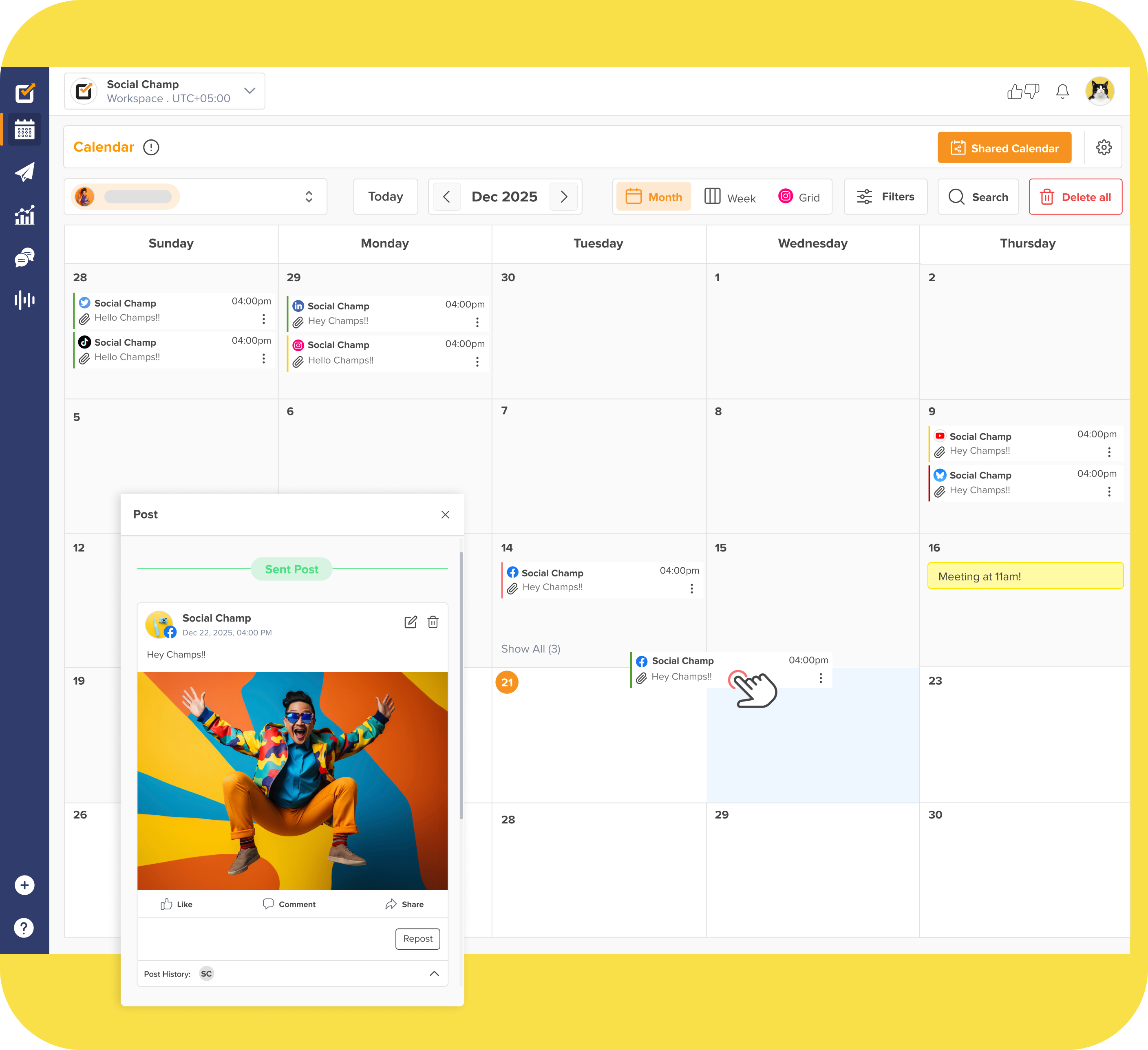
Schedule posts, track engagement, and monitor campaigns across multiple channels. Sign up for Social Champ and see results faster.
What Is Multichannel Advertising and Why It Matters
If you run a business or brand, you may know how your audience jumps between devices, apps, and even offline spaces.
One moment they’re scrolling Instagram, the next they’re watching a TV ad or checking email.
Considering this, it has become important for every business to learn multichannel advertising this year.
If I describe it in simple words, it means running campaigns across multiple paid channels online and offline, to meet your customers wherever they are.
Understanding Multichannel Advertising
At its core, multichannel advertising is about visibility and presence. It’s not enough to run ads on just one platform.
Your audience searches for the products and brands on social media, search engines, email, mobile apps, and even on TV, radio, or events.
If you adopt a multichannel strategy, it ensures your message reaches your audience consistently, no matter where they are.
Why It Matters for Your Business
Let’s say someone sees your product on Instagram, then it appears again on Google search results, and then makes a purchase after seeing a display ad.
This type of multichannel marketing campaign allows you to know which step worked.
When you present on multiple channels, it means you’re increasing your chances of connecting and making a real impact.
Meeting Customers Where They Are
You know that your audience doesn’t scroll only one platform, especially when they’re making a purchase.
If you follow a multichannel campaign management approach, you can guide your audience through the journey naturally.
No matter if you run a multi channel business or are helping a franchise grow, being where your audience spends time is no longer optional; it’s how you stay relevant.
Featured Article: Social Media Crisis Management: Strategy, Tools & Recovery
Key Benefits of Multichannel Advertising
Have you ever tried running ads on just one channel? If yes, then you may noticed how easy it is to miss opportunities.
You know that your audience isn’t confined to a single platform, and your marketing shouldn’t be either.
A multichannel strategy brings several clear benefits that can make your campaigns more effective.
-
Increased Reach and Visibility
When you present on multiple platforms, your brand gets more visibility. People interact with content differently, such as some scroll social media, others check email, and some watch TV.
A multi channel marketing campaign ensures your message pops up wherever your audience spends time, helping you stay top of mind.
-
Higher Engagement
If you give consistent messages across platforms, your audience is more likely to connect.
A single post has chances of getting ignored, but when you run coordinated campaigns, it creates familiarity and trust.
This means more clicks, shares, and conversations about your brand.
-
Better Targeting
When you run ads on multiple channels, it allows you to reach different segments of your audience with messages that matter to them.
Social ads, search campaigns, and email all let you tailor content based on behavior, interests, and past interactions.
And when you follow multichannel advertising, your ads feel relevant rather than random.
-
Stronger Brand Recall and Conversion
If you maintain consistency across all platforms, it makes your brand memorable to your audience.
When people see your product multiple times, there are greater chances of them taking action, no matter if it’s signing up, making a purchase, or sharing your content.
For businesses of all sizes, from multi channel business owners to franchise marketers, this can make a real difference.
I recommend that you combine these benefits into a smart online marketing strategy, so you can make sure your every channel works together rather than just competing.
Tip of the Day!
Before launching a full multichannel advertising campaign, start with two strong channels and get them right. Once messaging and timing feel consistent, expand to more platforms.
Common Challenges in Multichannel Advertising
When you run a multichannel strategy, it sounds great in theory, but in practice, it can get complicated.
There are a lot of marketers who find themselves struggling with multiple platforms, different content formats, and separate analytics.
If this sounds similar to you and you’ve ever felt overwhelmed trying to track what works and what doesn’t, you’re not alone.
-
Coordination Across Channels
You may know that one of the biggest headaches is to make sure every channel works together.
If your social ads, email campaigns, and search ads aren’t aligned, your audience might see mixed messages.
This inconsistency can confuse customers and weaken your brand. A dual channel marketing approach can help, but it requires careful planning and monitoring.
If you use cross channel marketing techniques, you can make sure all of your platforms complement each other instead of competing for attention.
-
Data Silos and Attribution
Have you ever wondered which platform actually drove a sale?
Each channel has its own analytics, and it’s easy to lose track. If you don’t have a unified view, you might misallocate your budget or miss opportunities to improve campaigns.
For this, you can set up a centralized reporting system or use marketing automation tools to see the full picture.
-
Maintaining Consistent Messaging
From short social media posts to detailed emails or TV, each platform has its own style and format.
It’s very hard to keep your brand consistent while adapting content, and many businesses often struggle with this, which leads to weaker engagement.
-
Budget Allocation
I know it feels confusing to decide how much to spend on each channel when social, search, email, TV, and events all have different costs and expected results.
If you don’t have a clear plan, you might overspend on low-performing channels or underinvest in high-performing ones.
Manage your social campaigns alongside your multichannel advertising plan. Social Champ helps you stay consistent without extra effort.
Digital vs Traditional Channels in Multichannel Advertising
Let me tell you my experience when I started managing campaigns. I used to focus only on social media channels, which felt modern and measurable.
But after sometime, I realized that while my online ads were performing okay, I was missing a huge chunk of the audience who weren’t spending much time online.
This is where I felt the need to learn the value of combining digital and traditional channels in a multichannel strategy.
Digital Channels
We all know about digital channels that include social media, search engines, email, mobile apps, connected TV, and SMS.
What I love about these is the precision. I can target specific segments, test creatives in real time, and see instant results.
For example, you can run a social campaign alongside a Google search ad help you reach people at the exact moment they are looking for your product, which supports an effective consumer marketing strategy.
Traditional Channels
And when it comes to traditional channels, they cover TV, radio, print, outdoor ads, and in-person events.
Earlier, I used to hesitate to invest in traditional channels and thought everything needed to be digital.
But when I ran a small TV spot during a local event, it opened doors I hadn’t imagined. People started recognizing our brand offline and then searching for us online.
So, if you incorporate traditional or event marketing strategies into the plan, it can help tie offline efforts back to your digital campaigns.
Combining Digital and Traditional
And you know when the real breakthrough came? That’s when I blended both approaches.
Someone might see our product on a poster, then notice a social post later, and finally take action after receiving an email reminder.
This dual channel marketing approach can make your campaigns feel like a conversation rather than a random ad, and the results speak for themselves.
Making It Work
The key is to stay consistent. You should keep your messaging the same, even if the format changes.
That way, every touchpoint strengthens your multichannel campaign management efforts and leaves a lasting impression.
Featured Article: Best Social Media Sharing Tools: Comparison, Features, and Smart Choices
Leveraging Social Media in Your Multichannel Strategy
Let me be honest with you. Social media was the first channel where I truly understood the power of multichannel advertising.
That’s not because it was flashy, but the real reason was that it connected everything else.
If you use social media in the right way, it doesn’t sit alone, but it supports search ads, strengthens email campaigns, and keeps your brand visible between bigger touchpoints.
Why Social Media Plays a Central Role
Facebook, Instagram, LinkedIn, and TikTok are the social media platforms where conversations happen.
People scroll, compare, comment, and share. When you plug social into a broader multichannel strategy, it becomes the glue that holds campaigns together.
You can do it in a way that runs TV or event ads and then use social media channels to remind people what they saw earlier.
That repeat exposure builds familiarity fast and supports word of mouth marketing without forcing it.
Matching Social Content With Campaign Goals
Social media works best when each post has a clear role in your multi channel marketing campaign.
Short videos help with awareness. Carousel ads explain features. Retargeting ads bring people back when they hesitate.
Instead of pushing random posts, you should think about how social supports your wider goals.
This approach works especially well for franchise marketing, where brand consistency matters but local engagement still drives results.
Keeping Social Campaigns Consistent and Manageable
Now here starts the real struggle. I know it’s hard to post across platforms, which takes time, and consistency often slips.
I’ve found that using social media marketing management tools removes that friction.
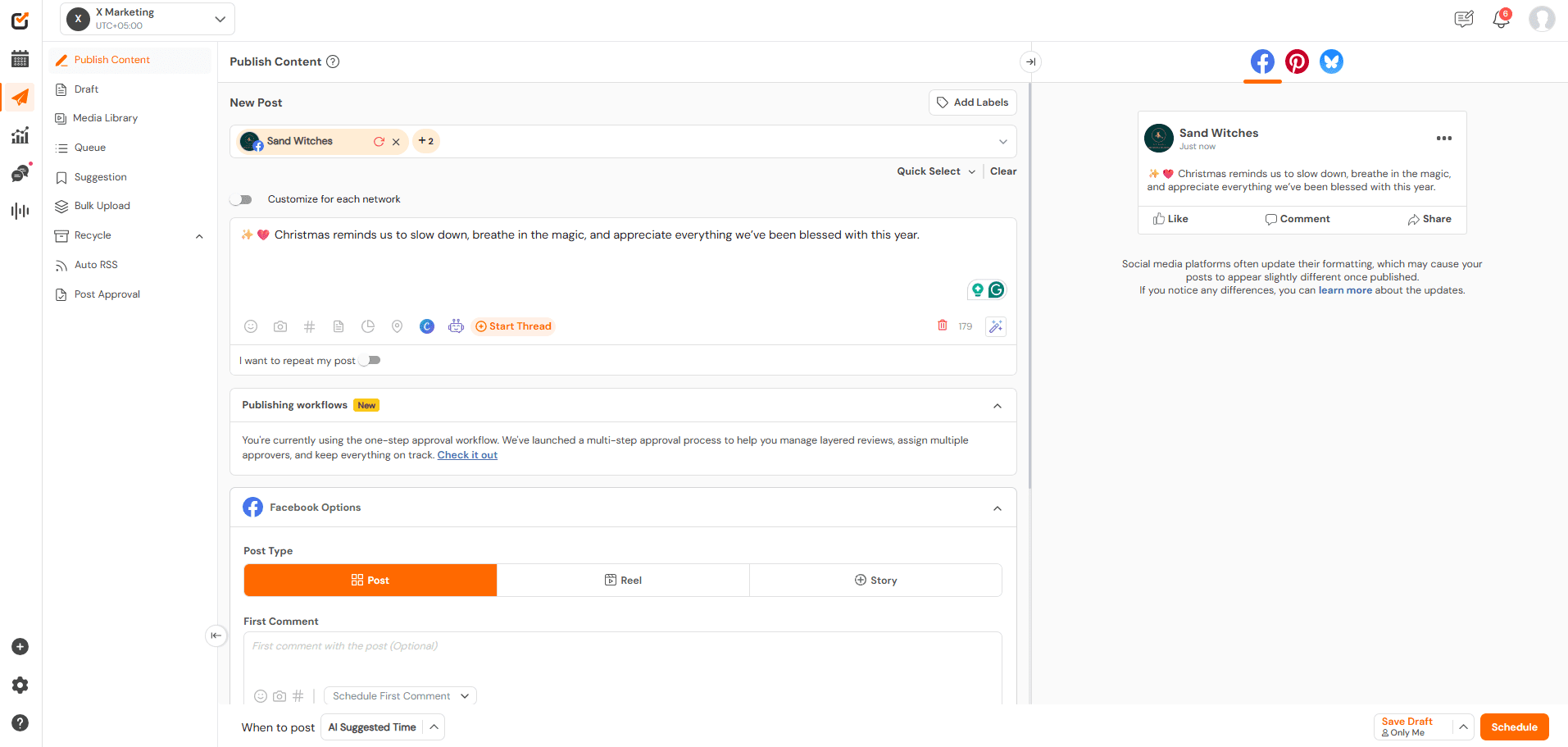
Here, I recommend that you use Social Champ to schedule your posts across channels, analyze engagement, and keep your messaging aligned with the rest of your campaign plan.
It does not replace strategy. It supports it. That distinction matters.
Social Media as a Long-Term Asset
When social media supports ads, email, and offline campaigns, it stops feeling like extra work. It becomes part of a system.
Over time, this approach saves effort and helps your multi channel business stay visible without burning out your team.
Quick Tip!
If your social posts feel rushed, your multichannel strategy will feel scattered. Planning social content even one week ahead can improve consistency across all channels.
Schedule posts, track engagement, and manage multiple platforms from one dashboard. Try Social Champ and simplify your workflow.
Building an Effective Multichannel Advertising Campaign
Like every other marketer, I made the mistake when I first tried multichannel advertising.
I added more channels without a clear plan. More ads didn’t mean better results.
What changed everything was building a campaign with intention, not noise. A strong multichannel strategy needs structure.
-
Identify Your Audience and Channels
The first step to building an effective multichannel advertising campaign is to identify your audience and channels.
First, ask yourself where your audience actually spends time, as some people respond better to search and email, while others live on social or attend industry events.
-
Set Clear Goals and KPIs
Every channel should serve a purpose. One may drive awareness. Another may bring leads. Another may close sales.
I always recommend defining your success early. Are you aiming for signups, demo requests, or traffic?
When your goals are clear, you can keep your multichannel campaign management focused and measurable.
-
Create Consistent Messaging
It’s not important to make your ads look the same everywhere. Instead, they should sound like the same brand.
I’ve seen campaigns fail simply because the tone changed across platforms.
You can think of it like a conversation. No matter where someone hears from you, the message should feel familiar.
This matters even more when you mix ads with multi channel content marketing efforts.
-
Allocate Budgets With Purpose
You don’t have to spend equally on every channel. Some channels test ideas while others scale what works.
You can start small, watch result, then shift the budget toward the channels that support your multichannel marketing strategy.
-
Test, Learn, and Adjust
It’s not necessary that your campaign is perfect on day one. That’s why I recommend you test headlines, formats, and timing to understand what your audience responds to.
This mindset turns your campaign into a system, not a gamble. It also helps your multi channel business grow without constant guesswork.
When all these steps work together, multichannel advertising stops feeling complex. It starts feeling controlled.
Tools and Technology for Multichannel Advertising
When your multichannel advertising efforts start to grow, it becomes challenging to manage everything manually.
What I’ve learned is that if you switch between dashboards, spreadsheets, and ad platforms, it will eat your time and cause mistakes.
But if you use the right tools, they can make a huge difference.
Ad Management and Channel Tools
Most campaigns rely on native ad platforms like Google Ads or social ad managers.

These tools help you control spend, targeting, and creatives for each channel. They work well on their own, but the real problems start when campaigns expand across channels.
If you don’t have a shared view, your multichannel campaign can feel fragmented. This is where planning and coordination matter more than the number of tools you use.
Automation and Analytics
We all know that automation helps reduce repetition, and analytics helps you see what actually works and what doesn’t.

And if you combine them, together they give you clarity.
Here, you can go for SaaS tools to automate repetitive tasks, track engagement, and keep campaigns aligned.
And when you pair the tools with a clear multichannel marketing strategy, you can spot patterns instead of guessing outcomes.
Managing Social Media Within a Larger Campaign
Social media often connects all channels. It supports ads, email campaigns, and even offline promotions.
And when you manage it all separately, it can break that flow.
I recommend using Social Champ to schedule your posts, monitor engagement, and analyze results across channels.
This way, you can easily connect your social efforts with your multi channel marketing campaign instead of treating them as isolated tasks.
Your multichannel strategy works better when social content stays consistent. Social Champ keeps your messaging on track.
Conclusion
If there’s one takeaway from this guide, it’s this: multichannel advertising works best when it feels intentional, not overwhelming.
Your audience doesn’t stick to one platform, and if you expect them to find you in just one place, you’re at a risk that you shouldn’t take.
I’ve seen how much smoother campaigns run when every channel supports the next, instead of working in silos.
If you have a clear plan, consistent messaging, and the right tools, you can manage multiple channels more easily.
At the end of the day, multichannel advertising isn’t about doing more. It’s about showing up in the right places, at the right time, with a message people recognize and trust.