I’m convinced some brands have a secret alarm that goes off every quarter whispering, “Time to reinvent your entire personality.”
I swear, there’s no buildup and no strategy. The branding just does a complete 180.
On Monday, it’s: “We deliver enterprise-grade solutions.” While on Tuesday, it goes: “slay queen, this integration hits different 💅.”
Sir, your audience is accountants.
Short Summary
- Main Character Syndrome is when brands stop talking to their audience and start performing at them.
- Trying too hard on social media doesn’t just look bad; it structurally kills trust.
- Consistency beats virality every single time when it comes to long-term brand growth.
- The fix is to build voice systems, not to chase trends harder.
- Social Champ helps you stay on-brand across platforms without the personality crisis.
That’s Main Character Syndrome! It’s when brands stop connecting and start auditioning. Every post becomes a desperate grab for relevance, every trend becomes a personal dare.
And you know the worst part? Audiences don’t even have to think about it. Inauthenticity just feels weird, like your dad discovering hashtags.
In this blog, I’m breaking down why it happens, why it backfires, and how to actually stay relevant without becoming everyone’s favorite cringe example.
Be the Brand That Doesn't Try Too Hard.
What Is Main Character Syndrome in Branding?
Main Character Syndrome is when a brand starts treating social media like a personal stage, such as chasing trends, forcing relevance, and making every post about being seen rather than being useful. It’s the branding equivalent of making someone else’s story about you.
The Core Difference: Audience-Centric vs Brand-Centric
| Feature | Main Character Brand | The Guide Brand (The Winner) |
|---|---|---|
| Primary Goal | Optimization for Applause | Optimization for Trust |
| Content Hook | “Look at what we did/said.” | “Here is how you win/solve this.” |
| Trend Usage | Jumping on every audio for reach. | Only using trends that reinforce the voice. |
| Outcome | High impressions, zero brand recall. | Sustainable growth and high conversion. |
Where the Term Comes From
The phrase started in internet culture. You’ve probably seen it on TikTok; it describes someone who moves through life like they’re the protagonist of a movie. Every situation revolves around them. Every interaction is part of their narrative.
Now, is Main Character Syndrome real in a clinical sense? Not exactly. But psychologists recognize the patterns behind it, which include protagonist bias, the spotlight effect, and inflated self-referential thinking. It’s real behavior, just not a diagnosis.
In branding, though? It looks slightly different and arguably worse, because there’s usually a marketing budget behind it.
What “Trying Too Hard” Actually Looks Like on Social Media
I’ve noticed it tends to show up in very specific, very recognizable ways:
- The Overnight Personality Transplant: Corporate tone on Monday, “hey bestie” energy by Wednesday.
- The Compulsive Trend Participant: Every trending audio, every meme, every moment is used opportunistically by the brand. As if skipping one will delete them from existence.
- The Protagonist Inserter: Shoehorning the brand into cultural conversations it has zero organic connection to.
- The Audience Amnesiac: Targeting a TikTok demographic when the actual buyers are mid-career professionals who’ve never heard the word “slay.”
- The Effort Exhibitionist: Content where you can physically feel the team straining to be clever. That strain? Audiences read it as inauthenticity instantly.
- The AI “Vibe” Hallucination: The new cringe isn’t just human effort, it’s unedited AI. It’s when brands let a model generate “trendy” captions without a human filter. If your brand sounds like a robot’s interpretation of a teenager, your audience will sniff out the lack of soul in milliseconds.
Here’s what I think the Main Character Syndrome meaning really comes down to in branding. It’s not about being active or present on social media. It’s about confusing performance with connection.
Brands that are trying too hard are optimizing for applause when they should be optimizing for trust. And those are two very different goals.
But what actually drives this behavior in the first place? The answer is more structural than you’d think.
Quick Check:
If your brand’s social media sounds nothing like the actual customer experience, that’s not creativity. That’s a personality crisis with a content calendar.
The “How Do You Do, Fellow Kids?” Problem: Why Brands Try Too Hard
Here’s something I’ve learned. The problem almost never starts with the social media manager. It starts with the system around them.
The Pressure Cooker Nobody Talks About
Brands don’t try too hard because their teams are incompetent. They try too hard because everything around them demands it. Here’s what social media managers are dealing with:
- The Duolingo Domino Effect: One brand goes “unhinged,” and it works. By Friday, every CMO has forwarded the screenshot with “Why aren’t we doing this?” Trying too hard becomes a directive, not a choice.
- Metrics That Reward Spikes Over Stability: When your team is measured on engagement and follower growth, they’re incentivized to chase peaks. Consistency produces steady lines. Trying too hard produces spikes followed by valleys that never make it into the report.
- Executive Panic Scrolling: A CEO sees a competitor go viral at 9 PM. By 9 AM, there’s a Slack message: “We need something like this by Friday.” An entire content strategy was scrapped for a reaction.
Worth Remembering:
Trying too hard is rarely a creative problem. It’s usually a structural and incentive problem wearing a creative costume.
Why Audiences Instinctively Punish Effort
Here’s where it gets interesting. In most areas of life, effort is rewarded. But on social media, visible effort reads as desperation.
-
Cognitive Dissonance in Branding
When your tweets sound like a chaotic bestie but your support emails read like a legal disclaimer, audiences feel the mismatch instinctively. That distrust registers before they can even name it.
-
The Uncanny Valley of Brand Voice
Audiences detect forced branding the way they detect bad CGI. Not consciously, just a gut feeling that something’s off, which may just be using slang slightly wrong or catching a trend 72 hours late.
-
Parasocial Betrayal
Followers who connected with your established voice feel genuinely alienated when you change it overnight. You broke a contract they didn’t know they’d signed.
These are the social media branding mistakes that quietly kill trust while everyone’s busy celebrating an impressions spike.
Enough theory. Let’s see what trying too hard actually looked like in 2026, because the examples are spectacular.
Featured Article: Why Your Brand Image on Social Media Is Important for Your Business
Rating 2026’s Most “Trying Too Hard” Brand Moments
Alright, let’s play a game.
I’ve spent enough time auditing social feeds to notice that brands trying too hard tend to fall into very specific archetypes. I’ve turned them into a rating system. You can think of it as a personality quiz your brand didn’t ask for.
These aren’t callouts of specific companies. They’re just my opinion based on patterns and archetypes. And if your brand feels seen by any of them… well, that’s your sign.
Here’s how we’re scoring:
- Try-Hard Score (1–10): How visible is the effort?
- Brand-Fit Score (1–10): How well does this actually match the audience?
- Cringe Factor (1–10): How uncomfortable does it make people?
-
The Corporate Baddie Overnight
You know the type. A B2B company that’s spent years building trust through whitepapers and case studies suddenly wakes up and decides it’s in its “era.” The LinkedIn bio gets a 💅.
Carousels start looking like a skincare brand. Captions say things like “cybersecurity but make it fashion.”
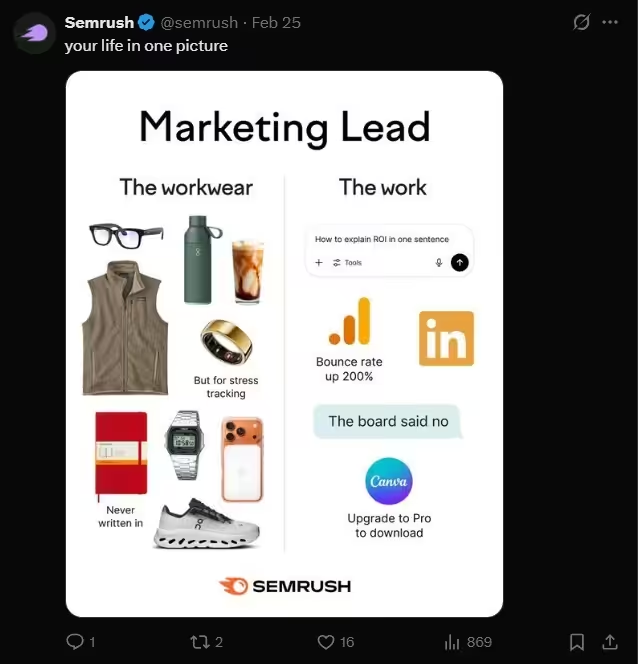
A B2B Software Brand Posting Memes on X If this sounds like your brand, your audience didn’t ask for a personality. They asked for reliability. When the distance between your product experience and your social persona is this wide, effort becomes the only thing people notice.
Try-Hard Score Brand-Fit Score Cringe Factor 9/10 2/10 8/10 -
The Meme Page With a Logo
If your brand’s Instagram has turned into a meme dump where the product shows up once every 30 posts, this one’s for you.
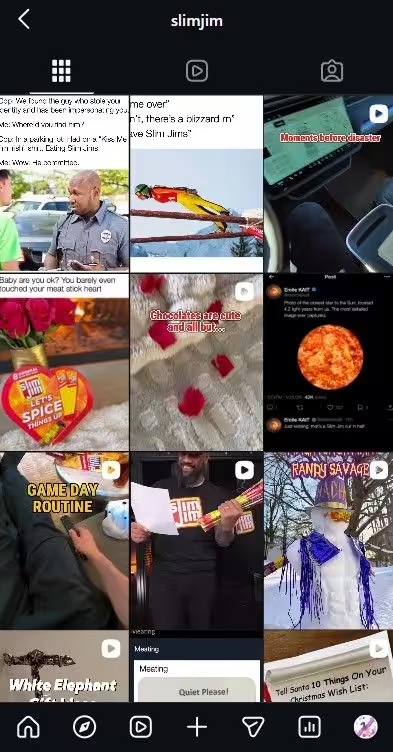
A Snack Brand’s Instagram Grid Looking Like a Meme Page Sure, followers grow. But they’re following you for laughs, not for what you sell. The second you post a product carousel, the silence is deafening.
The deeper problem is that you’ve built an entertainment audience, not a buying audience. Virality without purchase intent is just a vanity metric in a trench coat.
Try-Hard Score Brand-Fit Score Cringe Factor 7/10 3/10 5/10 -
The Gen Z Translator (Running 6 Months Late)
If your brand is still captioning posts with “no cap” or “it’s giving” in 2026, we need to talk. By now, those are basically “vintage.”
If you’re forcing the latest brain-rot terminology or trying to “slay” in financial services, you aren’t being relatable, you’re being a parody.
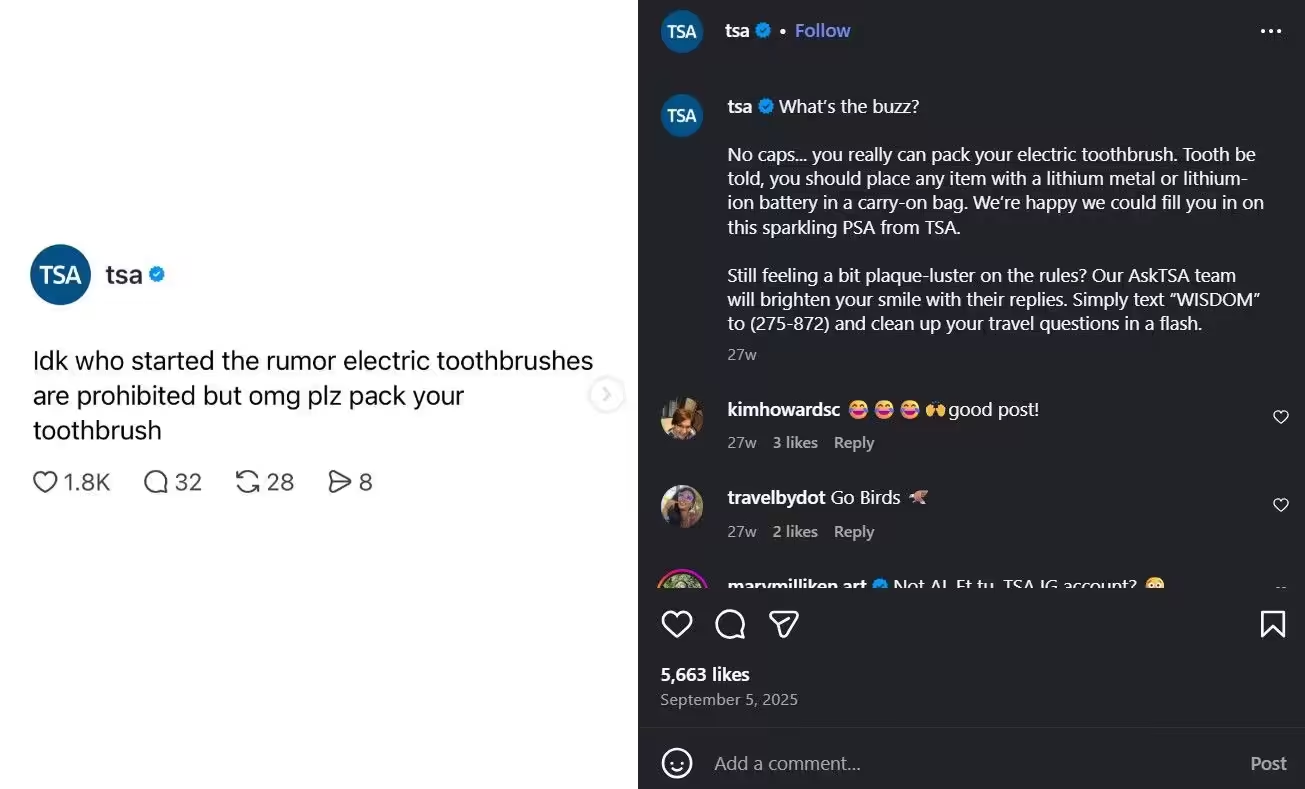
Government Agency Using Gen Z Slang in an Instagram Caption The 2026 Reality:
Speak to what your audience values, not the vocabulary they used three months ago on a trending audio. True connection doesn’t require a dictionary of slang; it requires a pulse.
Try-Hard Score Brand-Fit Score Cringe Factor 9/10 2/10 9/10 -
The Grief-To-Product Pipeline
If your brand has ever posted a heartfelt, somber statement about a global crisis… and then followed it up four hours later with a product promo, you already know this is about you.
The tonal whiplash tells your audience exactly what they suspected: the serious post was performative. Not every moment needs your logo. Sometimes, the most powerful brand tone example is knowing when to say nothing at all.
This kind of tonal mismatch isn’t new. One of the most well-known examples is the Pepsi Kendall Jenner ad featuring Kendall Jenner. It showed how quickly audiences reject brands that insert themselves into serious cultural moments in a way that feels performative rather than meaningful.
Try-Hard Score Brand-Fit Score Cringe Factor 10/10 1/10 10/10 -
The Unhinged Copycat
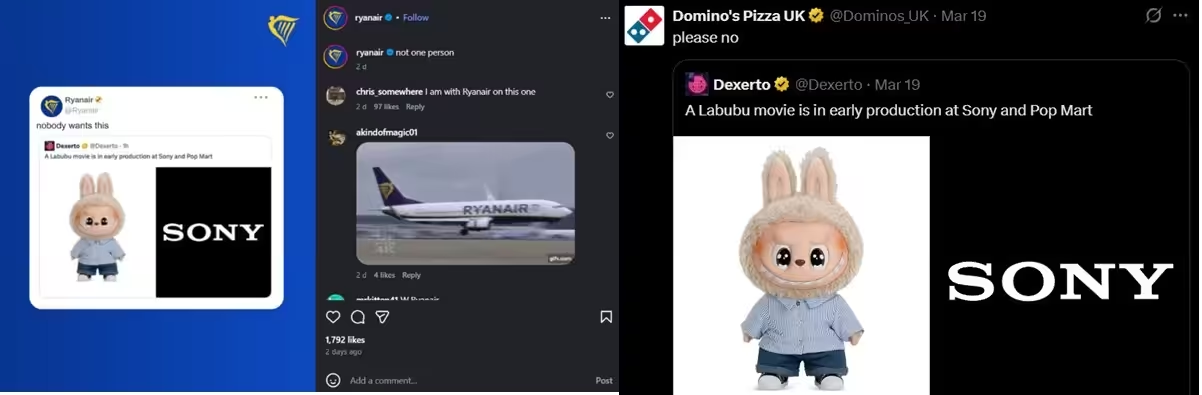
An Example of a Brand’s Posting Irrelevant, “Copy Cat” Posts If your B2B brand recently adopted a “chaotic” social voice because you saw a fast-food chain pull it off, pause. “Unhinged” works when your product is a $5 burger and your audience is scrolling during lunch. It does not transfer to six-figure contracts and 9-month sales cycles.
Copying a strategy without understanding the audience permission behind it is Main Character Syndrome at its core.
Another brand’s playbook only worked because of their conditions, like audience, price point, and history. If those don’t match yours, the tactic won’t either.
Try-Hard Score Brand-Fit Score Cringe Factor 8/10 1/10 7/10 If you recognized your brand in any of these, don’t panic. The point isn’t to shame, but it’s to diagnose. And the fix starts with understanding why consistency matters more than any of these stunts ever could.
Pro Tip:
The 70/20/10 Rule for 2026. To avoid a personality crisis, audit your feed against this ratio:
- 70% Core Content: Pure brand voice, solving problems.
- 20% Adaptive Content: Trends filtered through your specific lens.
- 10% Experimental: New formats (like AR or AI-interactive posts).
- Never let the 10% tail wag the 70% dog.
Why Brand Voice Consistency Actually Matters
I know “consistency” isn’t exactly the word that gets marketing teams excited. But here’s what I’ve learned: the brands that win long-term are almost never the loudest. They’re the most predictable.
And I mean that as a compliment.
Trust Is Built Through Predictability, Not Personality
Consumer trust doesn’t come from being relatable or entertaining. It comes from brand voice consistency, showing up the same way, every time, until your audience develops an unconscious expectation of who you are.
Psychologists call it the mere exposure effect. Familiarity creates preference. Preference creates trust. Trust creates conversions.
The counterintuitive part? Predictability feels boring from the inside. From your audience’s perspective, it feels safe. And safe is what makes people spend money.
Every time a brand resets its personality, the trust clock goes back to zero.
The Real Insight:
Every time your brand resets its personality, the trust clock goes back to zero. Familiarity builds preference. Preference builds revenue. There are no shortcuts.
Brand Recall Is a Voice Problem, Not a Visual One
Most brand recall conversations focus on logos and color palettes. But on social media, where content flies by in a scroll, audiences recognize how you speak before they ever notice your logo.
That’s tonal recall. And if your voice shifts every quarter, corporate in Q1, unhinged in Q2, meme-lord by Q4, you’re resetting that memory every single time.
Consistency Actually Converts
This isn’t just theory. When every touchpoint feels like the same brand, it reduces cognitive friction across the entire funnel. The jump from follower to customer feels smaller because the experience feels coherent.
Research backs this up: brand consistency increases companies’ revenue by 23% to 33%. This means that consistency is not a creative limitation; it’s a commercial multiplier.
The brands trying too hard are literally paying to undermine the mechanism that drives conversion.
So the goal isn’t to stop being creative. It’s to stop trying so hard to be something you’re not.
Think Your Brand Might Be Trying Too Hard?
How to Stop Trying Too Hard (Without Becoming Boring)
Here’s the good news. There’s a middle ground between “cringe” and “corporate.” It just requires a bit more intention than most brands are used to.
Define Tone Boundaries, Not Just Tone
Most brand voice guides are just lists of adjectives like “friendly, bold, innovative.” That’s a mood board, not a content strategy for brands.
What actually works? Define what you’ll never sound like. Create a “Never / Always” document with specific phrasing for real scenarios like product launches, crisis moments, and trending topics. Boundaries prevent trying too hard, better than inspiration ever could.
Build an Audience-Aware Humor Threshold
Not every brand has the same permission to be funny:
- High permission: Food, lifestyle, entertainment
- Medium permission: DTC, SMB SaaS, education
- Low permission: Finance, healthcare, enterprise B2B
My rule of thumb: if your team is debating whether something’s “too much,” it already is.
Not every brand has the same “license to chill.” Use this matrix to see where you stand before hitting ‘publish’ on that meme:
| Industry Type | Permission Level | Content Strategy |
|---|---|---|
| Food, Lifestyle, Entertainment | High | Lean into “unhinged” or chaotic energy; be the entertainer. |
| DTC, SMB SaaS, Education | Medium | Use witty, observational humor to solve user pain points. |
| Finance, Healthcare, Enterprise | Low | Stick to “humanity” and dry wit; avoid “brain-rot” slang. |
The “Should We?” Trend Test
Before jumping on any trend, ask four things:
- Does this connect to our audience or values?
- Are we early enough to feel organic?
- Can we execute it in our voice?
- What’s the worst interpretation?
One “no” means skip it. Another trend will come in 48 hours.
Platform-Adapt, Don’t Platform-Transform
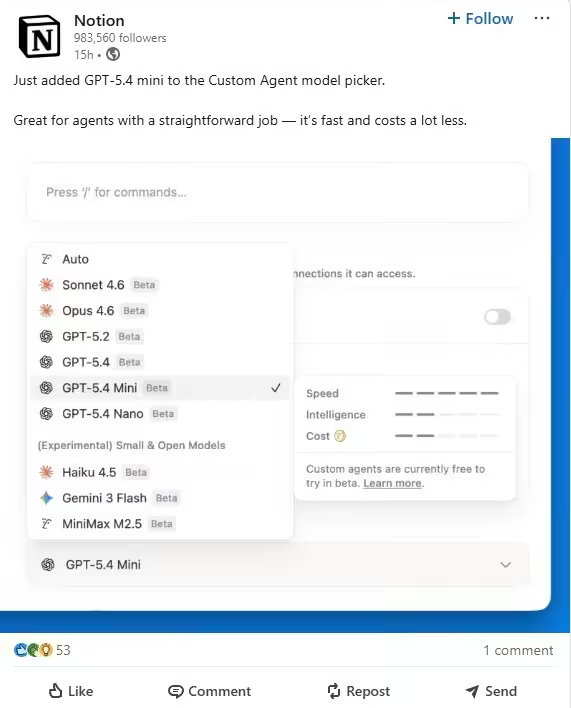
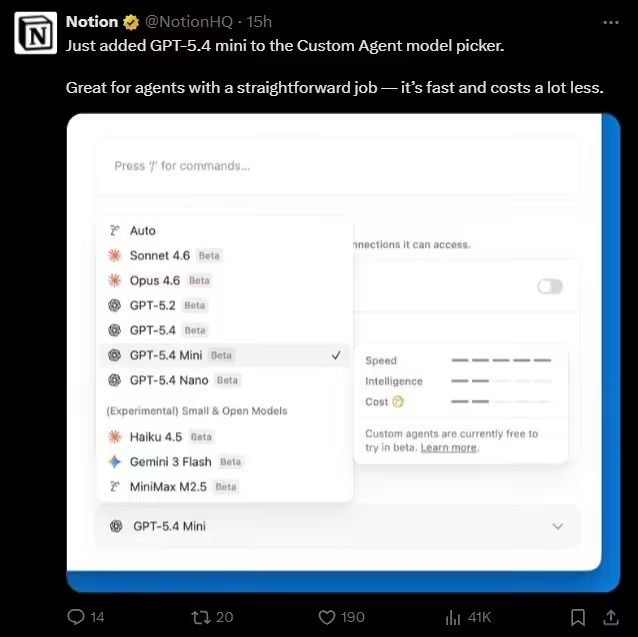
Your voice should be recognizable everywhere, just expressed differently. Think of it this way: you’re the same person at a work dinner and a weekend barbecue. While your volume can change, your personality shouldn’t.
Brands trying too hard on one platform often become unrecognizable on another. And audiences who follow across channels always notice.
This is what consistent branding looks like on different platforms:
The One Rule:
If your team is debating whether a trend is “too much” for your brand, it already is. The cost of skipping a trend is zero. The cost of forcing one is trust.
The Fix: Building a Brand Voice System That Prevents Main Character Syndrome
Knowing what not to do is helpful. But I’ve learned that brands don’t stay consistent through awareness alone. They need a system. I call it The Brand Voice OS, and it has five components:
- Voice Pillars (3–4 max): Not adjectives, behavioral definitions. Instead of “bold,” try: “We state opinions directly but never attack competitors by name.” Specific enough that two different writers produce recognizably similar content.
- Tone Spectrum: Each pillar shifts depending on context. “Bold” in a product launch isn’t “bold” in a crisis. Map the range so your team knows consistent doesn’t mean monotone.
- Content Governance Rules: Who approves tonal shifts? What’s the process for trend participation? Without governance, consistency depends on individual judgment, and that’s exactly how brands end up trying too hard.
- Reference Library: A living document of real posts that nail the voice. New hires, freelancers, and agency partners should be able to produce on-brand content without a lengthy briefing every time.
- Quarterly Voice Audit: Tonal drift is invisible in real-time but obvious in retrospect. A scheduled review catches the slow slide into Main Character Syndrome territory before it becomes a full episode.
That’s the strategic architecture. But executing it consistently across dozens of posts, multiple platforms, and an entire team? That’s where the right tools make the difference between a system that works and a document that collects dust.
How Social Champ Helps You Stay On-Brand (Without the Personality Crisis)
Everything I’ve outlined so far, the Brand Voice OS, tone boundaries, trend filtering, only works if your team can actually execute it consistently.
And in my experience, that’s where most brands fall apart. Not in strategy, but in daily operations.
This is where a platform like Social Champ becomes genuinely useful.
Content Planning and Scheduling
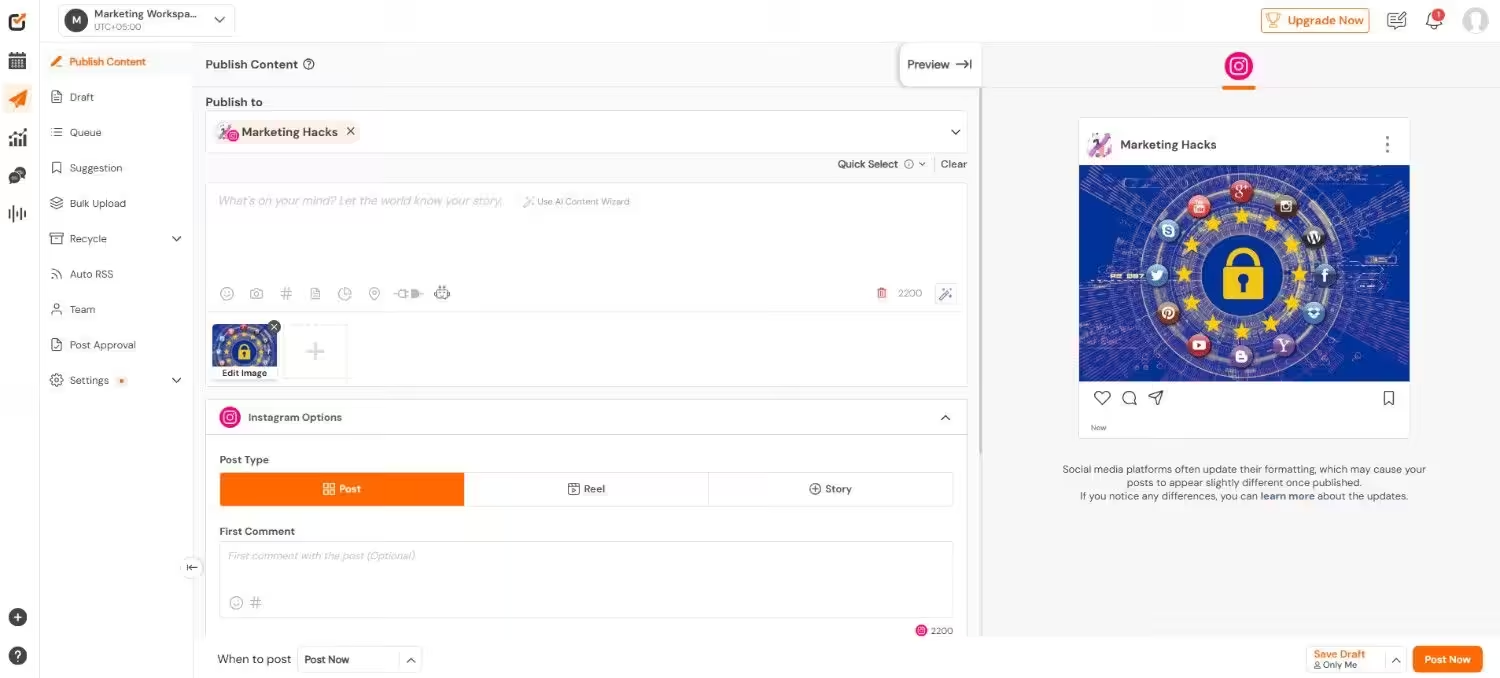
When your next two weeks of content are already planned and scheduled, the temptation to ditch strategy for a trending moment drops significantly.
Reactive posting is how brands end up trying too hard. Pre-planned content keeps you anchored to the system.
AI Suite With Tone Personas
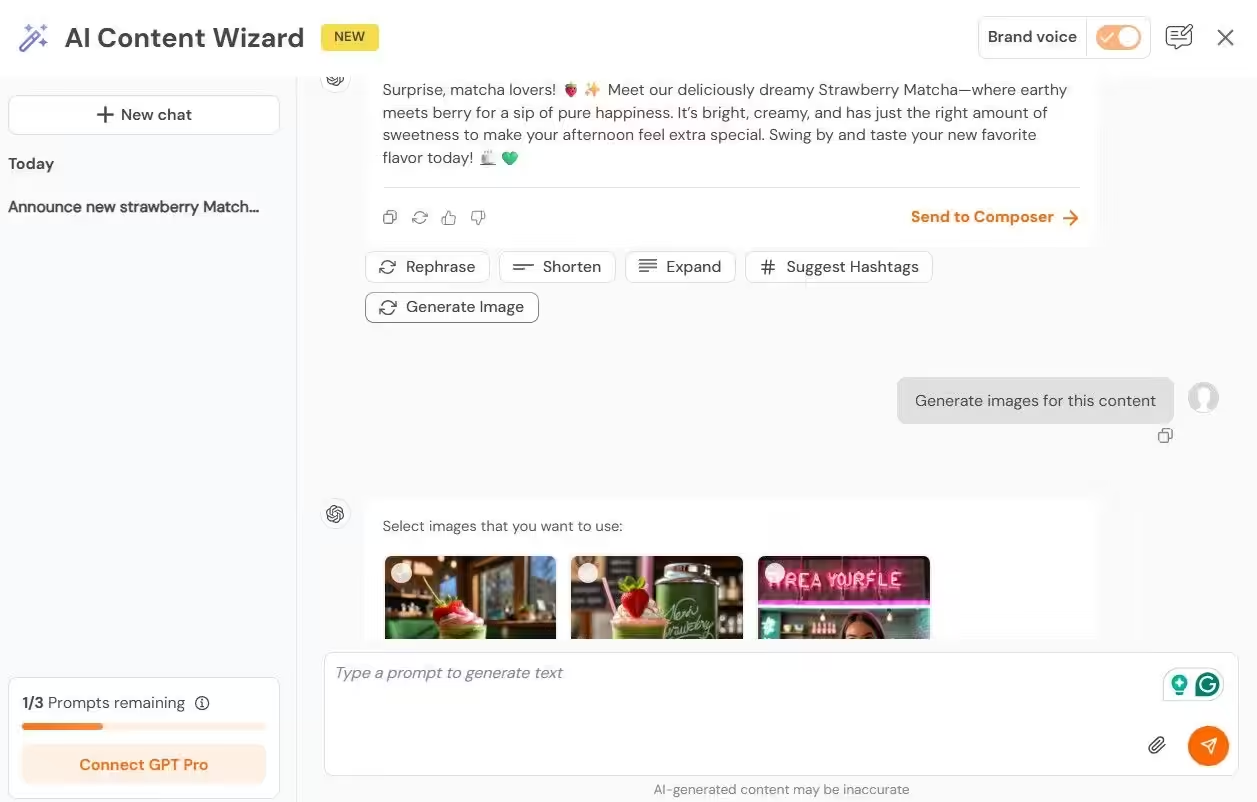
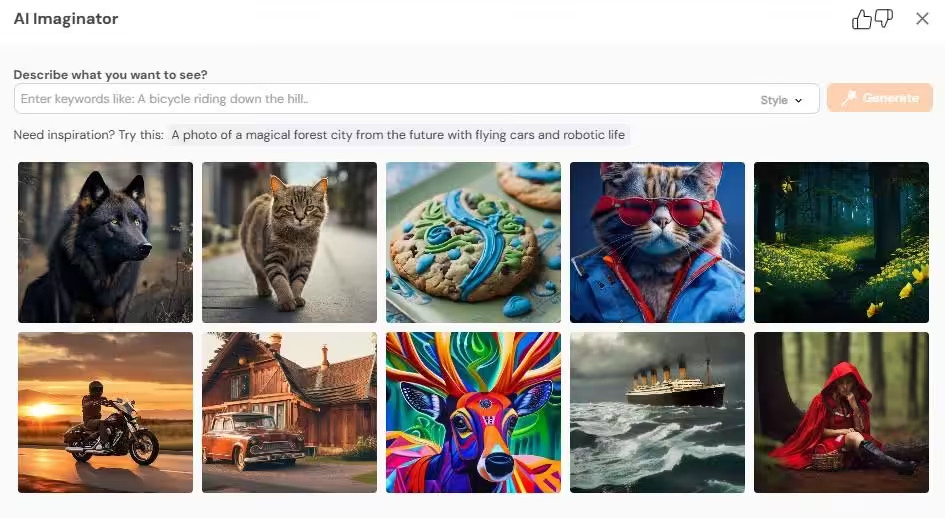
Social Champ’s AI tools let you set tone parameters upfront, so instead of “write something fun” (which gives you ten different interpretations), your content stays within defined voice boundaries.
Think guardrails, not limitations. That’s how you prevent the Main Character Syndrome spiral before it starts.
Multi-Platform Management
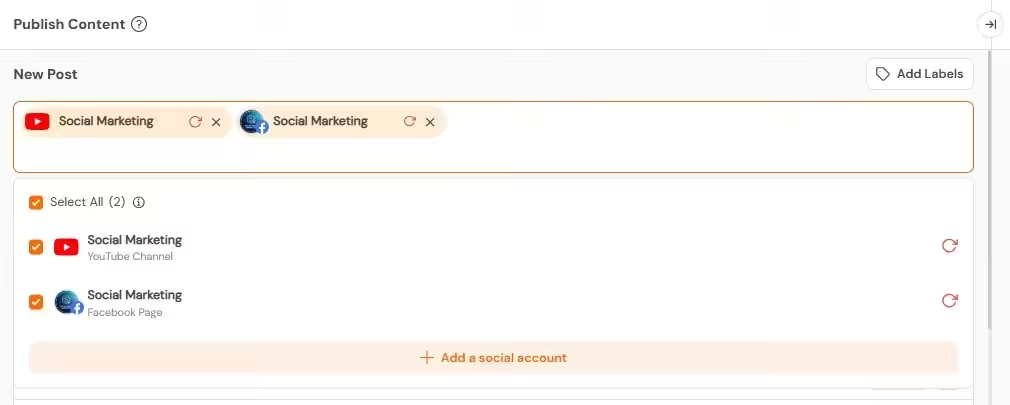
Remember “platform-adapt, don’t platform-transform”? Social Champ lets you manage and adjust content across every channel from one dashboard, maintaining your core voice while tailoring expression per platform.
Team Collaboration and Approval Workflows

This maps directly to content governance. Built-in approval workflows mean no post goes live without passing through the tonal checkpoint your team agreed on. No more rogue posts. No more “who approved this?” moments.
It’s not about overcomplicating things. It’s about making consistency the default, so your brand never has to try too hard in the first place.
You've Got the System. Now You Need the Tool.
Common Mistakes Brands Make (The Non-Obvious Ones)
Most articles will tell you “be authentic” and “know your audience.” Thanks. Groundbreaking. Here are the mistakes I actually see killing brand credibility, the ones nobody warns you about.
Confusing Evolution With an Identity Crisis
Brand evolution is healthy. It’s deliberate, documented, and audience-informed. But an identity crisis is reactive, which is usually triggered by a competitor going viral or a new marketing lead wanting to “shake things up.”
Both involve change. But here’s my test: if you can’t explain a voice shift in one sentence that references audience data, not internal preferences or competitor envy, it’s not evolution. It’s a Main Character Syndrome episode.
Over-Optimizing for the Algorithm
I’ve watched brands reshape their entire content strategy around trending sounds, optimal formats, and hashtag research, while their actual brand identity quietly disappears.
Here’s the trap: algorithms reward engagement, not equity. You can optimize your way into irrelevance, massive reach, zero recall. The audience engaged with the format, not with you.
The fix? A 70/20/10 ratio. 70% on-brand strategic content, 20% trend-adapted content that fits your voice, 10% experimental. Never let the 10% tail wag the 70% dog.
Hot Take:
You can optimize your way into irrelevance. Massive reach and zero recall is not a strategy. It’s an expensive way to be forgotten.
No Content Governance
Five people with five different interpretations of “professional but approachable” will produce five completely different brand voices. And when one of them tries too hard on a Tuesday afternoon, there’s no system to catch it.
Inconsistency isn’t always a strategy problem; it’s a process problem. Centralize who publishes, who approves, and what happens when something doesn’t sound like you. Building genuine connections with your audience requires that kind of structural consistency.
Stop Trying Too Hard.
Quick Audit: Is it an Identity Crisis or Evolution?
Before you finalize your content calendar, put your top-performing posts through this 2026 “Vibe Check”:
- The Purpose Test: Can we explain this post’s value without using the words “viral” or “algorithm”?
- The Recognition Test: Would our customer from three years ago still recognize this as the same company?
- The AI Test: If we stripped the logo, would this sound like a generic AI-generated response, or does it have a human “spark”?
If you answered “No” to any of these, you are currently in a Main Character Syndrome episode. Take a breath, check your Brand Voice OS, and reset.
Conclusion
I’ve broken down the patterns, the psychology, and the systems that actually fix The Main Character Syndrome. And it all comes back to one thing:
The brands that win aren’t the loudest. They’re the most consistent.
Consistency compounds. Trend-chasing doesn’t. And no amount of trying too hard will replace the quiet power of a brand that sounds like itself every single time.
If you’re ready to stop performing and start building something that actually lasts, Social Champ gives you the planning, AI, scheduling, and collaboration tools to make consistency your default, not something you have to try hard to maintain.
Same character. Every chapter. That’s the strategy.