With over 5.66 billion people using social media worldwide, the platforms where your audience hangs out have become prime real estate for reaching potential customers.
But if we’re honest, juggling ad campaigns across multiple platforms is no small feat, even for seasoned social media managers. One wrong move and your budget is toast.
That’s why choosing the right social media marketing tools to plan, manage, and optimize your campaigns is crucial. The right software for advertising can help you schedule posts, track performance, and even test different creatives without losing your sanity.
The purpose of this article is to walk you through 15 of the best social media advertising software in 2026, explore real use cases, and help you figure out which one fits your style.
By the end, you’ll also get tips on picking a solution that doubles as a smart social media scheduling tool, so your campaigns run smoothly without you needing a full-time circus act.
Short Summary
- Social media advertising software plays a critical role in helping businesses manage campaigns, optimize targeting, and track performance across multiple platforms from one place.
- The best tools combine automation, data-driven insights, and creative optimization to reduce manual effort while improving ad results.
- Different platforms serve different use cases, from advanced enterprise-level ad optimization to simplified solutions for small teams and agencies.
- Choosing the right software depends on factors like budget, team size, ad volume, and the level of control you need over targeting and reporting.
- For businesses seeking an all-in-one, easy-to-use advertising solution, Social Champ offers a strong balance of simplicity, automation, and performance-focused features.
Why Choosing the Right Social Media Advertising Software Matters
First things first: what is social media advertising software? This is software that helps you create, manage, and optimize paid campaigns across social media platforms.
Instead of manually posting ads, tracking performance, and juggling multiple dashboards, social media software centralizes everything so you can plan, schedule, and analyze campaigns from one place.
The tool you choose makes the difference between campaigns that feel like rocket fuel and ones that fizzle out before they even take off.
Here’s why picking the right tool can turn your social media efforts from fumbling around to full-on wins:
Maximize ROI
Both individuals and businesses can see real returns when they use the right social media advertising software.
For individuals, it not only cuts wasted spend but also helps reach the audience that actually matters, all while keeping track of which ads are pulling in real results.
Meanwhile, for businesses, those benefits multiply: the software gives a clear view across campaigns, allows smarter budget allocation, boosts overall performance, and delivers measurable growth that keeps stakeholders happy.
Boosting Engagement
You want your content to actually land, right? The right marketing automation software helps you reach the audience that cares, not just anyone scrolling by.
It shows you what resonates, so your posts get more likes, shares, and conversions. Instead of guessing which post will stick, you get insights that let you create content your followers actually love, and maybe even brag about to their friends.
Saving Time
Managing multiple campaigns can be overwhelming. The right tool automates scheduling, reporting, and optimization, freeing you up to focus on strategy, creativity, and yes, maybe even grabbing a coffee without feeling guilty.
Less repetitive work means more time to do the stuff that actually moves the needle.
Simplifying Social Media Management
If switching between platforms makes you feel like you need a second brain, you’re not alone. A good social media advertising software lets you handle everything from a single dashboard.
You can post, track, and tweak across multiple channels without losing your mind or forgetting which post goes where. Campaigns become more organized, less chaotic, and way more effective.
Supporting Smarter Decisions
Data doesn’t have to be scary. The right tool collects and presents insights in a way that actually makes sense, helping you refine campaigns and make choices that drive results.
Instead of relying on guesswork, you can adjust your strategy with confidence, turning trial-and-error into a well-oiled growth machine.
Top 15 Social Media Advertising Software Compared [2026 Edition]
Ready to see which social media advertising softwares are leading the pack? Here’s our top 15, compared so you can find the one that fits your needs perfectly.
| Tool | Starting Price | Best For | Supported Platforms | Free Trial | Stand-Out Features |
|---|---|---|---|---|---|
| Social Champ | $4/mo/social profile | Multi-Platform Management |
|
Free Plan |
|
| Facebook Ads Manager | Free | Facebook Advertising |
|
Free |
|
| Madgicx | $99/mo | E-Commerce Scaling |
|
7 Days Free trial |
Ad Management tools |
| AdEspresso | $49/mo | Split testing and Optimization |
|
14-Days Free Trial |
|
| Hootsuite | $99/mo | Multi-platform management |
|
30-Day Free Trial |
|
| Sprout Social | $199/mo | Social Media Management |
|
30-Days Free Trial |
|
| Buffer | $5/mo/channel | Multi-Platform Management |
|
Free Forever Plan |
|
| Later Influence | Not Publicly Displayed | Influencer Marketing |
|
No Free Trial |
|
| Smartly | Custom | AI Advertising |
|
Demo | – Smartly Creative
– Smartly Intelligence – Smartly Media |
| AdRoll | Dynamic Pricing Based on CPM | Brand Awareness Campaigns
Retargeting Campaigns |
|
No Free Trial |
|
| Enji | $19/mo | AI-Powered Content Generation |
|
Free Plan Available |
|
| Airtable | $20 | AI App Building
Visual project tracking Data management. |
|
Free Trial Available |
|
| Agorapulse | $79/mo/user | Multi-Platform Management |
|
30-Days Trial |
|
| Sendible | $29/mo | Agency Management |
|
14 Days Free Trial |
|
| SocialPilot | $25/mo | Social Media Management |
|
14-Day Free Trial |
|
Elevate Your Ads With Smart Post Boosting
-
Social Champ

Social Champ stands out as an ideal social media advertising software for teams and businesses that want paid and organic social to work together without complexity. It focuses on simplicity, automation, and clarity, which make it easier to plan, execute, and analyze campaigns from one central platform.
For ads, Social Champ lets you boost posts on Facebook, Instagram, LinkedIn, and TikTok.
Here’s a closer look at where Social Champ performs well and where it may fall short:
Pros:
- Unified management for organic posts and boosted content in one dashboard
- Easy-to-use scheduling tools that support consistent campaign planning
- Clear analytics and reporting for tracking engagement and performance
- Competitive pricing compared to larger, enterprise-focused platforms
- Supports multiple social networks, making cross-platform management simpler
Cons:
- Advanced advertising automation is more limited than enterprise-only ad tools
- Not designed for large-scale, high-budget ad operations
- Fewer e-commerce-specific optimization features compared to specialized platforms
Social Champ is designed for solo creators, small businesses, and agencies that want an accessible way to manage social media advertising alongside organic content.
If you value ease of use, affordability, and a unified workflow over heavy enterprise complexity, Social Champ delivers a practical and effective solution.
-
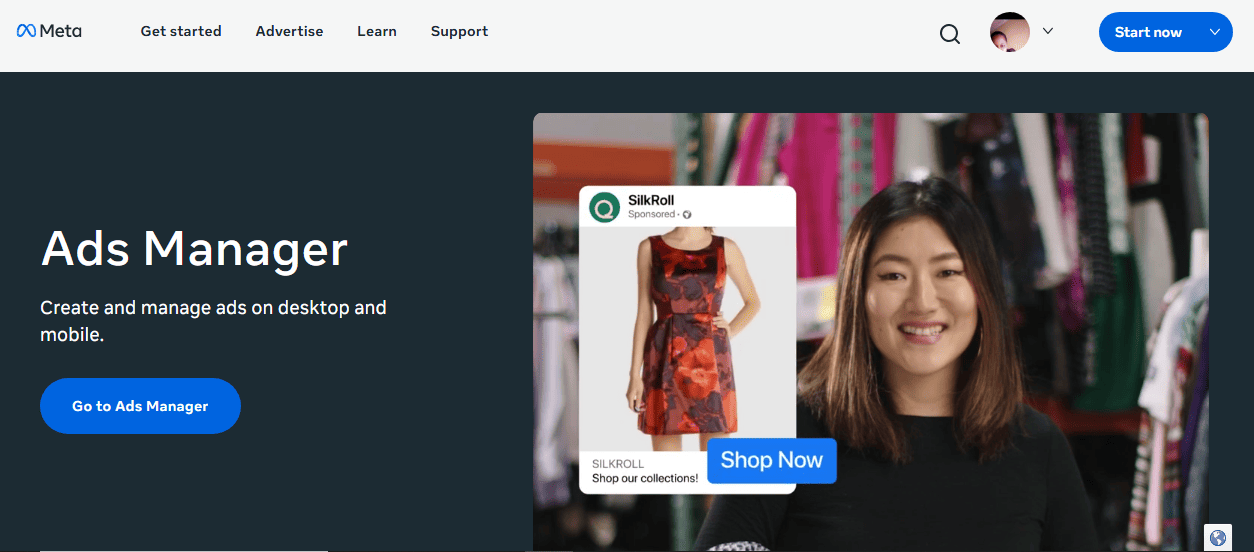
Facebook Ads Manager
Meta Ads’ Webpage Facebook Ads Manager is a go-to tool for advertisers who want full control over their campaigns on Facebook and Instagram. It offers deep targeting options and robust reporting to maximize ad performance. It’s ideal for marketers who need precision, flexibility, and insight when running paid social campaigns.
Here’s a look at where it excels and where it fails:
Pros:
- No extra fees or hidden markups since you work directly within Meta’s platform
- Early access to the newest ad features and updates
- Full control over campaign settings, targeting, and placements
- In-depth audience insights and detailed performance analytics
Cons:
- Requires hands-on management and constant optimization
- Limited automation compared to third-party tools
- No built-in way to manage ads across multiple social platforms
- Can feel overwhelming for beginners due to its steep learning curve
If you’re comfortable navigating a detailed platform and want to optimize campaigns with precision, Facebook Ads Manager is a reliable and feature-rich solution.
-
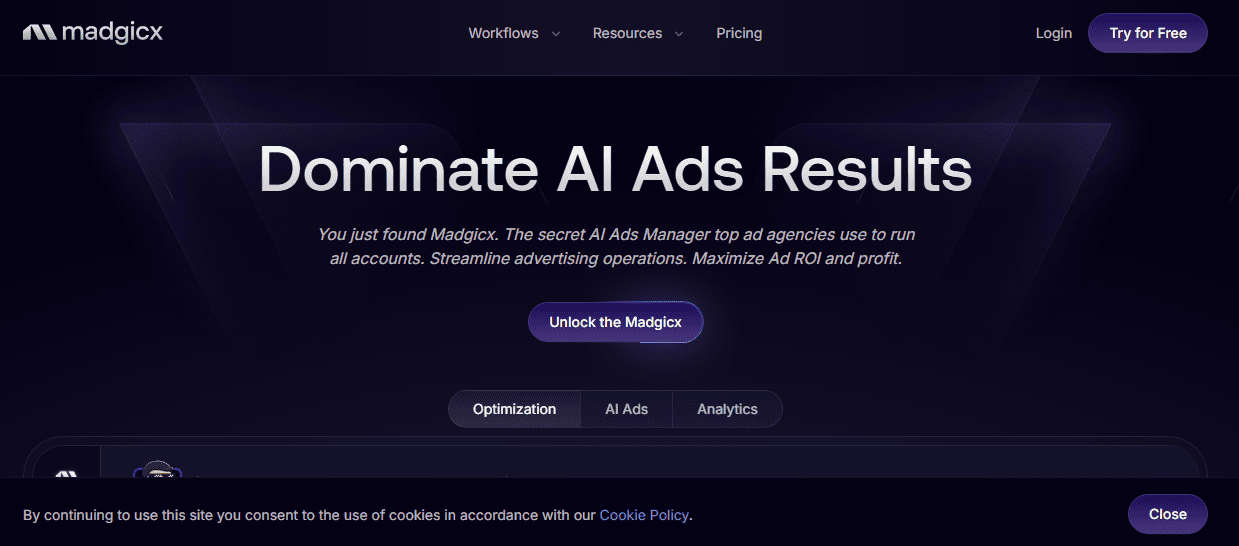
Madgicx
Madgicx’s Webpage Madgicx is perfect for marketers and e-commerce brands looking to combine AI-powered automation with advanced ad optimization.
It’s designed to help you manage campaigns efficiently, reduce manual work, and focus on driving profits rather than just revenue.
The following are its pros and cons:
Pros:
- Built with e-commerce brands in mind, making it ideal for online stores
- AI-driven automation cuts down the time spent on manual campaign optimization
- Seamless integration with Shopify for accurate performance and profit tracking
- Focuses on profit optimization, not just top-line revenue metrics
- Provides 24/7 automated monitoring to keep campaigns running efficiently
Cons:
- Advanced features can take time to learn and master
- Primarily optimized for Meta platforms, with limited support for others
- May feel too complex for very small businesses with simple advertising needs
Madgicx is a powerhouse for brands running high-volume campaigns and looking to automate optimization while maximizing profits.
If your team has the budget and scale to take full advantage, it delivers sophisticated tools that can supercharge your advertising performance.
-
AdEspresso (by Hootsuite)
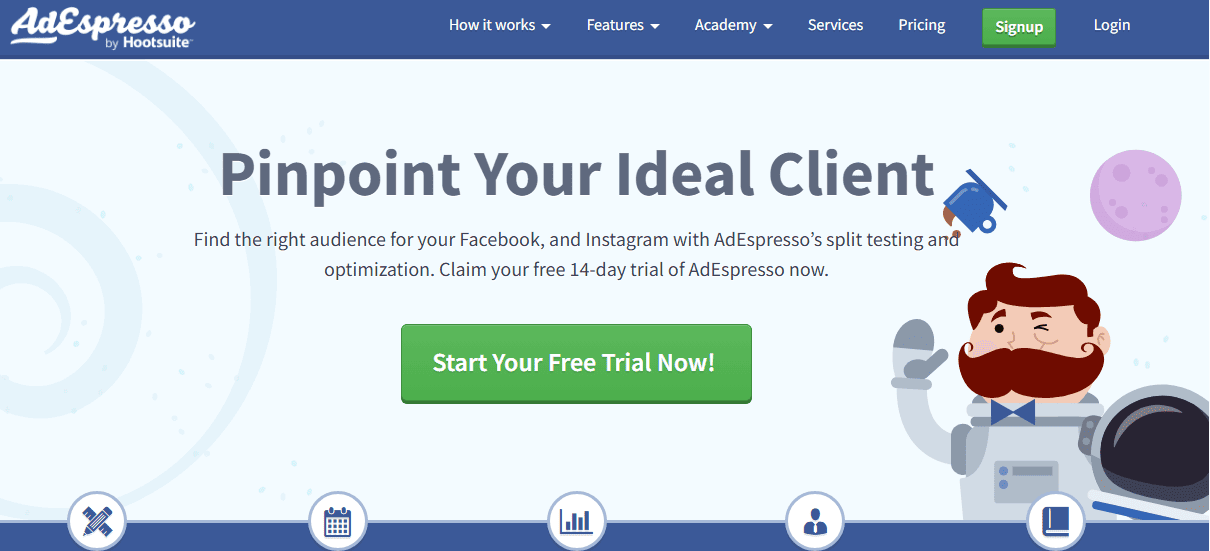
AdEspresso Webpage AdEspresso takes the guesswork out of social media advertising with an interface designed for experimentation and optimization.
It’s especially handy for marketers who want to test multiple ad variations quickly while keeping reporting and analytics clean and understandable.
Pros:
- Strong creative testing tools that make it easy to compare and refine ad variations
- Beginner-friendly interface that’s simple to navigate
- Solid automation features to support campaign optimization
- Detailed reporting and analytics for tracking performance
Cons:
- Lacks advanced features tailored specifically for e-commerce brands
- Does not offer profit-focused optimization tools
- Pricing can increase quickly as ad spend and usage grow
- Less robust than specialized platforms built for large-scale e-commerce advertising
If running multiple ad variations without losing your mind sounds appealing, AdEspresso delivers a workflow that keeps experiments organized and insights clear. It’s a platform that helps you iterate fast, learn what works, and spend your ad budget smarter.
-
Hootsuite
Hootsuite’s Webpage Hootsuite puts your paid and organic social in the same neighborhood, which makes it easier to keep campaigns coordinated without juggling a dozen tabs.
It’s built for teams that want a structured approach to ad management alongside broader social strategy.
Here’s a list of pros and cons to consider when considering this tool:
Pros:
- Centralizes organic and paid social management in one platform
- Well-suited for teams handling multiple accounts and campaigns
- Established, reliable platform with dependable customer support
- Seamless integration with the broader Hootsuite tool ecosystem
Cons:
- Limited features designed specifically for e-commerce brands
- Automation is fairly basic compared to more specialized advertising tools
- Higher pricing to unlock advanced and comprehensive features
- Not ideal for campaigns focused on profit-level optimization
For teams that want a single dashboard to coordinate ads and organic content, Hootsuite keeps everything organized and trackable. It’s practical, dependable, and keeps the chaos of multi-account campaigns to a minimum.
Featured Article: Hootsuite vs. Social Champ: In-Depth Comparison
-
Sprout Social
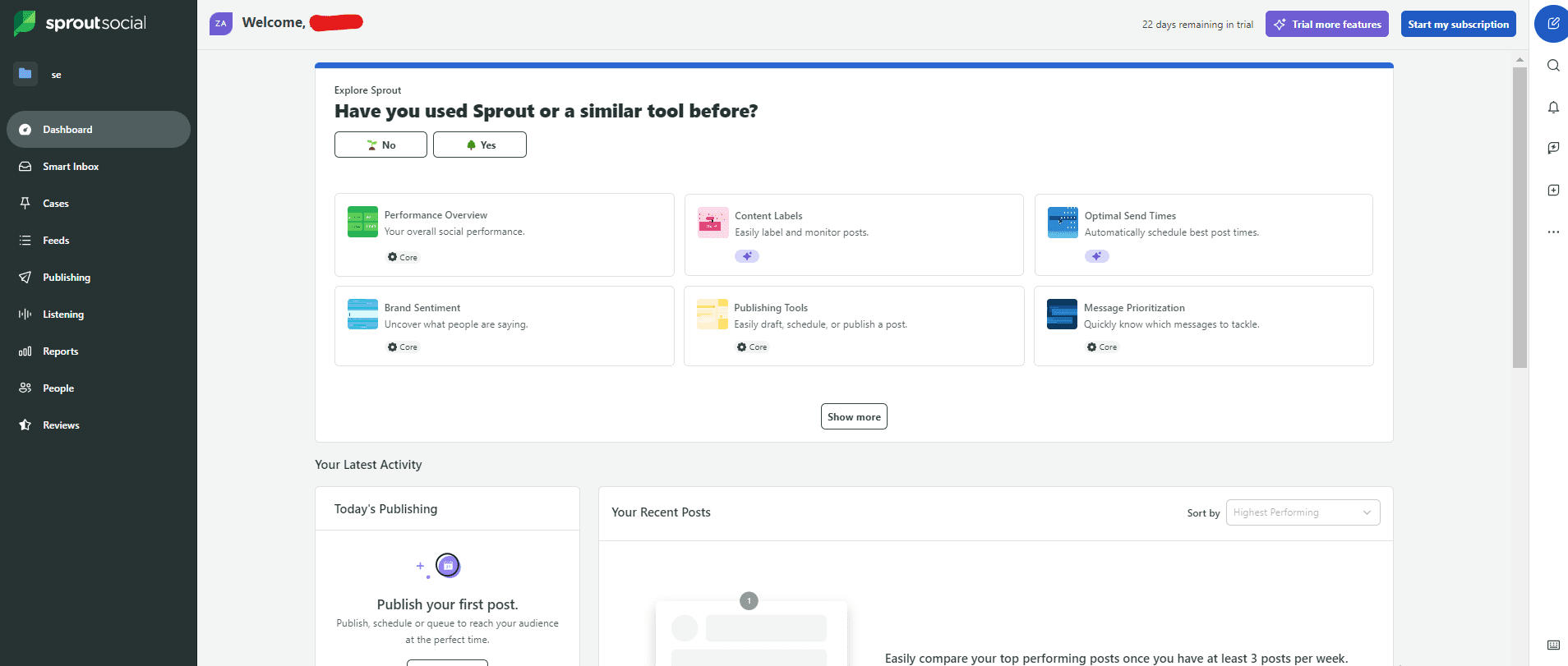
Sprout Social’s Dashboard Sprout Social combines paid and organic social management with powerful analytics, customer engagement features, and collaboration tools.
These features make it especially useful for teams that need structure, visibility, and accountability across campaigns.
That said, no tool is perfect for every use case. Here’s a closer look at where Sprout Social shines and where it may fall short:
Pros:
- All-in-one social media ads management suite that covers publishing, engagement, and advertising
- Strong customer service and social listening features for managing conversations at scale
- Advanced analytics and reporting with clear, actionable insights
- Excellent team collaboration tools for approvals, roles, and workflows
Cons:
- Pricing can be prohibitively high for small to medium-sized businesses
- Advertising automation is limited compared to specialized ad platforms
- Not built specifically for e-commerce-focused advertising strategies
- May feel excessive if your primary goal is managing ads rather than full social operations
If your workflow involves multiple stakeholders, approvals, and in-depth reporting, Sprout Social brings everything together in one organized space.
-
Buffer
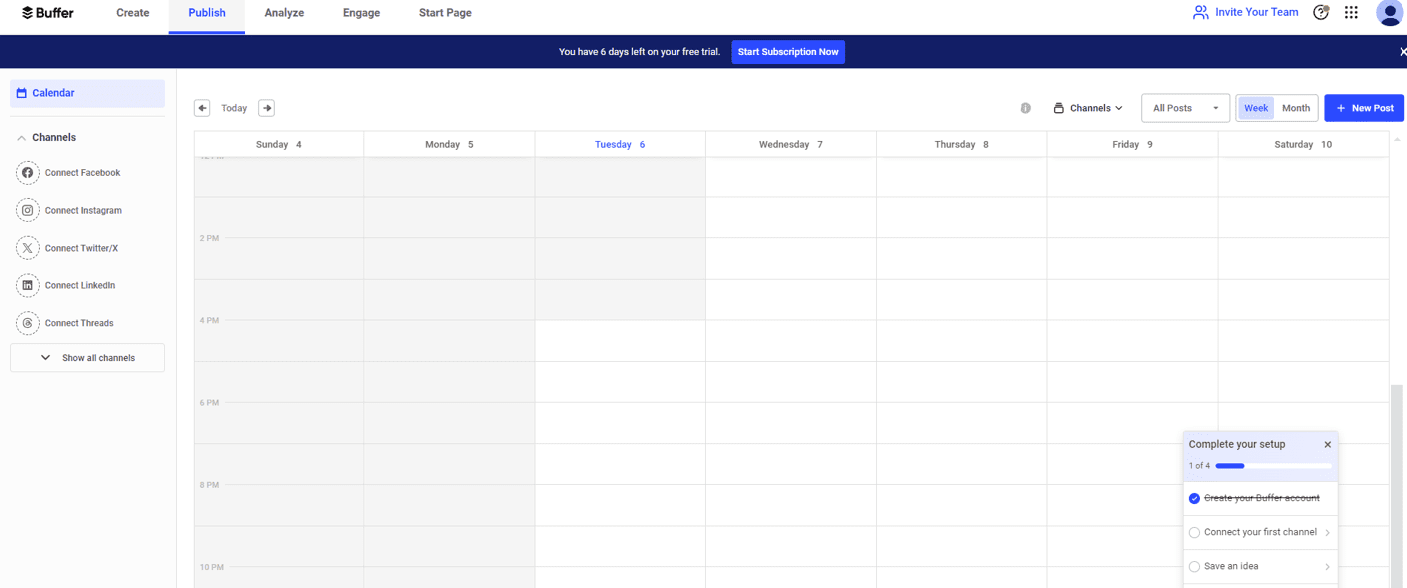
Buffer’s Dashboard Buffer is a solid option if you want to dip your toes into social media advertising without feeling overwhelmed.
It keeps things simple, affordable, and approachable, all of which make it especially appealing for small businesses and teams that are just getting started with paid social and want their organic and advertising efforts under one roof.
That said, here are its pros and cons:
Pros:
- Budget-friendly entry point for individuals and small businesses
- Clean, user-friendly interface that’s easy to navigate
- Well-suited for teams new to social media advertising
- Includes tools for managing organic social content alongside ads
Cons:
- Advertising features are quite limited compared to specialized platforms
- Lacks advanced automation and optimization tools
- Not ideal for businesses planning to scale ad campaigns
- Supports fewer platforms than more robust advertising solutions
Buffer is built for simplicity first, so it’s helpful to weigh what it does well against where it may feel limiting.
-
Later Influence
Later Influence stands out if your advertising strategy leans heavily on creators, social proof, and shoppable content.
It blends influencer marketing with paid social, making it a strong option for brands that want ads to feel more authentic and less like, well, ads.
Here’s a quick look at where Later Influence excels and where it may feel limiting:
Pros:
- Combines influencer marketing and paid advertising in one platform
- Strong Instagram Shopping integration for product-focused campaigns
- Optimizes user-generated content to boost authenticity and engagement
- Offers detailed campaign tracking across influencer and paid efforts
Cons:
- Limited primarily to Instagram and Facebook
- Less advanced for brands focused solely on traditional paid advertising
- Works best when you already have an influencer marketing strategy in place
- Automation features are fairly limited compared to ad-focused tools
Later Influence is ideal for brands that see influencer content as a core part of their advertising strategy. If your goal is to turn creator partnerships and user-generated content into measurable ad performance, it offers a unique approach that traditional ad platforms often miss.
-
Smartly
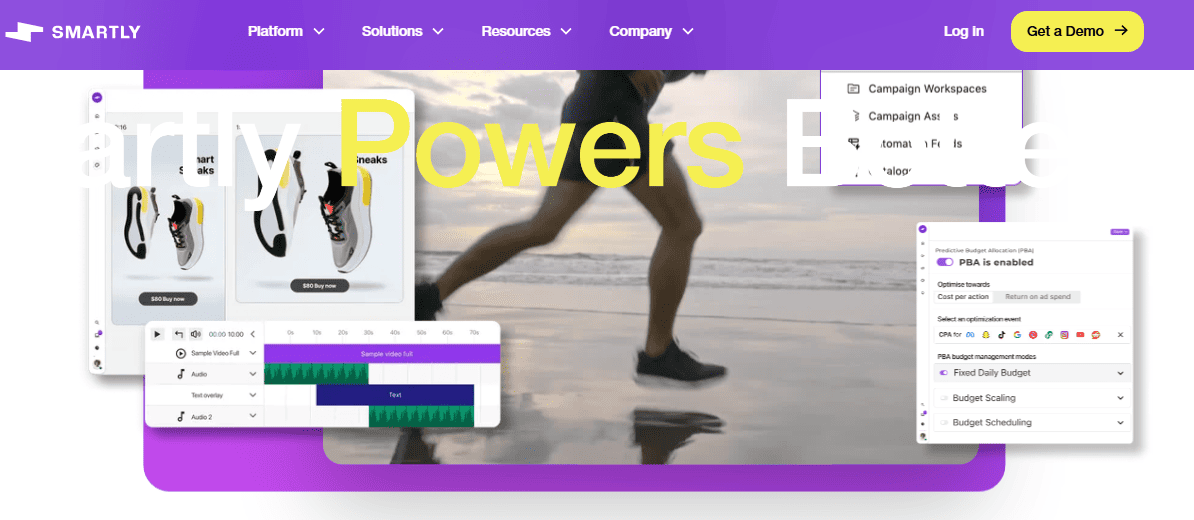
Smartly’s Webpage Smartly is built for brands running high-volume, high-budget social media campaigns that demand precision, speed, and scale. It focuses heavily on automation and creative optimization, making it a strong choice for enterprises that need to manage complex advertising operations across large audiences.Before committing, it’s worth weighing where Smartly.io excels and where it may be too much for smaller teams:
Pros:
- Highly advanced automation that reduces manual campaign management
- Designed to support large-scale and high-volume advertising efforts
- Strong dynamic creative optimization for personalized ad delivery
- Enterprise-grade features backed by dedicated support
Cons:
- Pricing is steep and not practical for small or budget-conscious businesses
- Setup and onboarding can be complex with a noticeable learning curve
- More powerful than most e-commerce businesses actually need
- Requires substantial ad spend to fully justify the investment
Smartly.io is a powerful solution for enterprises that operate at scale and rely on automation to drive performance.
If your brand manages massive ad budgets and needs advanced creative control, it delivers serious firepower. However, it may be more muscle than is necessary for small teams.
-
AdRoll
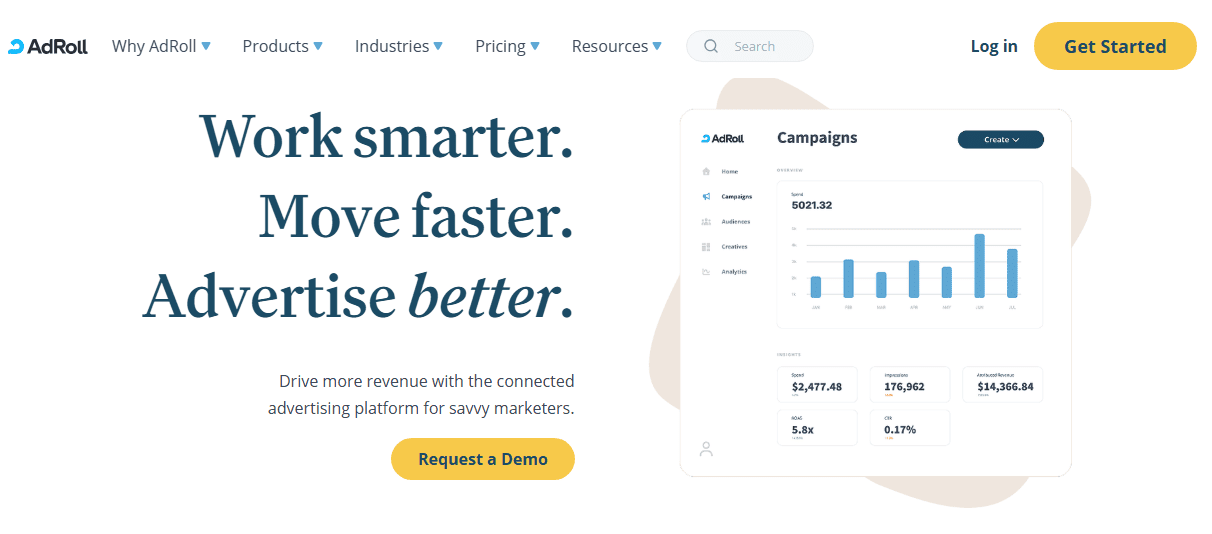
Ad Roll’s Webpage AdRoll is a strong choice for brands that want to bring visitors back and turn interest into conversions. It shines in retargeting and cross-channel advertising, helping businesses stay visible across social media and beyond while keeping campaign performance front and center.
Here’s a look at where AdRoll performs best and where it may require extra consideration:
Pros:
- Powerful retargeting tools that help re-engage visitors and past customers
- Broad cross-platform reach that extends beyond traditional social media channels
- Solid integrations with popular e-commerce platforms for smoother tracking
- Automated audience optimization to improve campaign performance over time
Cons:
- Limited support for organic social media ads management
- Initial setup can feel complex without prior advertising experience
- Costs may rise quickly as campaigns scale
- Less effective for top-of-funnel prospecting compared to specialized ad platforms
AdRoll is ideal for businesses focused on retargeting and conversion-driven campaigns. If your goal is to stay top of mind across channels and bring shoppers back at the right moment, AdRoll offers a practical, performance-oriented approach.
-
Enji
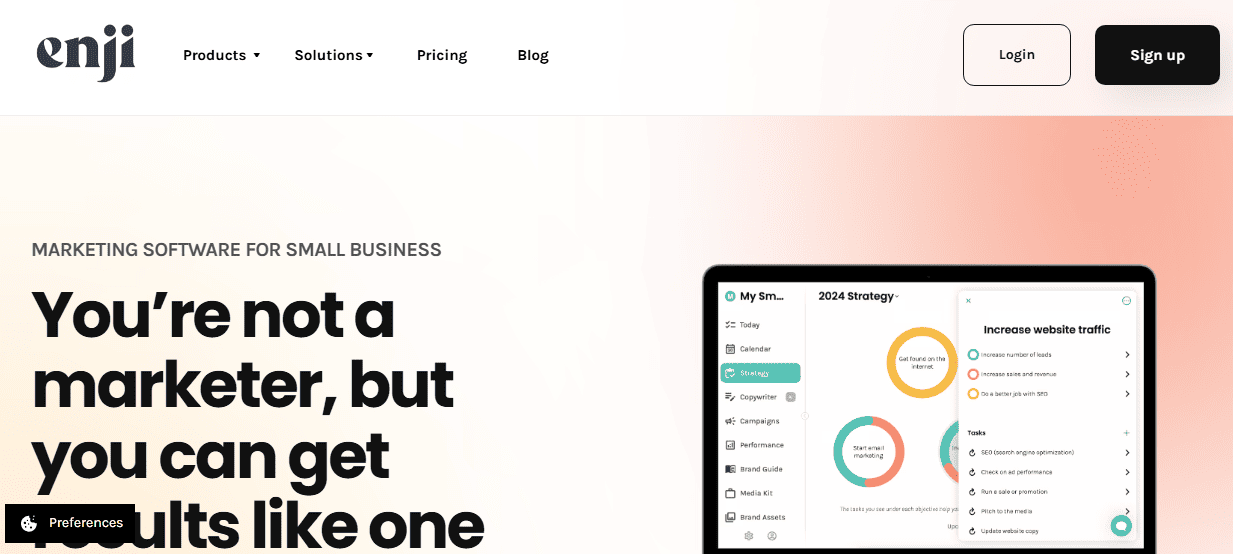
Enji’s Webpage Enji is a great fit for marketers who want their social media advertising to feel intentional, visual, and strategy-led rather than rushed and reactive.
It combines planning, content creation, and AI-powered assistance in one platform, which makes it especially useful for teams that care about what they post and why it works.
Here’s a breakdown of its strengths and limitations:
Pros:
- Visual-first planning with an Instagram grid preview and calendar views across seven social platforms
- Built-in marketing strategy tools that help you plan content with purpose, not guesswork
- AI-powered copy generation for captions and blogs that stays aligned with your brand voice
- Hashtag manager that lets you save, organize, and reuse hashtag groups effortlessly
- Content repurposing tools that turn URLs and blog posts into ready-to-publish social content
Cons:
- Lacks a dedicated link-in-bio feature similar to Later’s Linkin.bio
- Still a newer platform compared to more established Instagram-focused tools
Enji is ideal for brands and marketers who value strategy-driven content and visual planning alongside social media advertising.
If your goal is to align ads and organic content with a clear social media advertising strategy, it offers a thoughtful, creative-first approach that stands out.
-
Airtable
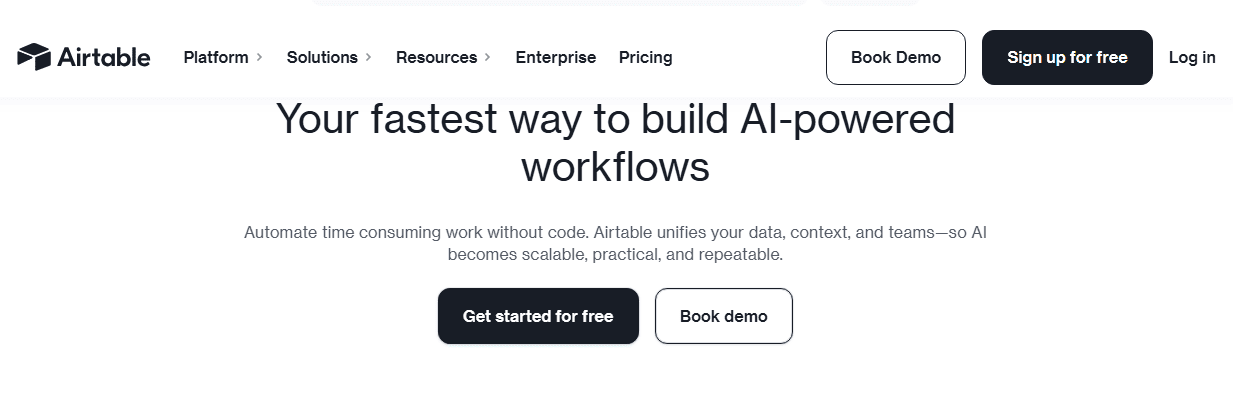
Airtable’s Webpage Airtable works well as a social media advertising support tool for teams that want structure, visibility, and collaboration around campaigns.While it is not a traditional ad platform, it shines at organizing workflows, tracking performance, and keeping paid and organic efforts aligned in one flexible system.
Here’s a quick look at Airtable’s strengths and limitations:
Pros:
- No-code interface that is easy to set up and manage
- Combines spreadsheet simplicity with database-level structure
- Real-time collaboration with comments and live updates
- Multiple views, including Grid, Calendar, Timeline, List, and Kanban
- Integrates with popular tools like Slack, Google Drive, and Trello
- Large library of ready-to-use templates for different use cases
Cons:
- Pricing increases quickly as teams grow
- Free plan limits database entries and scalability
- Storage is restricted on lower-tier plans
- Closed-source platform limits customization options
- API rate limits can slow complex or data-heavy workflows
Airtable is ideal for teams that want a customizable, collaborative way to plan and manage social media advertising workflows.
If you need clarity, flexibility, and strong organization around your campaigns, Airtable can be a powerful behind-the-scenes ally.
-
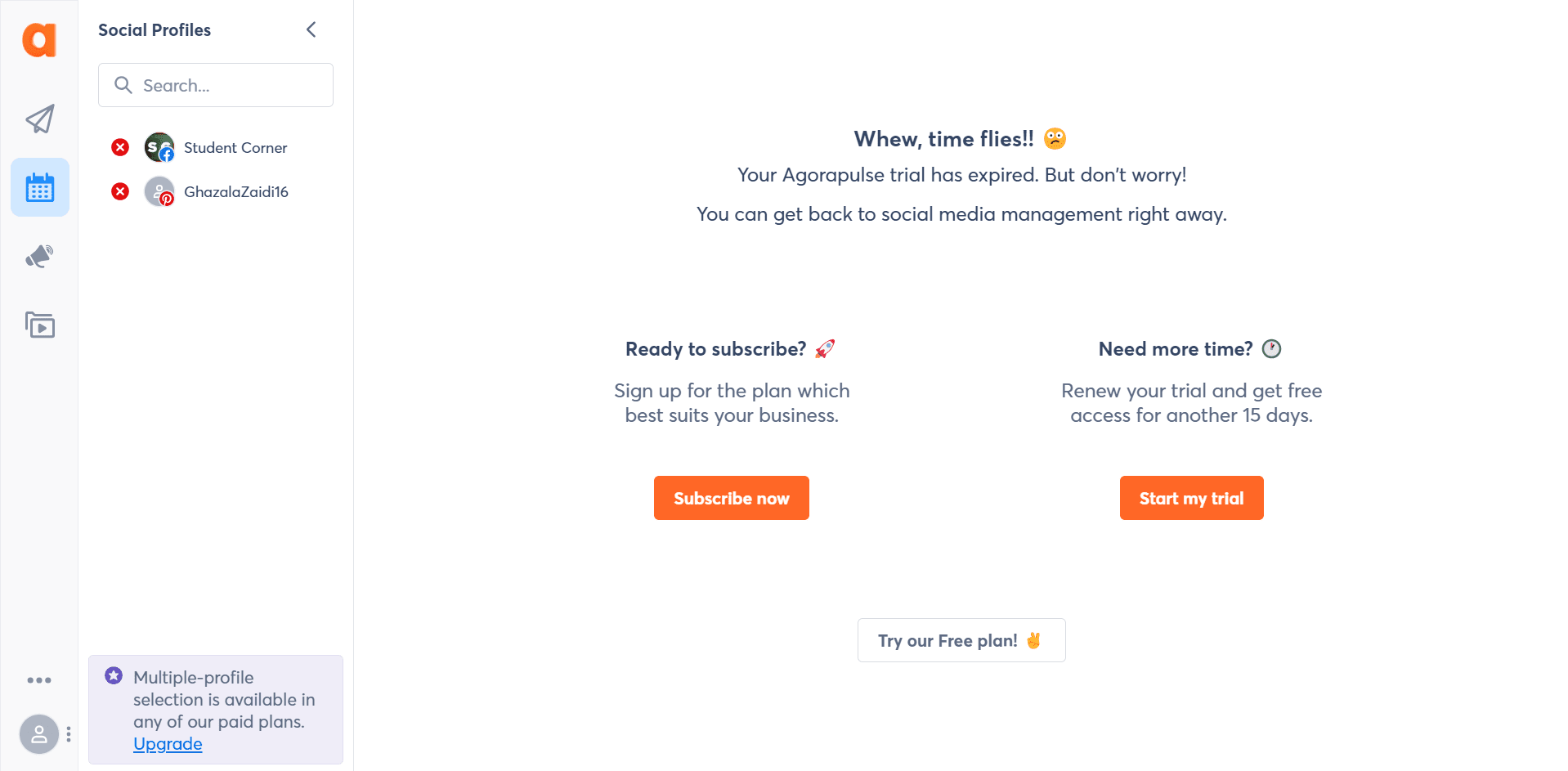
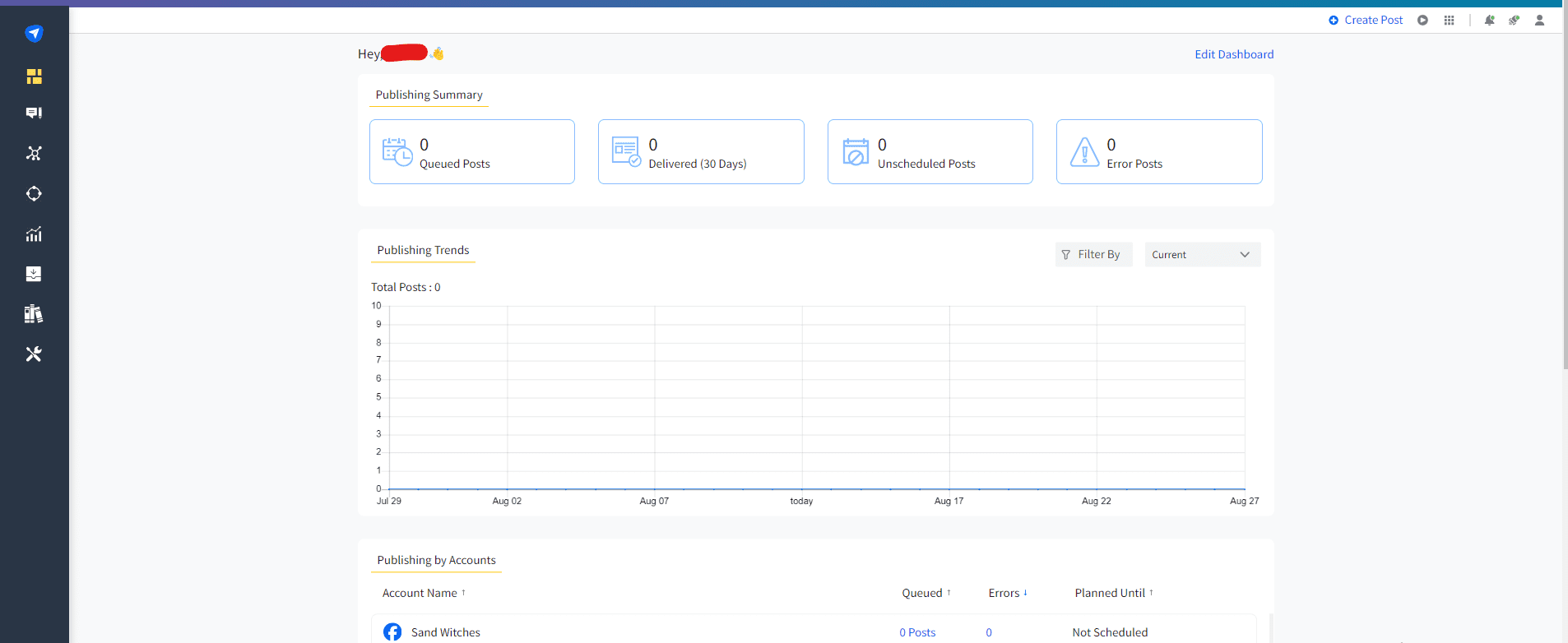
Agorapulse
Agorapulse’s Dashboard Agorapulse is a strong option for teams that want structured social media advertising support alongside powerful publishing, reporting, and audience management.
It works especially well for agencies and growing teams that need clarity, collaboration, and reliable performance tracking in one platform.
Let’s take a closer look at its pros and cons:
Pros:
- Advanced scheduling and publishing tools, plus a handy Chrome extension
- Built-in CRM to identify and engage your most active followers
- Detailed reporting with exportable metrics for client-ready reports
- Strong team and client collaboration features
Cons:
- Per-user pricing can become costly for larger teams
If you manage multiple accounts or clients and need a dependable structure, Agorapulse can deliver a well-rounded and professional experience.
Featured Article: Agorapulse Pricing – Plans & Costs Guide
-
Sendible
Sendible’s Dashboard Sendible is built for teams that want to keep social media advertising organized without losing sight of engagement and performance.It’s a platform that brings scheduling, monitoring, and analytics together, letting you manage campaigns while staying on top of conversations across channels.
Pros:
- Centralized dashboard for posting, monitoring, and reporting
- Strong collaboration tools for teams and clients
- Supports a wide range of social networks and integrations
- Detailed analytics make it easier to track campaign performance
Cons:
- Advertising automation is limited compared to specialized tools
- Can get pricey as the number of users and accounts increases
- Not tailored specifically for e-commerce optimization
- Some features require a learning curve for new users
Sendible gives teams a command center for social media campaigns, keeping posts, analytics, and client communication in one place.
If your goal is to manage ads and engagement without hopping between platforms, it makes the process smoother and more manageable.
-
SocialPilot
SocialPilot’s Dashboard SocialPilot approaches social media advertising with practicality in mind, giving you the tools to plan, schedule, and monitor your paid efforts without overcomplicating things.
It’s a straightforward platform that keeps performance data close at hand so you can focus more on strategy and less on toggling between apps.
Pros:
- Simple and intuitive scheduling that keeps campaigns on track
- Affordable pricing for teams and growing businesses
- Supports a wide range of social networks in one interface
- Analytics help you monitor performance and refine campaigns
Cons:
- Advertising-specific features are more basic than niche ad tools
- Limited automation and optimization compared to AI-driven platforms
- Less focus on e-commerce-specific ad strategies
- Reporting isn’t as deep or customizable as some competitors
SocialPilot keeps social ad management approachable and budget-friendly without bogging you down in complexity.
If you appreciate simplicity and clear performance insights over bells and whistles, it’s a practical choice that gets the job done.
That’s a wrap! The top social media advertising software you can rely on in 2026. Be sure to compare the platforms to decide which platform is best suited for your advertising needs.


What to Look for in Social Media Advertising Softwares
While all the tools are designed to help you, some might not be right for your workflow. Essentially, choosing the wrong one can turn all that potential into frustration faster than a misfired meme.
Now that you’ve seen how the right software for advertising can boost ROI, save time, and make your campaigns actually work, the next step is figuring out what to look for when picking one.
Here are the key features you should keep an eye on when evaluating social media advertising software:
Ad Placement Capabilities
You want the freedom to run campaigns wherever your audience hangs out, whether it’s Instagram, TikTok, Facebook, or LinkedIn. A good tool makes this effortless, so you’re not wasting time hopping between platforms or wondering if your ad even reached the right people.
Automation
The best tools handle all those boring, repetitive tasks like scheduling, posting, and reporting. That way, you can spend more time brainstorming killer content, tweaking campaigns, or yes, sneaking in that much-needed coffee break without feeling guilty.
Analytics
Numbers should guide you, not confuse you. Look for marketing and advertising software that turns data into clear, actionable insights so you can see what’s working, what’s not, and where to make small tweaks that actually move the needle. No more staring at spreadsheets, wondering if anyone even saw your last post.
Platform Integrations
The fewer apps you have to juggle, the better. Social ads software that plays nicely with your existing tools, like CRMs, design apps, or even email marketing platforms, keeps everything in sync and your sanity intact.
Ease of Use
You want a tool that feels intuitive, not one that makes you want to throw your laptop out the window. Complexity is fine for rocket science, but for social media ads, you need social media management software that’s easy to navigate and gets the job done without a PhD in tech.
Featured Article: Social Media Advertising: Drive Success Instantly
Social Champ: The All-in-One Alternative for Social Media Advertising & Management
If you want your paid ads and organic posts to actually work together instead of living separate lives, Social Champ makes that happen.
It brings your Boost Post efforts and everyday content into one smooth workflow, so you are not bouncing between tools, wondering where things went sideways.
Social Champ simplifies the posting process by letting you turn high-performing organic posts into paid promotions with minimal effort.
You can spot what is already resonating, boost it at the right time, and track results without switching platforms.
At the same time, your organic posts stay neatly scheduled and managed, so nothing falls through the cracks.
Here is what makes Social Champ stand out:
- Ad management integrations: Social Champ connects with major social platforms, allowing you to manage paid promotions alongside organic content. This keeps your campaigns aligned and saves you from juggling multiple dashboards like a digital acrobat.
- Easy campaign scheduling: Planning campaigns feels refreshingly simple. You can schedule organic posts, time your boosted content, and keep your messaging consistent without last-minute scrambling.
- Unified dashboard for paid + organic: Everything lives in one place. You can track performance, engagement, and growth across paid and organic efforts without hopping between tabs or losing context.
- Advanced analytics that actually make sense: Social Champ’s analytics give you clear insights into what is working and what needs a tweak. No confusing data overload, just actionable metrics you can use.
- Competitive pricing compared to big platforms: You get powerful features without enterprise-level pricing. That means more value for your budget and fewer awkward conversations about social ads software costs.
Social Champ proves that effective social media advertising doesn’t have to be complicated or expensive. With smart automation, built-in promotion tools, and clear performance insights, it gives you everything you need to turn everyday content into ads that actually get seen, clicked, and remembered.
Simplify Campaigns With a Unified Dashboard!
How to Choose the Best Social Media Advertising Software for Your Needs
Choosing the right social media advertising software isn’t about picking the most popular tool; it’s about finding the one that fits how you work and what you’re trying to achieve.
If you’re a solo creator, simplicity and speed matter more than enterprise-level controls. So, free social media management tools with intuitive interfaces and minimal setup will serve you best.
Agencies, on the other hand, should prioritize platforms that support multi-account management and client approvals. They also need advanced reporting and collaboration features that scale without friction.
For SMBs, the sweet spot often lies in social media advertising tools that balance automation with affordability. This allows you to manage growing ad volumes without stretching your budget.
At the same time, consider how much you plan to spend on ads, since some platforms only deliver real value at higher spend levels. You can even consider free social media tools so you can test campaigns and build momentum before committing to a larger budget.
Equally important are integrations with your existing stack, including CRMs, analytics tools, and e-commerce platforms. You should also consider the learning curve your team can realistically handle without slowing campaign execution.
Conclusion
Social media advertising software has become the backbone of modern digital marketing.
With platforms offering everything from advanced targeting and automation to performance tracking and creative optimization, the right tool can be the difference between ads that blend in and ads that convert.
Among the options compared, Social Champ stands out as an ideal choice for teams that want powerful advertising features without unnecessary complexity.
Its intuitive dashboard makes it easier to launch, manage, and scale high-performing campaigns at optimal times when the audience is likely to engage.