
How many times have you heard someone say, “Facebook is dead”? Yet here we are in 2026, and with over 3.07 billion monthly active users, it’s still the biggest party on the internet.
And your business? It needs to be in that room.
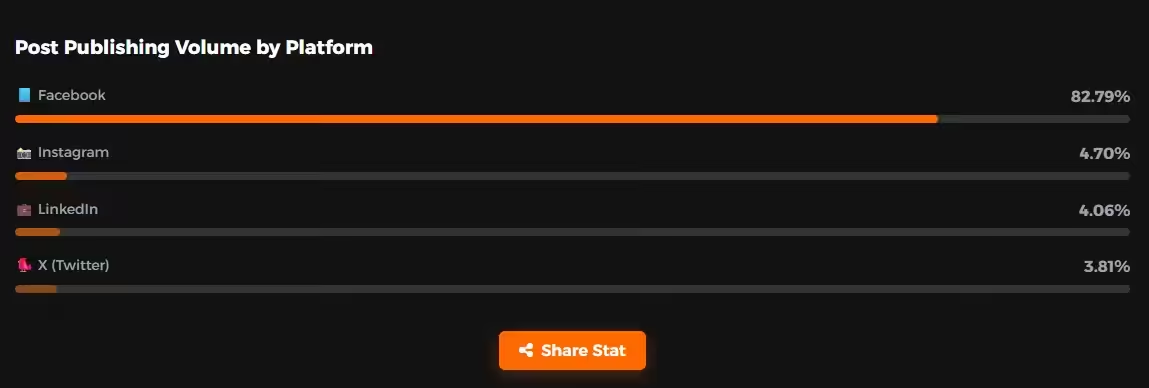
In fact, according to Social Champ’s report, Facebook remains the titan of content distribution, accounting for a massive 82.79% of all post publishing volume across major social platforms.
The truth is, Facebook marketing has evolved massively, and what worked two years ago probably isn’t cutting it for you anymore. New ad formats, AI-driven targeting, Reels, Groups… It’s a lot to keep up with. Even properly setting up and optimizing your Facebook business page can make the difference between being ignored and getting leads.
And if you’re not keeping up, trust me, your competitors are.
That’s why we put this guide together. I’ll walk you through everything, from building your presence to running ads that actually convert, so you stop guessing and start growing.
Ready? Let’s dig in.
Still Managing Facebook Manually?
Short Summary
- Facebook marketing in 2026 blends organic content, paid ads, retargeting, and community building, not random posting.
- Your Facebook Business Page sets the first impression. Complete it, verify it, and pin your top post.
- Video and Reels drive reach, so skipping short-form video limits your visibility.
- Use Ads Manager with precise targeting and creative rotation, not just Boost Post.
- Stay consistent with tools like Social Champ, track meaningful metrics, and continuously adapt your strategy.
What Is Facebook Marketing and Why Is It Important in 2026?
If you’ve been treating Facebook marketing as just another checkbox in your social media plan, like posting occasionally, boosting a random post here and there, you’re not really doing Facebook marketing.
You’re just showing up. And showing up without a real Facebook marketing strategy is basically the same as not showing up at all.
Facebook marketing in 2026 is a layered system. It’s organic content working alongside paid campaigns, community building, reinforcing brand trust, and retargeting funnels, catching the people who slipped through the first time.
Done right, it doesn’t feel like advertising. It feels like the right message reaching the right person at exactly the right moment.
Facebook in 2026: Still the Biggest Room in the House
Here’s what people who say “Facebook is dying” don’t want to admit: the numbers say otherwise.
With over billions of monthly active users globally, Facebook remains the most-used social platform on the planet. Billions of people open the app every day, scrolling, clicking, watching, and yes, buying. But here’s what has changed.
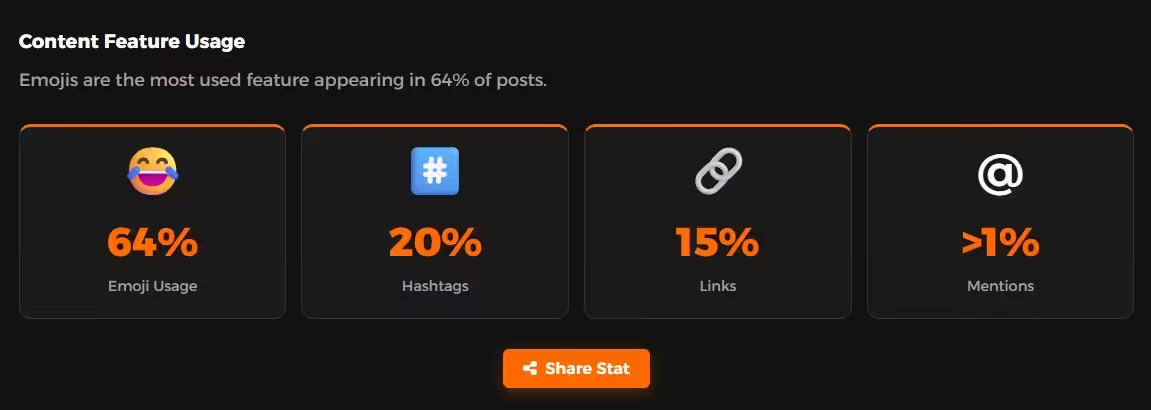
According to Social Champ, engagement is no longer just about the words you write; it’s about the visual cues you use. Data shows that emojis have become the ultimate engagement tool, appearing in 64% of all successful social media posts.
The Algorithm Has Grown Up
The Facebook algorithm in 2026 is far smarter and far less forgiving. It doesn’t reward you just for posting consistently. It rewards relevance, meaningful interactions, watch time, and content that sparks conversation.
If your current Facebook marketing strategy still relies on static images and generic captions from three years ago, that’s why your reach feels like it’s shrinking. It is.
So What Does Facebook Marketing Actually Cover?
Most guides skim this part. We won’t.
It Starts With Your Foundation
Before ads. Before Reels. Before funnels. Your Facebook presence needs to be airtight, including your page setup, branding, bio, response rate, pinned posts, and linked website. Whether you’re doing Facebook marketing for a small business or scaling an established brand, credibility matters.
People check your page before they click your ad. If it looks abandoned or inconsistent, your budget is fighting a trust problem.
Then Comes the Strategy Layer
Real Facebook marketing means building a system that includes:
- Organic content that builds familiarity
- Paid campaigns that amplify what works
- Retargeting funnels that bring warm audiences back
- Lookalike audiences that scale your best customers
- Groups that create community
- Reels and short-form content that drive discovery
And yes, timing still plays a role. Understanding the best time to post on Facebook can improve your organic reach without increasing your ad spend.
This is where a structured Facebook marketing strategy separates growing brands from stagnant ones.
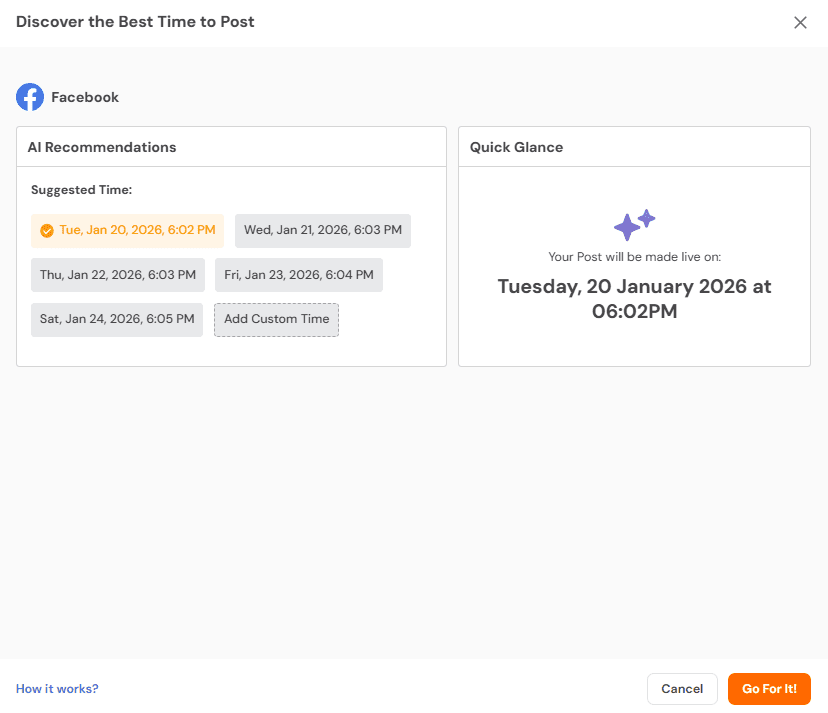
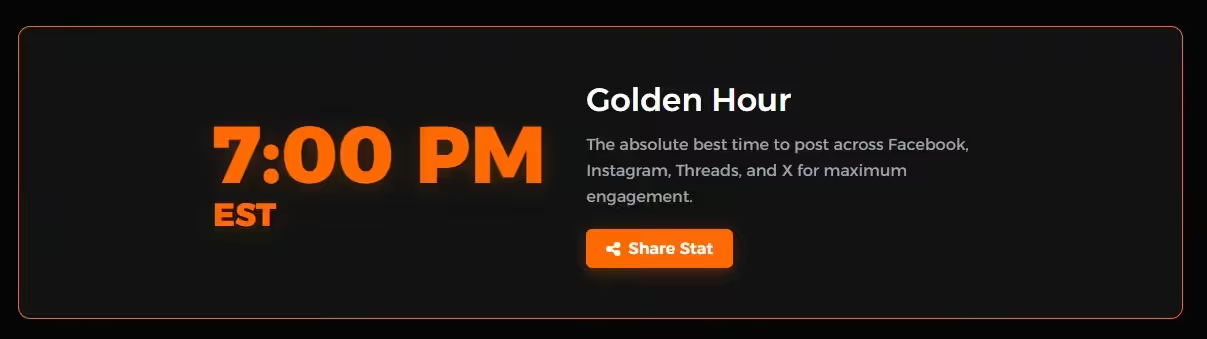
Data from our 2026 Trends Report highlights 7:00 PM EST as the “Golden Hour,” the absolute best time to post for maximum engagement across Facebook and other major networks.
The Ad Side Is Its Own Universe
Facebook’s ad platform is still one of the most precise targeting engines in digital marketing. In 2026, you can target based on:
- Job titles
- Industry
- Employer
- Website behavior
- Purchase intent
- Engagement activity
This level of precision turns basic campaigns into full-scale Facebook marketing solutions. You’re no longer “running ads.” You’re building an acquisition system.
Why Facebook Marketing Still Deserves a Serious Budget in 2026
Let’s break down why smart brands aren’t sleeping on this channel.
Scale That’s Hard to Match
No other platform offers this level of reach combined with this much targeting depth. Even Facebook marketing for small businesses can compete with larger brands because relevance beats raw budget.
When your Facebook marketing strategy is clear, your content works harder.
Lead Generation That Actually Converts
Facebook’s lead tools have evolved.
- Native lead forms
- Conversion-optimized campaigns
- Retargeting sequences
- AI-assisted optimization
When structured correctly, your Facebook marketing strategy stops chasing cold traffic and starts nurturing warm prospects. That’s when Facebook shifts from being a cost center to a growth channel.
Engagement That Builds Real Loyalty
Most brands underestimate this. Engagement isn’t vanity; it’s relationship-building.
When someone comments, and you respond thoughtfully, that interaction builds trust. Messenger replies, Group conversations, and Live videos create touchpoints competitors can’t easily replicate.
This is where strong Facebook marketing tips make a difference, focusing on conversations, not just promotions.
Targeting Precision That Makes Budgets Work Harder
Modern targeting is behavioral, not just demographic.
When your Facebook marketing strategy is built around real buyer intent, not broad age ranges, your cost per result drops and return on ad spend improves. That’s not luck. That’s structure.
Video Is the Entry Ticket Now
Facebook video marketing isn’t optional anymore.
- Reels expand organic reach.
- Video ads increase retention.
- Live sessions build credibility.
If video isn’t part of your strategy, your content is fighting the algorithm instead of working with it.
The Right Tools Change Everything
Trying to manage posting, testing, ad tracking, and analytics manually? That’s chaos.
Using proper Facebook marketing tools makes your execution consistent and measurable. Planning content, analyzing performance, adjusting campaigns, that’s what transforms scattered efforts into a real Facebook marketing strategy.
The Real Question
It’s not whether Facebook still works. It’s whether you’re treating Facebook marketing like a serious growth channel or just maintaining a presence and hoping something sticks.
Because the brands are winning right now?
- They’re not louder.
- They’re not necessarily spending more.
- They’re just more intentional.
And that’s exactly what the rest of this guide is going to help you build.
Featured Article: 15 Best Facebook Management Tools
How to Set Up a Facebook Business Page for Marketing
Here’s something most people don’t realize: your Facebook Business Page isn’t just a social media profile. It’s often the first place a potential customer lands before visiting your website. And if it looks incomplete, inconsistent, or abandoned, you’ve already lost them.
Setting up a page takes less than 20 minutes. Setting it up well, in a way that actually builds trust, shows up in search, and converts visitors into followers, takes a little more intentionality. Let’s walk through it properly.
Fun Fact: Facebook pages that have complete business information (hours, address, description, website) get significantly higher engagement than incomplete ones, because Facebook’s algorithm actually rewards pages it can categorise clearly.
Step 1: Start With a Personal Account
Facebook doesn’t let you create a Business Page without a personal account attached to it. This trips people up, but here’s the reassurance: your personal profile stays completely invisible to anyone visiting your business page. Visitors see your business, not you.
If you’d rather keep things cleanly separated, create a fresh personal account specifically for managing your brand. Just use a real name and a valid email, as Facebook flags fake accounts.
Once you’re logged in, hit the “Create Facebook Page” in the top right corner, and you’re in.
Step 2: Name Your Page and Choose the Right Category
Your page name should be your exact business name, not a keyword-stuffed variation, not a tagline. Facebook uses this for search, and consistency across platforms matters for brand recognition.
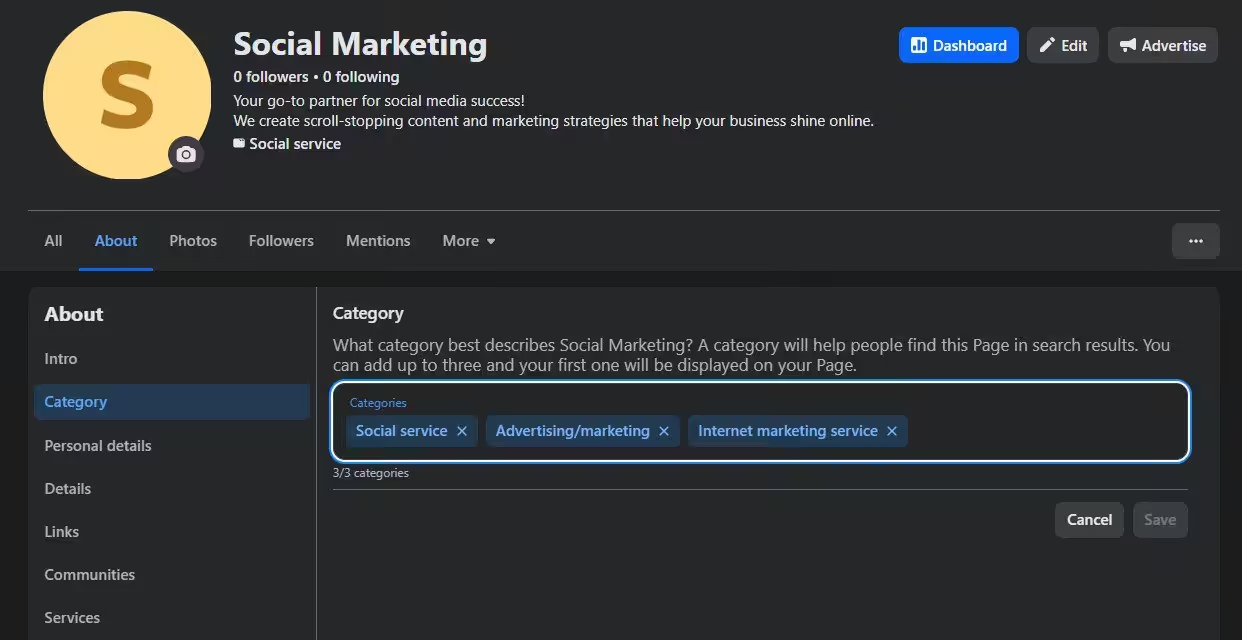
You can add up to three categories. They directly affect who Facebook suggests your page to.
Your short description (255 characters max) needs to work harder than most people let it. Don’t waste it on generic lines. Write it as if someone will read it and decide in 10 seconds whether to follow you. Include your primary keyword naturally, what you do, and who you do it for.
Step 3: Upload Visuals That Actually Represent Your Brand
Two images. That’s all Facebook gives you, and both need to be right.
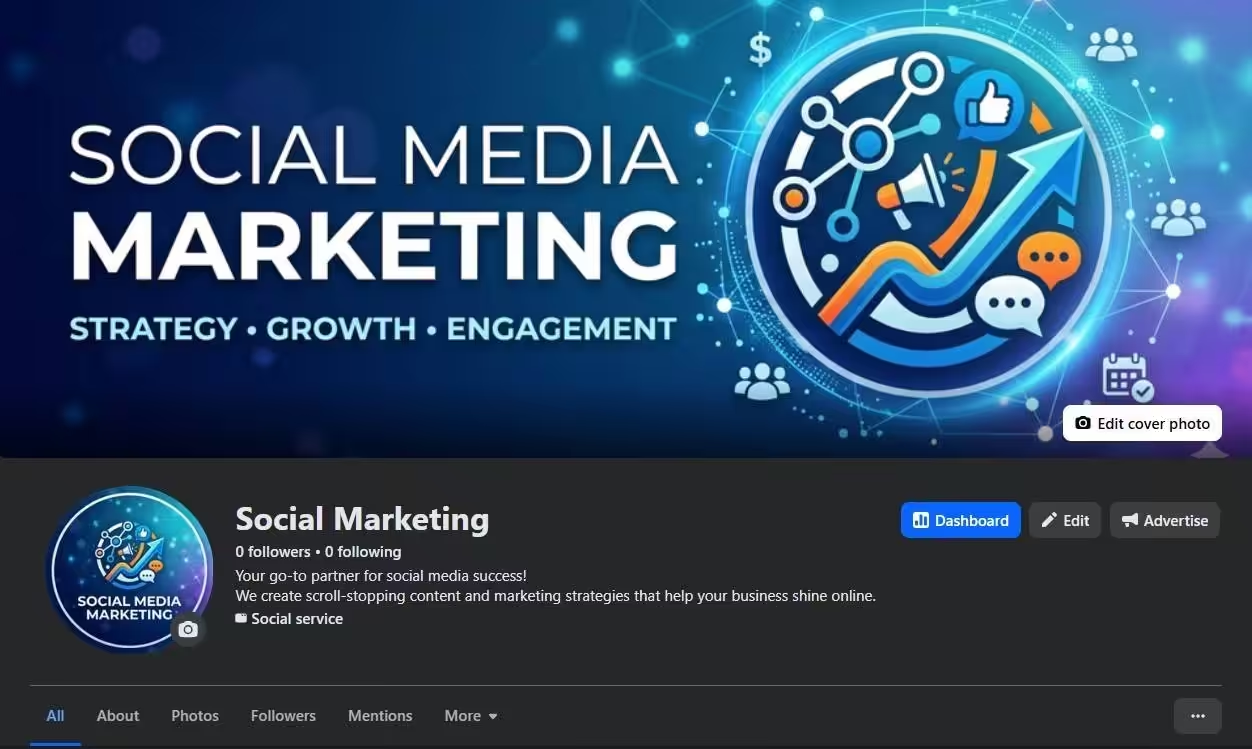
- Profile photo: Use your logo, clean and centred. Recommended size is 170 x 170 pixels. Remember, this image appears as a tiny circle next to every post and comment you make. If it’s blurry or awkwardly cropped, it quietly damages your credibility every single time.
- Cover photo: This is prime real estate. Recommended size is 820 x 312 pixels for desktop, but design for 640 x 360 pixels if most of your audience is on mobile (which, statistically, they are). Use this space intentionally: a product shot, a tagline, a seasonal promotion. Update it regularly. Pages that update their cover photo signal activity to both visitors and the algorithm.
Step 4: Fill In Every Single Field in the About Section
This is where most pages fall flat. People skip the fields they consider optional and wonder later why their page isn’t showing up in searches. Here’s what you need to fill in:
- Website URL: Links your page to your site and improves both Facebook and Google discoverability
- Phone Number: Builds trust and enables the “Call Now” feature on mobile
- Email Address: For Messenger and contact transparency
- Business Hours: Especially critical for local businesses; Facebook shows “Open Now” or “Closed” based on this
- Location/Address: Even service-based businesses benefit from a city/region tag for local search
- Price Range: Underutilised, but it helps pre-qualify visitors
Think of this section less like a form and more like an SEO opportunity. The words you use here are indexed by Facebook and Google.
Step 5: Set Up Your Username and Vanity URL
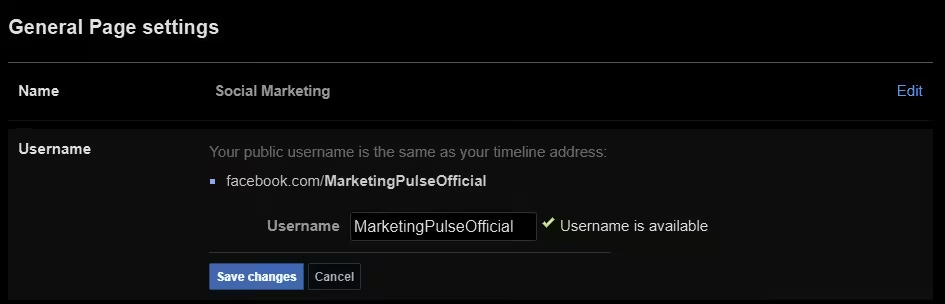
Your username is what comes after facebook.com/. Instead of facebook.com/pages/yourbusiness/1283744927, you want facebook.com/yourbusinessname.
Go to Settings → Page Setup → Username → Edit.
Keep it consistent with your handle on Instagram, X, and LinkedIn. This isn’t just about aesthetics. Consistent usernames across platforms build searchability and make it easier for people to tag you.
Step 6: Add Your CTA Button
The blue Action Button sits right under your cover photo and can be set to: Book Now, Contact Us, Send Message, Call Now, Learn More, Shop Now, and more.
Don’t default to “Send Message” just because it’s easy. Think about where you actually want people to go. If you’re running lead gen, use “Sign Up.” If you’re a service business, “Book Now” connected to a scheduling tool converts better than any post ever will.
Step 7: Verify Your Page
The blue checkmark that comes with verification isn’t just a cosmetic badge. Verified pages rank higher in Facebook search results, appear more credible to new visitors, and are protected against impersonation, which is a real problem for growing brands.
To request verification: Settings → General → Page Verification. You’ll need to confirm your phone number or submit business documentation. It takes a few days, but it’s worth it.
Before You Hit Publish, Do This First!
- Keep your page unpublished until it’s actually ready.
- Create at least 3–5 posts before you go public. An empty page with zero content makes the worst first impression.
- Pin your strongest post to the top, make sure your visuals look right on both desktop and mobile, and double-check that your CTA button works correctly.
- Then publish.
- Now, you can invite people.
A fully built page on day one looks like a business that means it.
What Are the Best Types of Content to Post on Facebook?
There’s no single “best” content type in Facebook marketing, and anyone who tells you otherwise is oversimplifying. What actually works is understanding why each format behaves differently, then building a mix that plays to all of them.
-
Photos: Still the Engagement Workhorse

A Photo on Facebook Photos remain the most reliable format for consistent interaction. But the key isn’t just any photo. It’s context. What outperforms polished studio shots:
- Your product is being used in a real situation
- Behind-the-scenes imagery
- Text-overlay graphics with a single clear takeaway
- Multi-image albums that tell a story
Human content builds trust faster than branded content ever will. If it looks like an ad, people scroll past it. If it looks like a moment, they stop.
-
Video and Reels: Your Reach Multiplier
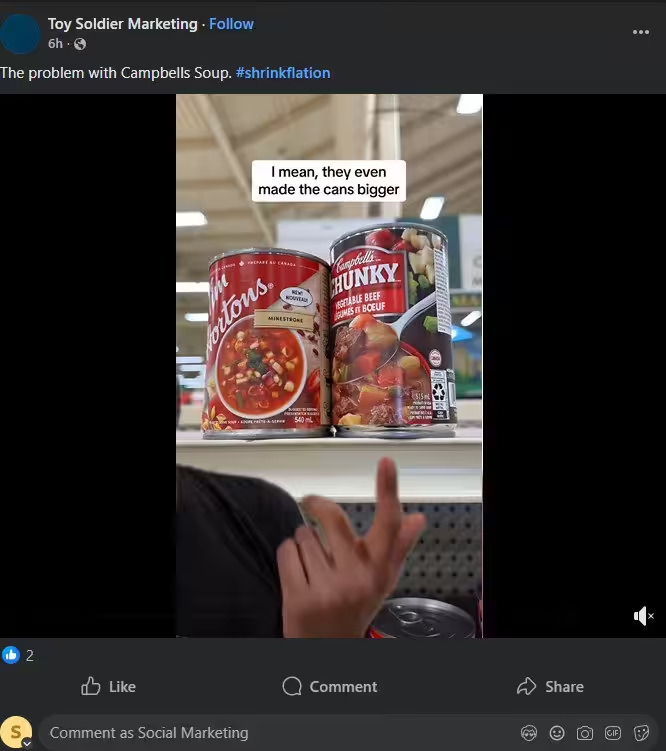
A Video Post on Facebook Video reaches more people than any other format. Reels specifically get pushed to audiences who don’t follow you yet, making them the most powerful organic discovery tool in your Facebook marketing strategy right now.
The formula is simple:
- Hook viewers in the first 3 seconds
- Keep it under 2 minutes
- Always add captions (Facebook auto-plays on mute)
- Prioritize tutorials, demos, and testimonials over polished brand videos
Facebook video marketing isn’t optional anymore. It’s the entry ticket to organic reach in 2026.
-
Stories: Stay Top of Mind
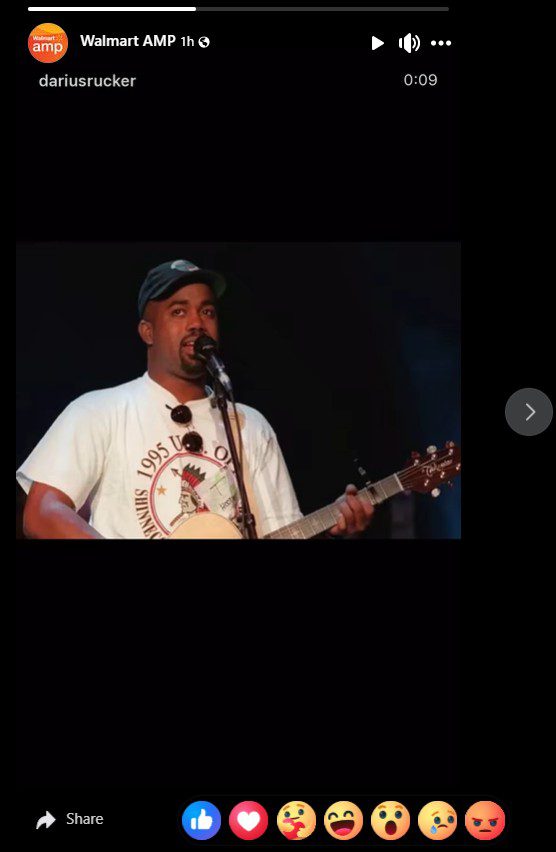
A Story on Facebook Stories disappear in 24 hours, which creates natural urgency. They’re perfect for:
- Limited-time offers
- Quick polls and questions
- Day-in-the-life content
- Event countdowns
They don’t clutter your main feed, and they keep your brand visible at the top of the app, where attention lands first.
-
Polls and Question Posts: The Underrated Engagement Driver
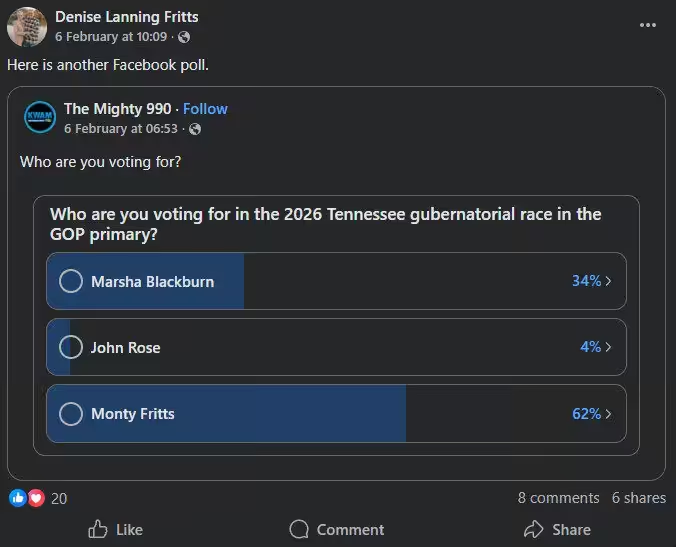
A Poll on Facebook A well-crafted question post can out-comment a heavily produced video. For Facebook marketing for small businesses, polls are particularly powerful as they generate real engagement and give you live audience insights without a production budget.
The key is specificity. “What do you think?” gets ignored. “Which packaging do you prefer, A or B?” gets responses.
-
Link Posts: Use Them Carefully
Link posts have the lowest engagement rate of any format. The algorithm deprioritizes content that sends people off-platform.
The workaround? Drop your link in the first comment, not the caption. Your post performs better organically, and the link is still accessible for anyone who wants it.
The Content Mix That Actually Works
Instead of guessing what to post each day, follow a structured weekly ratio:
| Content Type | Weekly Frequency | Purpose |
|---|---|---|
| Reels / Short-form video | 2 posts | Reach and discovery |
| Photos / Carousels | 2 posts | Engagement and trust |
| Polls / Questions | 1 post | Interaction and audience insights |
| Educational tips / How-to | 1 post | Authority and value |
| Soft CTA / Promotional | 1 post | Conversion |
This framework ensures you’re never overloading your audience with promotions or starving the algorithm of engaging content. Consistency with this structure beats posting randomly every single time.
Track what’s working using Facebook stats inside Meta Business Suite, as your own audience data will always be more accurate than any general benchmark.
Quick Tip: Post 30 minutes before your audience’s peak activity window, not during it. Your content gains early traction, so it’s already performing when the traffic surge hits, giving the algorithm a reason to push it further.
How to Create a Facebook Marketing Strategy That Delivers Results
Let me come to the point.
If your Facebook marketing strategy is “post and pray,” you don’t have a strategy. You have a habit. And habits without direction don’t generate leads, sales, or growth.
The brands winning on Facebook right now aren’t necessarily spending more or posting more. They’ve built a system where every piece of content connects to a business outcome. Here’s how to build yours.
Set Goals You Can Actually Measure
Vague goals produce vague results. “Get more engagement” tells you nothing. Instead, use the SMART framework to force clarity:
- Specific: “Generate 150 leads through Facebook lead form ads” beats “get more leads.”
- Measurable: Attach a number. If you can’t track it, you can’t improve it.
- Achievable: Ambitious is good. Delusional wastes budget.
- Relevant: Does this goal actually drive revenue, or just look good in a screenshot?
- Time-bound: “By the end of Q2” is a deadline. “Soon” is a wish.
Most importantly, your Facebook goals need to ladder up to real business objectives. If your company needs sales, optimizing for reach alone is a vanity play. Every goal should answer one question: how does this move the business forward?
Know Exactly Who You’re Talking To
You can’t create content that resonates if you don’t deeply understand who’s on the other side.
Start with Meta Audience Insights. It shows you the demographics, behaviors, and interests of your existing audience for free. Then look at your top-performing posts from the last 90 days. What format? What topic? That’s your audience telling you what they want.
For Facebook marketing for small businesses, this step is your competitive edge. You can’t out-spend bigger brands, but you can out-target them when your audience research is sharper.
Build a Content Plan With Structure
Stop winging it. A simple weekly framework keeps you consistent without burning out:
| Day | Content Type | Purpose |
|---|---|---|
| Monday | Educational tip or how-to | Value-driven, builds authority |
| Tuesday | Reel or short-form video | Reach and discovery |
| Wednesday | Poll, question, or engagement post | Interaction and algorithm boost |
| Thursday | Behind-the-scenes or team content | Trust and relatability |
| Friday | Reel or video (different angle) | Reach expansion |
| Saturday | User-generated content or testimonial | Social proof |
| Sunday | Soft CTA or promotional post | Conversion |
Plan at least two weeks ahead. This gives you room to jump on trends without abandoning your core Facebook marketing strategy. Using a Facebook post scheduler can make this process significantly easier and more consistent.
Track What Matters, Ignore What Doesn’t
Review these weekly: engagement rate, CTR, cost per result, and conversion rate. Reach is a useful context, but conversions pay the bills. If a metric doesn’t connect to a business outcome, it’s a distraction.
This video breaks down the strategic framework visually, worth watching alongside this guide:
Let Tools Do the Heavy Lifting
If you’re manually logging in daily to post and check stats, you’re spending time on execution that should go toward strategy.
Tools like Social Champ let you schedule your entire content calendar, track performance from one dashboard, and manage multiple pages, so your Facebook marketing strategy actually runs like a system, not a scramble.
The formula is straightforward: Set SMART goals tied to business outcomes, research your audience before you create, plan content with a repeatable structure, track results weekly, and use the right tools to stay consistent. That’s not a hack. That’s a strategy that compounds.
Your Facebook Strategy Deserves a System, Not a Spreadsheet!
Tips to Execute a Successful Facebook Marketing Strategy
A strategy without execution is just a document no one looks at. I’ve seen brands invest weeks into planning a Facebook marketing strategy, then fumble the moment it’s time to actually do the work.
These are the Facebook marketing tips that bridge the gap between planning and results.
-
Make Video Your Default, Not Your Exception
Static posts still have a place, but if they’re the backbone of your content, you’re leaning on the weakest format available.
Facebook video marketing dominates in 2026. Reels specifically get pushed to users who don’t follow your page, making them the most effective organic discovery tool on the platform.
What works right now:
- A strong hook in the first 3 seconds
- Captions on every video (most users watch on mute)
- Tutorial clips, quick demos, behind-the-scenes moments
- Customer testimonials over polished brand videos
You don’t need cinematic production. You need consistency and a clear message. If video isn’t leading your content mix, you’re leaving reach on the table weekly.
-
Install Meta Pixel, and Actually Use It
Most brands install Meta Pixel during setup, then never touch it again. That’s a massive missed opportunity. When configured properly, Pixel tracks what users do after clicking your ad. That behavioral data lets you:
- Build Custom Audiences from visitors who didn’t convert
- Create Lookalike Audiences mirroring your best customers
- Run retargeting campaigns with specific messaging for warm leads
Without it, your Facebook marketing strategy is flying blind every time you spend money on ads. This isn’t advanced marketing; it’s foundational.
-
Stop Posting Manually Every Day
Logging in each morning to figure out what to post means you’re spending energy on execution instead of strategy.
A better approach:
- Batch your content weekly
- Plan it against your content framework
- Use Social Champ to schedule Facebook posts in advance
This keeps posting consistent even when you’re busy and gives you a bird’s-eye view of your calendar, so you can spot gaps like three promotional posts in a row with zero value content in between.
The best Facebook marketing tools don’t just automate publishing; they force you to think in systems.
-
Run Ads Through Ads Manager, Not the Boost Button
This is one of the most common mistakes in Facebook marketing for small businesses. A post gets decent engagement, so you hit “Boost” and throw budget at it. It feels productive, but it’s not the same as a structured campaign.
Approach What It Does Best For Boost Post Pushes an existing post to a wider audience with basic targeting Quick visibility, social proof Ads Manager Campaign Full control over objectives, placements, audiences, and conversion tracking Lead gen, sales, retargeting funnels Boosting is fine for amplifying organic winners. But if your goal is conversions or building retargeting funnels, Ads Manager gives you precision that boosting simply can’t. Different objectives need different Facebook marketing solutions.
-
Cross-Promote Your Facebook Presence Everywhere
Your Facebook page shouldn’t grow in isolation.
- Link it in your email signature
- Embed it in blog content
- Reference it in LinkedIn posts
When someone searches your brand, your Facebook page should appear alongside your website, not buried under competitors.
-
Engage Like a Person, Not a Page
The algorithm in 2026 weighs meaningful interactions, comments, shares, and replies far more heavily than passive likes. Every real conversation signals to Facebook that your content is worth distributing further.
Quick rules:
- Reply to comments within the hour
- Respond to Messenger messages the same day
- Ask specific, opinionated questions, not generic “What do you think?” prompts
- Treat every comment thread as a trust-building opportunity
Pro Tip: Audit your Facebook Page every quarter. Check that your business hours, contact details, CTA button, and pinned post are all current. An outdated page silently erodes trust, and most brands don’t notice until engagement has already dropped off a cliff.
Featured Article: What to Post on Facebook: A Comprehensive Guide to Boost Engagement
What Are the Latest Facebook Advertising Options and How to Use Them?
If organic reach is the slow burn, Facebook Ads are the accelerant. But here’s what most brands get wrong: they jump into ads without understanding the formats, the targeting, or how the platform actually wants you to spend money.
Facebook’s ad ecosystem in 2026 is more sophisticated than ever. The brands getting real returns aren’t just “running ads.” They’re matching the right format to the right objective with the right audience. Let me break down how.
Ad Formats: Choosing the Right One for the Job
Not every ad format serves the same purpose. Picking the wrong one is like using a billboard when you need a direct mail piece.
| Ad Format | What It Is | Best For |
|---|---|---|
| Image Ads | Single static visual with copy and CTA | Brand awareness, simple offers |
| Video Ads | Short or long-form video content | Storytelling, product demos, retargeting |
| Carousel Ads | Up to 10 scrollable images/videos in one ad | Showcasing multiple products or features |
| Slideshow Ads | Lightweight video created from static images | Low-bandwidth audiences, quick production |
| Collection Ads | Instant full-screen mobile experience after click | Immersive shopping and mobile-first campaigns |
A few things worth noting:
- Video ads consistently deliver the lowest cost per result. If you’re investing in Facebook video marketing, your ads should reflect that, not just your organic content.
- Carousel ads are massively underused. They’re perfect for Facebook ads for real estate, product lineups, or walking someone through a process step by step.
- Collection ads are built for mobile shopping. If your audience buys on their phone, this format removes friction between discovery and purchase.
Targeting: This Is Where Facebook Earns Its Money
The real power of Facebook advertising isn’t the creative. It’s the targeting. No other platform lets you get this specific about who sees your ad.
Core targeting layers:
- Demographics: Age, gender, location, job title, education, relationship status
- Interests: Pages liked, topics engaged with, content consumed
- Behaviors: Purchase history, device usage, travel patterns
- Custom Audiences: People who’ve already visited your website, engaged with your page, or are on your email list
- Lookalike Audiences: New users who mirror the behavior of your best existing customers
The mistake most businesses make is that they target too broadly. A well-defined audience of 50,000 will almost always outperform a vague audience of 2 million, because relevance drives conversions, not volume.
For Facebook marketing for small businesses, especially, tight targeting is how you compete with bigger budgets. You don’t need to reach everyone. You need to reach the right ones.
Setting Up Campaigns in Ads Manager
If you’ve only ever used the Boost button, Ads Manager will feel like a different platform, because it basically is.
Here’s the simplified structure:
- Campaign Level: Choose your objective (awareness, traffic, leads, conversions)
- Ad Set Level: Define your audience, placements, budget, and schedule
- Ad Level: Upload your creative, write your copy, set your CTA
One critical tip: Let Facebook handle placements automatically unless you have data telling you otherwise. Advantage+ placements use Meta’s AI to distribute your ad across Facebook, Instagram, Messenger, and the Audience Network based on where it performs best. In most cases, it outperforms manual placement selection.
Budgeting and Bidding: Spend Smart, Not Big
You don’t need a massive budget. You need a structured one.
- Start with $10–20/day per ad set during testing
- Run 3–4 creative variations against the same audience
- Kill underperformers after 3–5 days. Scale winners by increasing the budget by no more than 20% every 48 hours, as sudden jumps reset the algorithm’s learning phase
- Use Campaign Budget Optimization (CBO) to let Meta distribute spend toward the best-performing ad sets automatically
Measuring What Matters
Once your ads are live, focus on these metrics:
- CTR (Click-Through Rate): Are people actually clicking?
- CPC (Cost Per Click): What are you paying for each visit?
- Conversion Rate: Of those who clicked, how many took action?
- ROAS (Return on Ad Spend): For every dollar in, how much came back?
If your CTR is strong but conversions are low, the problem isn’t your ad. It’s your landing page. If CTR is weak, your creative or targeting needs work. Every metric tells you where the breakdown is, not just that something isn’t working.
Facebook Ads aren’t a slot machine. They’re a testing system. The brands seeing real Facebook marketing solutions from paid campaigns are the ones treating every dollar as a data point, testing formats, refining audiences, and scaling only what the numbers prove works.
How to Use Facebook Insights and Analytics for Improved Performance
Here’s something I see constantly.
Brands are posting consistently, running ads, and even building a decent following, but they never actually look at the data. They’re making decisions based on gut feeling instead of evidence. And gut feeling, no matter how experienced you are, doesn’t scale.
Facebook gives you a free, built-in analytics engine. If you’re not using it, you’re essentially driving with your dashboard blacked out.
The Metrics That Actually Tell You Something
Not every number in your analytics deserves attention. Some look impressive but mean nothing for growth. Others seem small but directly predict revenue.
Here’s what to focus on:
| Metric | What It Tells You | Why It Matters |
|---|---|---|
| Reach | How many unique users saw your content | Measures distribution, is the algorithm pushing your content? |
| Engagement Rate | Interactions (comments, shares, saves) relative to reach | Signals content quality, higher engagement = more organic distribution |
| Click-Through Rate (CTR) | Percentage of people who clicked your link or CTA | Shows whether your message is compelling enough to drive action |
| Conversions | Completed actions (signups, purchases, form submissions) | The only metric that directly ties to revenue |
| Video Retention | How long do people watch before dropping off | Critical for Facebook video marketing, tells you exactly where you lose attention |
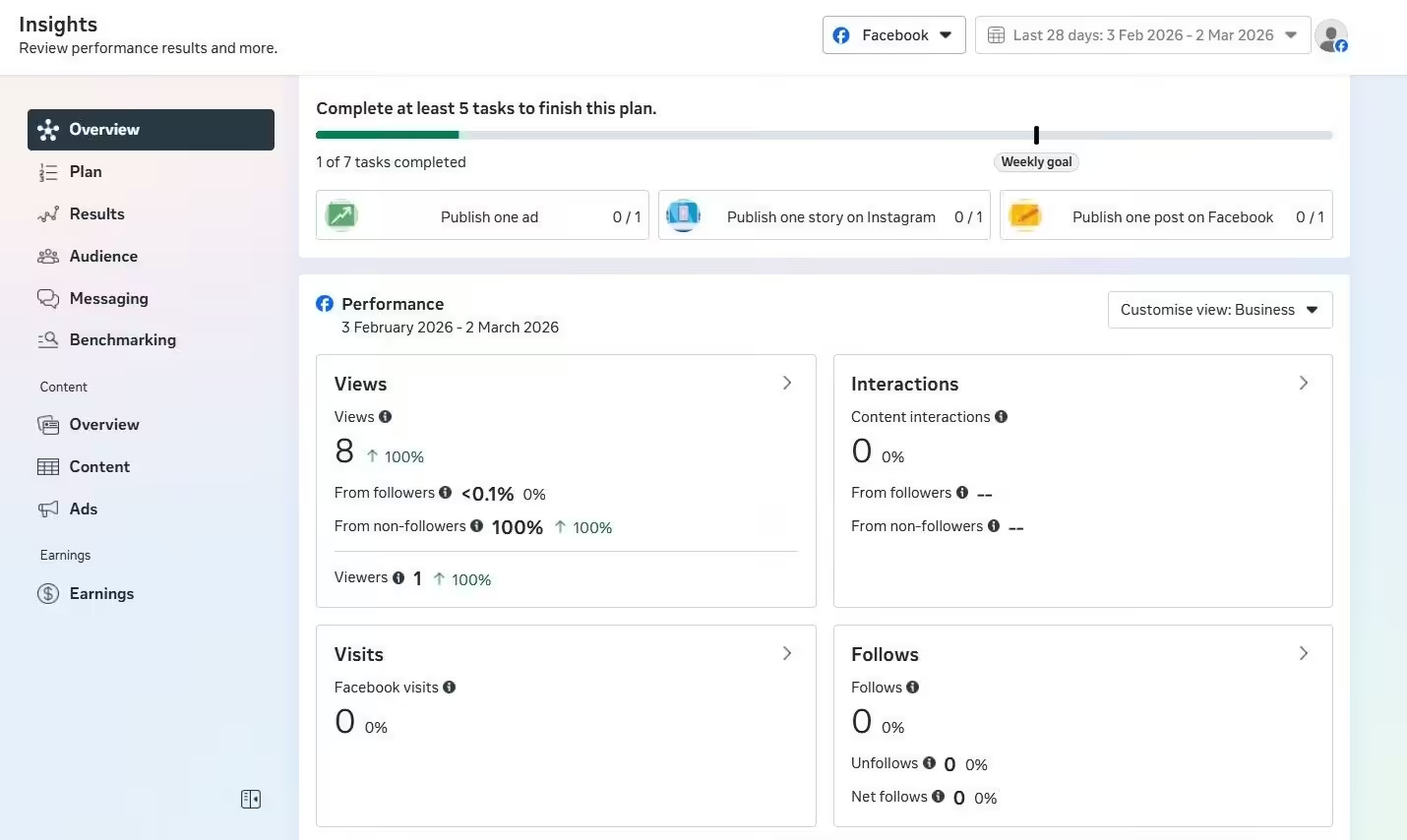
You’ll find most of these inside Meta Business Suite under the Insights tab. If you’re running ads, Ads Manager gives you a deeper layer, cost per result, ROAS, frequency, and audience breakdowns.
How to Actually Read the Data (Not Just Look at It)
Numbers without interpretation are just decoration. Here’s how to turn your metrics into decisions:
High reach, low engagement? Your content is getting distributed, but people aren’t stopping. The hook is weak, or the format isn’t resonating. Test a different opening line, switch from static image to Reel, or try a more specific audience segment.
High engagement, low clicks? People like the content, but they’re not taking the next step. Your CTA is either unclear, buried, or asking too much too soon. Simplify the ask.
High clicks, low conversions? The ad or post is doing its job; the problem is downstream. Your landing page, form length, or offer isn’t matching the expectation your content sets. This is a funnel problem, not a Facebook problem.
Declining reach over time? The algorithm is deprioritizing your content. This usually means your engagement rate has dropped, you’re posting too much promotional content, or your format mix is stale. Revisit your content framework.
Every metric points to a specific fix. The brands running the strongest Facebook marketing strategy aren’t the ones with the best content. They’re the ones reading data weekly and adjusting.
A/B Testing: The Habit That Separates Guessing From Growing
If you’re not testing, you’re assuming. And assumptions get expensive. A/B testing on Facebook doesn’t need to be complicated. Here’s the simplest approach:
- Test one variable at a time: headline, image, CTA, audience, or placement. Never multiple at once, or you won’t know what caused the change.
- Run each variation for 5–7 days with equal budget
- Measure against one primary metric tied to your objective, not three or four
- Kill the loser. Scale the winner. Then test again.
Over time, these incremental improvements compound. A 15% better CTR here, a 20% lower cost per lead there. That’s how small Facebook marketing tips turn into significant budget savings.
When strategizing Facebook marketing for small businesses with limited ad spend, A/B testing isn’t optional. It’s how you make every dollar work harder without spending more.
Use the Right Tools to Make Analytics Actionable
Meta Business Suite gives you solid baseline data. But if you’re managing multiple content types, tracking posting consistency, and trying to connect organic performance with your ad results, you need a centralized view.
Social Champ pulls your Facebook analytics into a single dashboard alongside your scheduling and publishing workflow. Instead of jumping between tabs to figure out what’s working, you see performance data right next to the content that generated it.
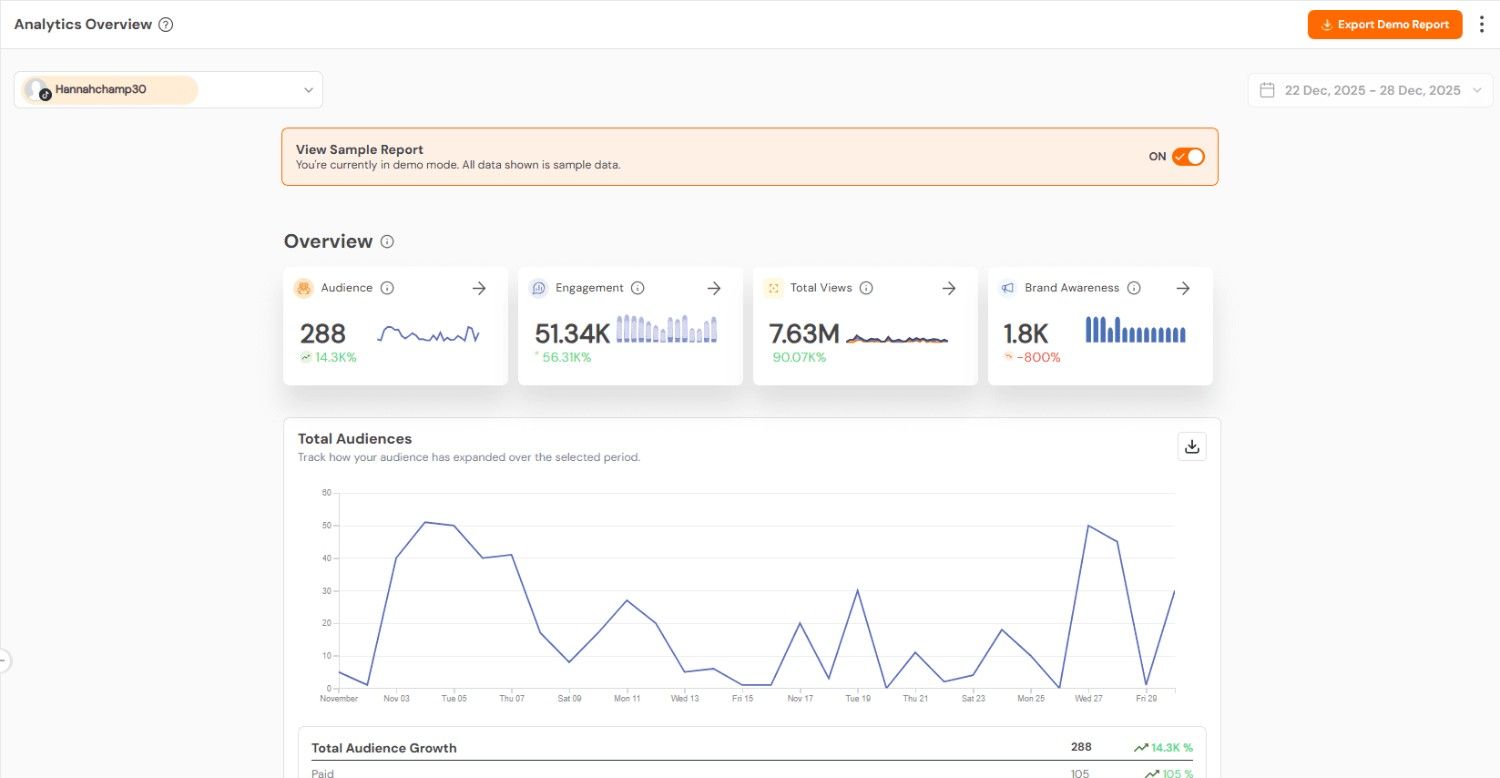
This is where Facebook marketing tools become operational, especially when you’re running a lean team managing a Facebook business account alongside other platforms.
You've Got the Data. Now Make It Easy to Act On.
What Are the Common Challenges in Facebook Marketing and How to Overcome Them?
I’ll be honest. Facebook marketing would be straightforward if the platform stopped changing every few months.
But it doesn’t. And the brands that struggle most aren’t the ones facing tough challenges. They’re the ones still using last year’s playbook to solve this year’s problems.
Here are the biggest obstacles I see businesses run into, along with the specific fixes for each.
The Algorithm Keeps Burying Your Content
This is the most common frustration. You’re posting regularly, your content looks good, but your reach keeps declining.
Why it happens: Facebook’s algorithm in 2026 prioritizes meaningful interactions, not just activity. If your posts aren’t generating comments, shares, or saves, the algorithm quietly stops distributing them. Posting more doesn’t fix this. Posting better does.
How to fix it:
- Shift toward formats that the algorithm actively pushes. Reels and short-form video get the most organic distribution right now
- Stop posting content that only informs. Start posting content that provokes a response, opinions, questions, and polls
- Reply to every comment within an hour. Each reply counts as an additional interaction, which signals the algorithm to keep pushing the post
- Audit your content mix. If more than 30% of your posts are promotional, the algorithm is already penalizing you
Ad Fatigue Is Draining Your Budget
You launched an ad that performed great for two weeks. Now your cost per result is climbing, CTR is dropping, and you’re wondering what went wrong.
Why it happens: Ad fatigue occurs when the same audience sees the same creative too many times. Facebook measures this through Frequency; once it crosses 2.5–3.0 for cold audiences, performance typically nosedives.
How to fix it:
| Symptom | Likely Cause | Fix |
|---|---|---|
| Rising cost per result | Creative fatigue | Rotate in new visuals and copy every 7–14 days |
| Dropping CTR | The audience has seen it too often | Expand audience or create new Lookalike segments |
| High frequency score | Audience pool too small | Broaden targeting or refresh Custom Audiences |
| Low relevance score | Message-audience mismatch | Revisit your offer and who you’re showing it to |
The key habit here is building creative rotation into your process from day one, not waiting until performance drops. Prepare 3–4 variations per campaign before launch, so you always have a fresh option ready.
Targeting the Wrong Audience (or Too Broad of One)
This one quietly wastes more ad spend than any other mistake. I’ve seen businesses throw hundreds of dollars at audiences of 5 million+ people with zero Custom Audience layering and wonder why nothing converts.
Why it happens: Broad targeting feels safe. It feels like you’re maximizing exposure. But exposure without relevance is just noise.
How to fix it:
- Start narrow, then expand. A well-defined audience of 50,000–200,000 built from Custom or Lookalike Audiences will almost always outperform a broad 2M+ cold audience
- Use Meta Pixel data to build audiences based on actual behavior, like page visits, cart additions, and video views, not just demographics
- Layer your targeting. Combine interest-based targeting with behavioral filters. Someone interested in “home buying” who also recently searched mortgage rates is a far better audience for Facebook ads for real estate than a generic homeowner segment
- Exclude converters. If someone already purchased, stop showing them the acquisition ad. This alone can reduce wasted spend significantly
Inconsistent Posting Killing Momentum
For Facebook marketing for small businesses, this is often the root cause behind everything else. You post consistently for three weeks, get busy, disappear for ten days, then wonder why your reach tanked.
Why it happens: Small teams. Limited time. No system in place.
How to fix it:
- Batch content creation into one session per week
- Use Facebook marketing tools like Social Champ to schedule everything in advance
- Follow a repeatable content framework, so you’re never starting from scratch
Consistency doesn’t mean posting daily. It means showing up on a predictable rhythm that your audience and the algorithm can rely on.
Measuring the Wrong Things
Vanity metrics feel good but don’t pay bills. If your weekly report highlights follower count and post likes but ignores CTR, conversion rate, and cost per result, you’re optimizing for applause instead of outcomes.
How to fix it:
- Tie every metric back to a business objective
- Review performance weekly, not monthly
- If a metric doesn’t influence a decision, stop tracking it
Featured Article: Top 15 Facebook Publishing Tools to Boost Your Strategy
How to Integrate Facebook Marketing With Other Social Media Platforms
Here’s a pattern I see with businesses that plateau.
They treat every platform like a separate island. Facebook content stays on Facebook. Instagram stays on Instagram. LinkedIn exists in its own universe. And the team behind it all is doing triple the work for a fraction of the results.
The brands growing fastest in 2026 aren’t running five separate strategies. They’re running one connected system across multiple platforms, and Facebook sits at the center of it.
Why a Multi-Platform Approach Isn’t Optional Anymore
Your audience doesn’t live on one platform. They scroll Facebook in the morning, check Instagram at lunch, browse LinkedIn during work, and watch YouTube at night. If your brand only exists in one of those moments, you’re invisible for the rest.
A multi-platform approach does three things:
- Increases touchpoints: Marketing research consistently shows that people need 7–10 brand exposures before taking action. One platform can’t deliver that alone.
- Reduces platform dependency: If Facebook changes its algorithm tomorrow (and it will), your entire pipeline doesn’t collapse.
- Reinforces your message: Seeing the same brand with consistent messaging across multiple platforms builds familiarity and trust faster than repetition on a single channel.
This doesn’t mean doing more work. It means making the same work go further.
The Cross-Promotion Framework That Actually Works
Cross-promotion isn’t just copy-pasting the same post everywhere. Each platform has different audience expectations, formats, and algorithm preferences. The strategy is adapting your core message to fit each environment, not duplicating it blindly.
Here’s how to think about it:
| Platform | What Works Best | How It Connects to Facebook |
|---|---|---|
| Reels, Stories, visual-first content | Repurpose top-performing Facebook Reels directly. Cross-post Stories to both platforms simultaneously | |
| Long-form thought leadership, industry insights | Take your best-performing Facebook educational posts and expand them into LinkedIn articles or text posts | |
| X | Short takes, real-time commentary, threads | Pull key stats or one-liners from your Facebook content and reformat as standalone posts |
| YouTube | Long-form video, tutorials, deep dives | Use short clips from YouTube content as Facebook Reels. Link full videos in Facebook posts |
| TikTok | Trend-driven short-form video | Reels that perform on Facebook often perform on TikTok with minor tweaks to pacing and captions |
The principle is simple: create once, adapt many times.
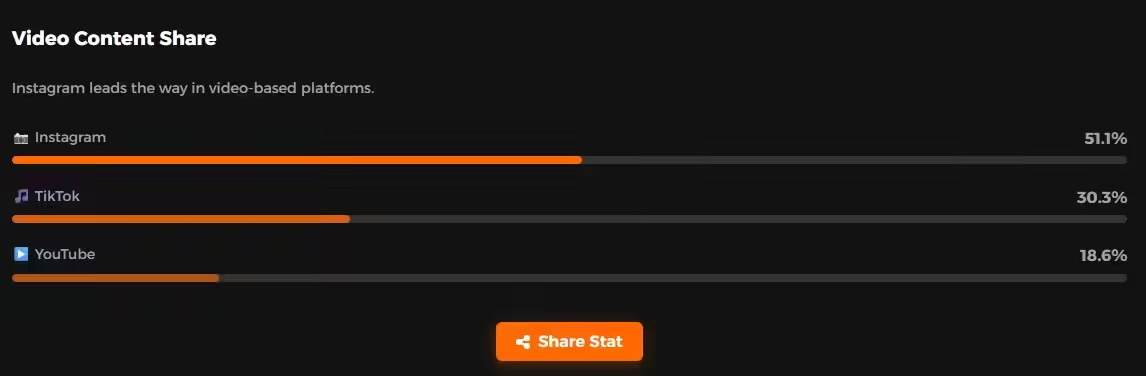
When integrating your platforms, prioritize video. Social Champ’s data reveals that Instagram currently leads the video content share at 51.1%, but Facebook’s ecosystem is catching up. Repurposing your high-performing Facebook Reels for Instagram and TikTok is no longer optional; it’s a data-backed necessity for 2026.
Platform-Specific Adaptation Tips
Let’s take a look at platform-specific adaptation tips:
Facebook → Instagram
This is the easiest integration because Meta owns both platforms. You can:
- Cross-post Reels directly from one platform to the other
- Run ads across both from a single Ads Manager campaign
- Share Stories simultaneously
One thing to watch is that Facebook ad sizes don’t always translate perfectly to Instagram placements. A 1200×628 Facebook feed image gets cropped awkwardly in Instagram’s square feed.
Always check your creative renders on both platforms before publishing.
Facebook → LinkedIn
Different audience, different tone, but the content overlap is bigger than most people think.
Your best-performing Facebook marketing tips posts, the ones with high saves and shares, are prime candidates for LinkedIn. Expand them slightly, shift the tone from conversational to professional, and reformat for LinkedIn’s text-heavy feed.
The audiences are different, but the value is the same.
Facebook → YouTube (and Back)
If you’re investing in Facebook video marketing, you likely have longer-form content that could live on YouTube. Conversely, every YouTube video is a source of 3–5 short clips you can repurpose as Facebook Reels.
This loop creates a system where one piece of content fuels multiple platforms without starting from scratch each time.
Facebook → Email
This one gets overlooked constantly. Your top-performing Facebook posts, the ones with high engagement and clicks, tell you exactly what messaging resonates with your audience. Use those insights to:
- Write better email subject lines
- Shape newsletter content
- Build lead magnet topics based on what your Facebook audience engages with most
The data flows both ways. Email open rates and click patterns can also inform your Facebook marketing strategy.
Maintain Consistent Branding Everywhere
Cross-promotion falls apart when your brand looks different on every platform. If your Facebook page uses one color palette, your Instagram has a different tone, and your LinkedIn feels like a completely separate company, you’re confusing people instead of building recognition.
What needs to stay consistent:
- Visual identity: Same logo, color palette, and font treatments across every platform
- Voice and tone: If you’re conversational on Facebook, don’t suddenly become corporate on LinkedIn. Adjust formality slightly, but keep the core personality intact
- Core messaging: Your value proposition shouldn’t change between platforms. The format changes. The message doesn’t.
- Username/handle: Use the same handle everywhere. It makes it easier to find, tag, and search for
This sounds basic, but I’ve audited dozens of brands where their Facebook page and Instagram profile look like they belong to two different companies. That inconsistency costs trust silently and constantly.
Use One Tool to Manage It All
Here’s where the operational side of cross-platform marketing either works or collapses. If you’re logging into four separate platforms to post, then switching to another tab for analytics, and manually tracking what went where, you’re burning hours that should go toward strategy.
Social Champ lets you manage Facebook, Instagram, LinkedIn, X, and more from a single dashboard. You can:
- Schedule content across all platforms in one session
- Tailor each post’s format and copy per platform without starting from scratch
- Track performance analytics side by side, so you can see which platform drives the most engagement, clicks, and conversions for the same content
- Maintain a unified content calendar that shows your entire cross-platform strategy at a glance
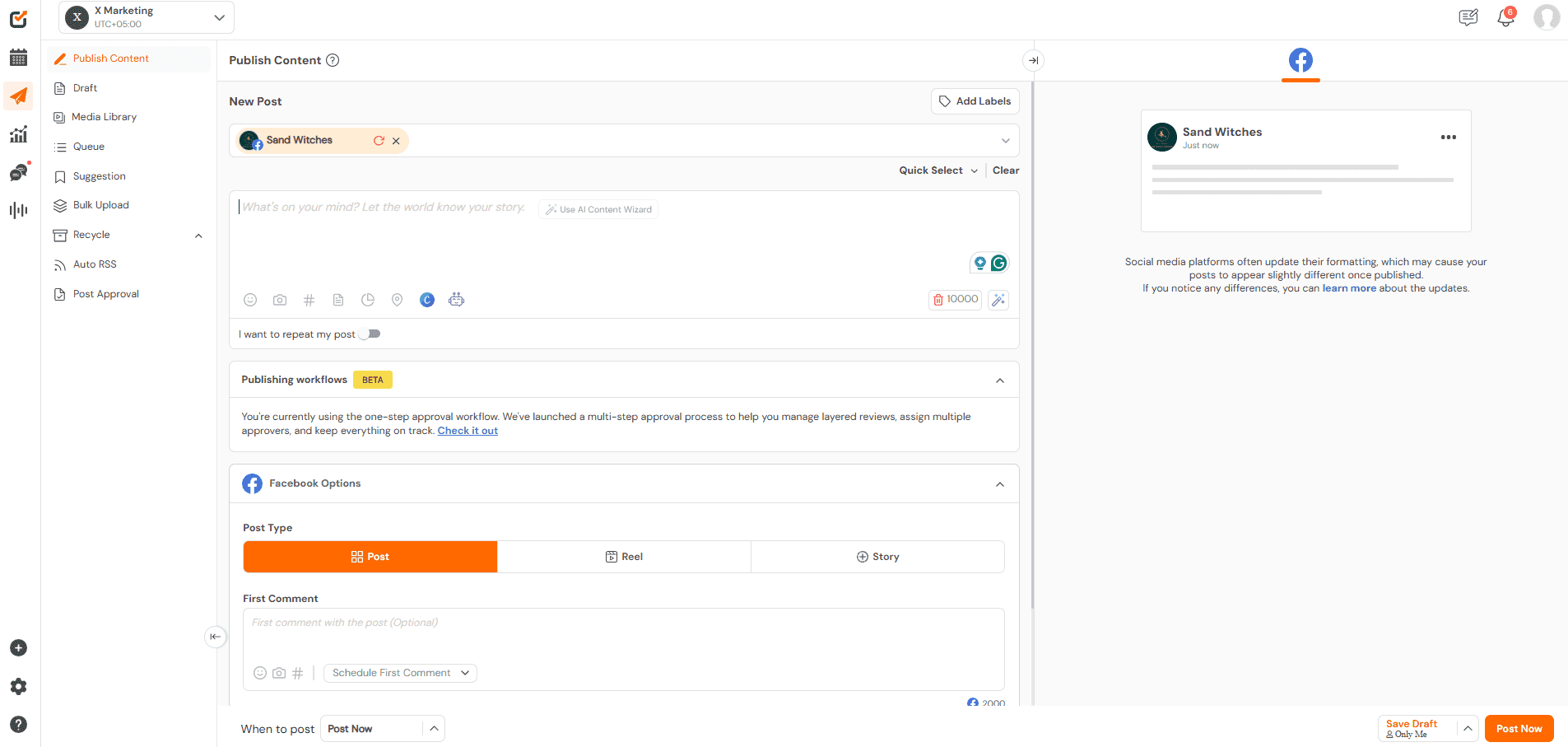
For Facebook marketing for small businesses running with lean teams, this isn’t a luxury. It’s the difference between sustainable execution and burnout.
The Content Recycling System
Instead of creating net-new content for every platform, build a recycling system:
- Create one core piece of content, a video, blog post, or in-depth Facebook post
- Adapt it into platform-specific formats:
- Pull a 30-second clip for Reels
- Write a text summary for LinkedIn
- Create a carousel for Instagram
- Extract a quote graphic for X
- Schedule all variations through Social Champ in one sitting
- Track which platform drives the best results for each content type
- Double down on the platforms and formats that perform
This system means you’re creating once and distributing five times, with each version optimized for where it lives.
Managing Facebook, Instagram, LinkedIn, and X Separately?
How to Stay Updated With Facebook Marketing Trends and Best Practices
Here’s an uncomfortable reality. The Facebook marketing strategy that’s working for you right now has a shelf life. Maybe six months. Maybe less. The platform evolves constantly, and what drives results today can quietly stop working tomorrow without warning.
I’ve watched brands build entire campaigns around features that Meta deprecated a quarter later. The ones who recovered quickly weren’t smarter; they were just paying attention.
Staying updated isn’t a bonus activity you do when you have free time. It’s a core part of running a functioning Facebook marketing strategy.
Why “Set It and Forget It” Doesn’t Work on Facebook
Facebook makes hundreds of changes per year, such as algorithm updates, new ad formats, shifting organic reach mechanics, updated policies, and feature rollouts. Most of these happen without a major announcement.
The consequences of not keeping up:
- Ad costs creep up because you’re using outdated targeting approaches
- Organic reach drops because your content format mix hasn’t adapted
- Campaigns get rejected because policy changes caught you off guard
- Competitors pull ahead because they adopted new features while you were still debating
For Facebook marketing for small businesses, especially, one missed update can mean weeks of wasted budget before you even notice the shift.
Where to Actually Get Reliable Updates
Not all sources are equal. Half the “Facebook marketing tips” content online is recycled advice from 2021 with a new publish date. Here’s where I’d actually spend your attention:
| Source | What It Gives You | Best For |
|---|---|---|
| Meta Business Blog | Official announcements, product updates, and new features | Knowing what’s changing directly from the source |
| Social Champ Blog | Actionable strategies, platform-specific guides, and tool updates | Practical application of new Facebook marketing tips |
| Jon Loomer’s Blog | Deep-dive Facebook ad strategies, advanced testing frameworks | Paid advertising optimization |
| Social Media Examiner | Industry trends, expert interviews, and broad social strategy | Staying current across platforms |
| HubSpot Marketing Blog | Data-backed insights, benchmark reports, strategy templates | Connecting Facebook marketing to broader business goals |
| Reddit (r/FacebookAds) | Real-time practitioner discussions, troubleshooting | Hearing what’s actually working from people spending money daily |
Want a deeper look at what’s shaping social media this year? Social Champ’s Social Media Trends for 2026 report reveals that while Facebook accounts for over 82% of post volume, only 15% of those posts currently utilize links. This suggests a massive opportunity for brands to drive traffic by using links more intentionally in high-value posts.
Set Up a Passive Update System
You don’t need to check ten websites every morning. Build a system that brings updates to you.
Google Alerts: Set up alerts for these terms at google.com/alerts:
- “Facebook algorithm update”
- “Meta advertising changes”
- “Facebook marketing 2026“
- “Meta Business Suite update”
You’ll get email notifications whenever something relevant gets published. Takes 5 minutes to set up and runs forever.
Newsletters worth subscribing to:
- Meta Business News: Direct from the source
- Social Champ Newsletter: Actionable social media strategies, feature updates, and platform changes delivered to your inbox
- Social Media Examiner Weekly: Curated industry roundup
- Stacked Marketer: Daily digital marketing brief that covers Facebook changes alongside broader trends
Podcasts for passive learning:
- Beyond the Feed by Social Champ: Conversations on social media strategy, trends, and what’s actually working right now
- Social Media Marketing Podcast: Weekly, covers platform changes in real time
The goal is to build a system where relevant information reaches you without requiring daily manual effort.
Join Communities Where Practitioners Share What’s Working
Blog posts tell you what changed. Communities tell you what to do about it.
The most valuable Facebook marketing tips I’ve seen don’t come from official announcements, but they come from practitioners testing things in real time and sharing results.
Worth joining:
- Facebook Ad Buyers Group (Facebook Group): Active discussions on campaign performance and algorithm shifts
- r/FacebookAds and r/PPC on Reddit: Unfiltered, real-time feedback from people managing real budgets
- LinkedIn communities focused on paid social, more strategic, B2B-oriented conversations
When Meta rolls out a change, these communities surface practical workarounds days before most blogs publish about it.
Build a Monthly Review Habit
Staying informed means nothing if you don’t act on it. I’d recommend a simple monthly practice:
- Week 1: Review what changed on Facebook this month (algorithm, features, ad options)
- Week 2: Audit your current Facebook marketing strategy against those changes
- Week 3: Test one new approach based on what you learned
- Week 4: Measure results and decide whether to integrate or discard
This turns “staying updated” from a vague intention into an actual operational rhythm. It’s also how you keep your Facebook marketing tools and tactics aligned with how the platform actually works, not how it worked six months ago.
Use Tools That Evolve With the Platform
Your Facebook marketing tools should update as the platform updates. Social Champ consistently rolls out features aligned with Meta’s latest changes, whether that’s new scheduling capabilities, updated analytics dashboards, or cross-platform adjustments.
Instead of manually tracking what’s changed and figuring out how your workflow needs to adapt, the right tool does that heavy lifting for you. For lean teams running Facebook marketing for small businesses, that’s not a convenience; it’s a necessity.
Pro Tip: Dedicate 20 minutes every Friday to scanning your saved sources, Meta’s blog, one newsletter, and one community thread. That’s less than 2 hours a month, and it’s enough to catch 90% of changes before they impact your results. The brands that get blindsided aren’t unlucky. They’re just not looking.
Conclusion
Look, I know that was a lot. But here’s the thing. Facebook marketing isn’t complicated. It’s just layered. And now you have every layer mapped out.
You know how to set up a page that builds trust at first sight. You know which content formats the algorithm actually rewards. You’ve got a strategy framework, ad tactics that go beyond the Boost button, analytics that tell you what to fix, and a system for staying ahead when the platform inevitably changes again.
The only part left is execution.
And if there’s one thing I’d want you to take away from this entire guide, it’s this: the brands winning at Facebook marketing in 2026 aren’t doing anything magical. They’re just doing the basics consistently, tracking what works, and adjusting before problems compound.
You’ve got the playbook now. Stop overthinking it. Start building.

1 comment
Chen K
What a comprehensive article. Covers all the basics for beginners.