Managing a brand’s presence across LinkedIn, Instagram, X, and TikTok simultaneously can quickly become overwhelming.
The constant context-switching, individual logins, and platform-specific formatting usually turn simple content distribution into a tedious task.
With the average person now juggling roughly 6.5 different social media platforms every month, trying to publish across every channel manually is nearly impossible to scale. That’s exactly why you and I need smarter automation.
By leveraging the best social media APIs, you can streamline cross-platform publishing, automate post scheduling, and control all your brand’s distribution from a single dashboard.
In this blog, I’ll give you seven options built for developers to streamline your post delivery process.
So without waiting any longer, let’s start!
Short Summary
- Juggling multi-platform social distribution manually is impossible to scale; unified APIs let you automate scheduling across platforms from one dashboard.
- Native APIs connect directly to single networks (requiring constant, separate codebase maintenance), whereas unified APIs act as a wrapper layer so you can send one request to publish everywhere.
- Offers a unified REST API for multi-network posting plus a 41-tool Model Context Protocol (MCP) server for native AI agent integrations.
- An enterprise-ready option with deep features like comment moderation and white-labeling, ideal for mature backend builds.
- A free, open-source, and self-hostable platform supporting over 30 traditional and decentralized Web3 networks.
- Cost-effective alternatives—Post for Me uses volume-based pricing per post, while Outstand uses a pure $0.01 pay-as-you-go model.
- Zernio provides pay-as-you-grow pricing with MCP support, while Blotato focuses on automated video encoding for Reels, Shorts, and TikTok.
- Pick pay-as-you-go tools for side projects, open-source for total server control, or all-in-one solutions like Social Champ for scalable AI and multi-account publishing.
What Is a Social Media API?
Think of a social media Application Programming Interface (API) as a universal bridge connecting your application directly to social platforms. Instead of opening an app, logging in, and clicking buttons to share an update, your code talks directly to the platform behind the scenes.
It gives your software the ability to automate routine actions programmatically, everything from scheduling posts and uploading media to fetching real-time analytics, replying to comments, and pulling performance metrics.
Unified API vs. Native APIs
When it comes to building your workflow, you generally run into two types:
Native Platform APIs
Provided directly by specific networks (like the Meta Graph API or LinkedIn API). These offer deep access to platform-specific capabilities, but they also require maintaining individual integrations, custom authentication flows, and separate permissions for every single platform you want to target.
Unified/Multi-Platform APIs
These sit as an aggregation layer on top of native APIs. They let you send a single structured request that automatically formats, schedules, and distributes your content across multiple platforms simultaneously without having to write separate code for each network.
Simply put, a social media scheduling API removes manual labor from the publishing loop so you can build scalable, multi-account distribution tools right into your software. Here is a quick snapshot of how they stack up side-by-side:
| Feature / Aspect | Unified API | Native APIs |
|---|---|---|
| Integration Complexity | Low: One endpoint, standard payload format, single integration process. | High: Separate authentication, docs, and code logic for every network. |
| Setup Speed | Fast: Launch cross-platform posting in hours or days. | Slow: Takes weeks or months to build and pass app review for every platform. |
| Maintenance Burden | Minimal: Vendor manages breaking changes, rate limits, and retries. | Heavy: Your team must update code every time a platform changes its API. |
| Cost Model | Monthly subscription fees based on tier, posts, or profiles. | Free for most networks (though some like X charge pay-per-use fees). |
| Feature Depth | Covers standard posting (images, videos, text, reels) across platforms. | Full access to platform-native features (e.g., ad campaigns, AR filters, deep analytics). |
| Best For | Developers, apps, and teams scaling multi-platform distribution quickly. | Massive enterprises or platforms needing ultra-niche, single-network functionality. |
Unified Social Media APIs: Quick Comparison
When you are ready to streamline your multi-platform distribution, picking the right unified API comes down to how you prefer to pay, which social networks you need to reach, and whether you want a full-featured commercial tool or an open-source codebase.
Here is a quick side-by-side comparison of seven top unified social media APIs to help you evaluate your options:
| Social Media API | Supported Networks | Pricing |
|---|---|---|
| Ayrshare | 13 networks (Facebook, Instagram, X, LinkedIn, TikTok, YouTube, Pinterest, Reddit, Telegram, Snapchat, Google Business Profile, and more) | Starts at $149/month (Premium) up to $499/month+ for Business plans. |
| Postiz | 30+ networks (Instagram, Facebook, X, LinkedIn, TikTok, YouTube, Threads, Bluesky, Mastodon, Discord, Nostr, Farcaster, etc.) | Free if self-hosted; Cloud hosted starts at $29/month. |
| Social Champ | 12+ networks (Facebook, Instagram, X, LinkedIn, TikTok, YouTube, Pinterest, Threads, Bluesky, Mastodon, GBP, etc.) | Free plan available; API access & developer tools on Agency plan starting at $149/month. |
| Post for Me | 9 networks (TikTok, Instagram, Facebook, X, LinkedIn, YouTube, Threads, Pinterest, Bluesky) | $10/month for 1,000 posts; flexible tiers scaling up to $1,000/month. |
| Zernio | 15 networks reachable via a unified endpoint. | Starts at $19/month. |
| Outstand | 10 networks (X, LinkedIn, Instagram, Facebook, TikTok, YouTube, Threads, Bluesky, Pinterest, Google Business Profile) | $0.05 per post over 10,000 (Pay-as-you-go). |
| Blotato | Multi-platform support covering major channels (including YouTube Shorts, TikTok, Instagram, X, and LinkedIn). | Subscription tiers based on publishing volume and connected profiles. |
Best Unified Social Media APIs for Developers 2026
Here’s a detailed breakdown for each tool, so you can make a known decision!
-
Ayrshare
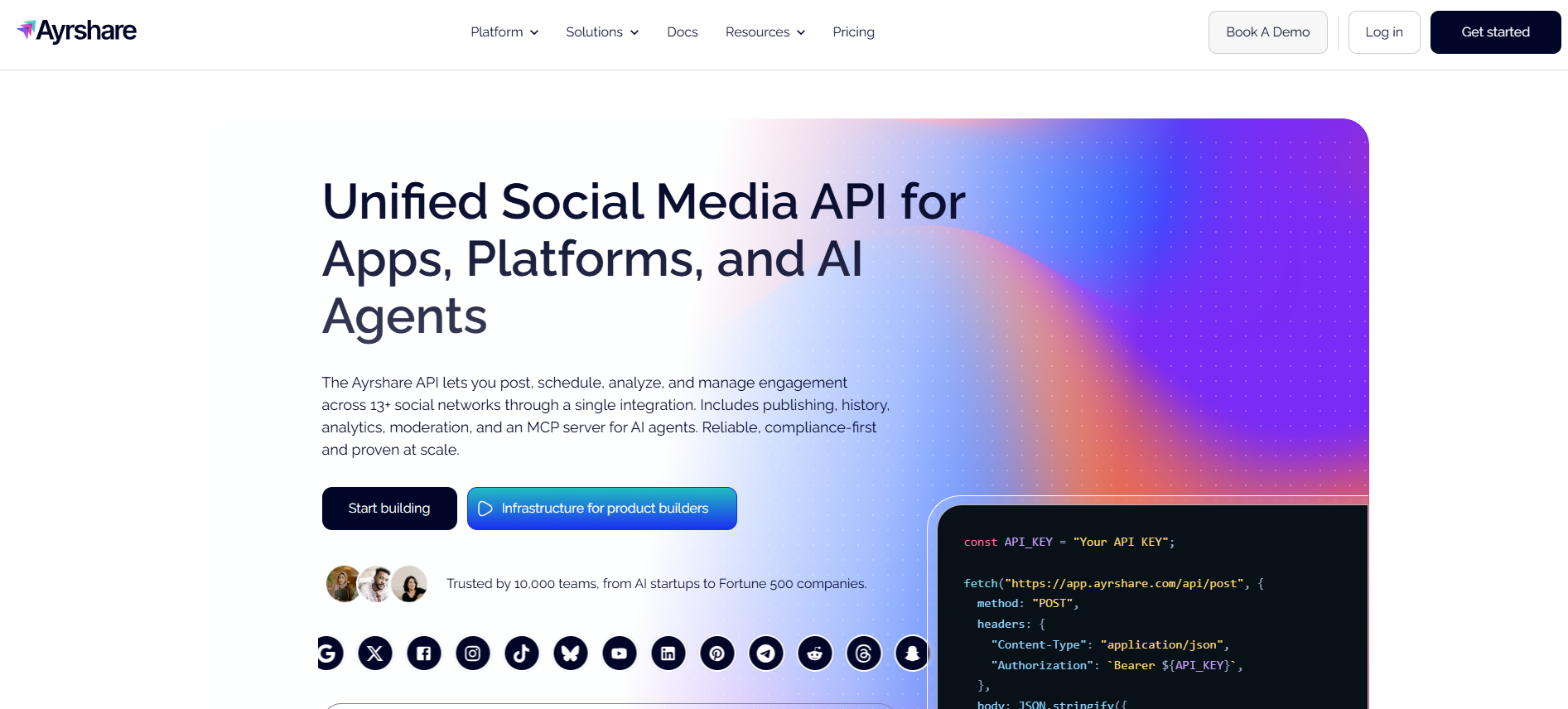
Ayrshare’s Homepage Ayrshare is built for setups where social publishing is a core part of the product and downtime isn’t an option. It handles the heavy lifting like a complete social management backend. It comes with a higher price tag, but you get rock-solid stability alongside deep features like comment moderation and white-labeling.
- Platforms supported: 13 networks (Facebook, Instagram, X, LinkedIn, TikTok, YouTube, Pinterest, Reddit, Telegram, Snapchat, Google Business Profile, Threads, Bluesky).
- Key features: Real-time webhooks, analytics API, comment management/replies, auto-resizing media, and white-label OAuth.
- Pricing: Starts at $149/month (Premium) up to $599/month (Business).
- Best for: SaaS products and agencies that need a mature, feature-complete API.
-
Postiz
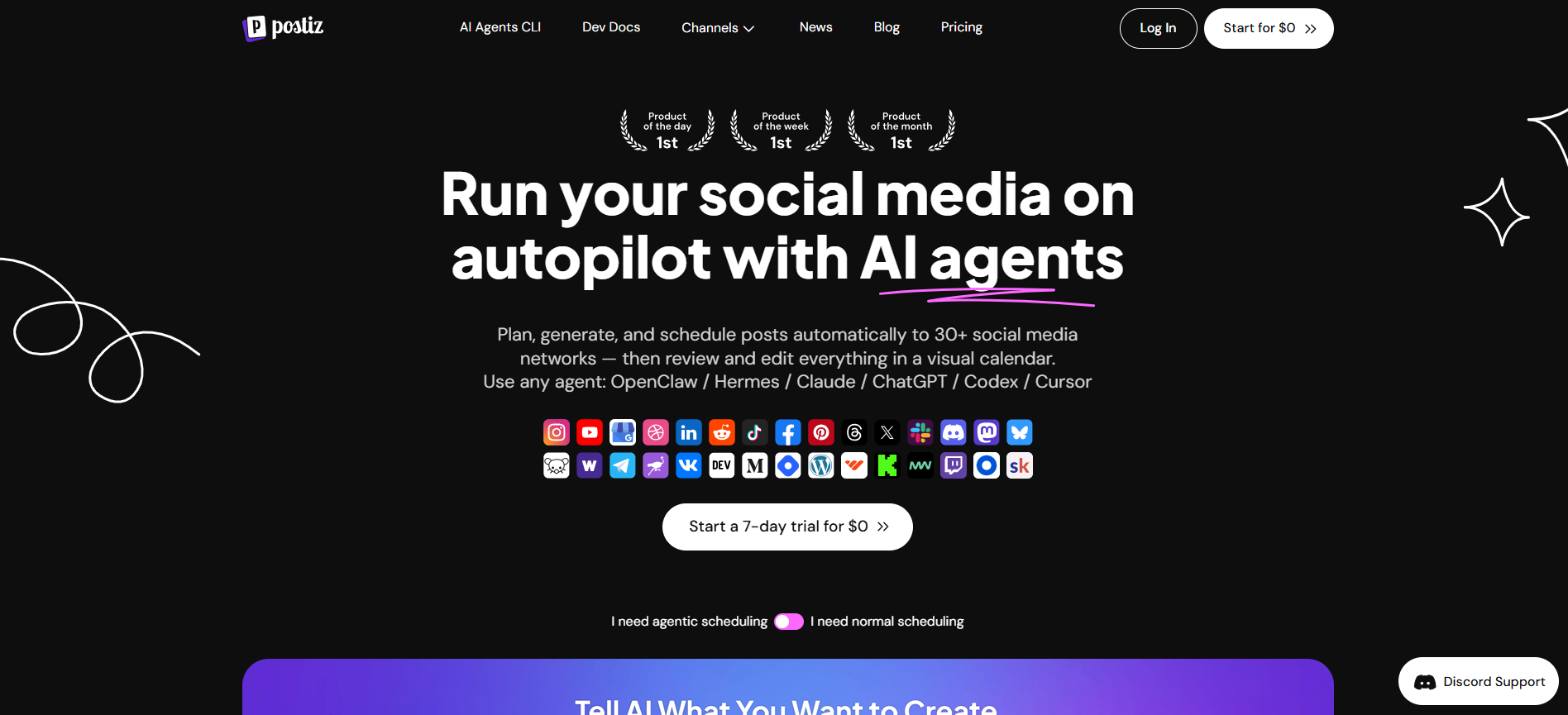
Postiz’s Homepage Postiz is a great pick if you prefer open-source tech or want total control over your data. You can host the whole engine on your own server for free, avoiding monthly subscription costs entirely. It also supports niche and decentralized platforms that most commercial tools pass over.
- Platforms supported: 30+ networks (Instagram, Facebook, X, LinkedIn, TikTok, YouTube, Threads, Bluesky, Mastodon, Discord, Nostr, Farcaster, etc.).
- Key features: Open-source codebase, self-hosting support, built-in AI assistant, image editor, and Web3 network connections.
- Pricing: Free (self-hosted); hosted cloud plans start at $29/month.
- Best for: Developers looking for open-source flexibility, self-hosted stacks, and apps targeting alternative networks.
-
Social Champ API
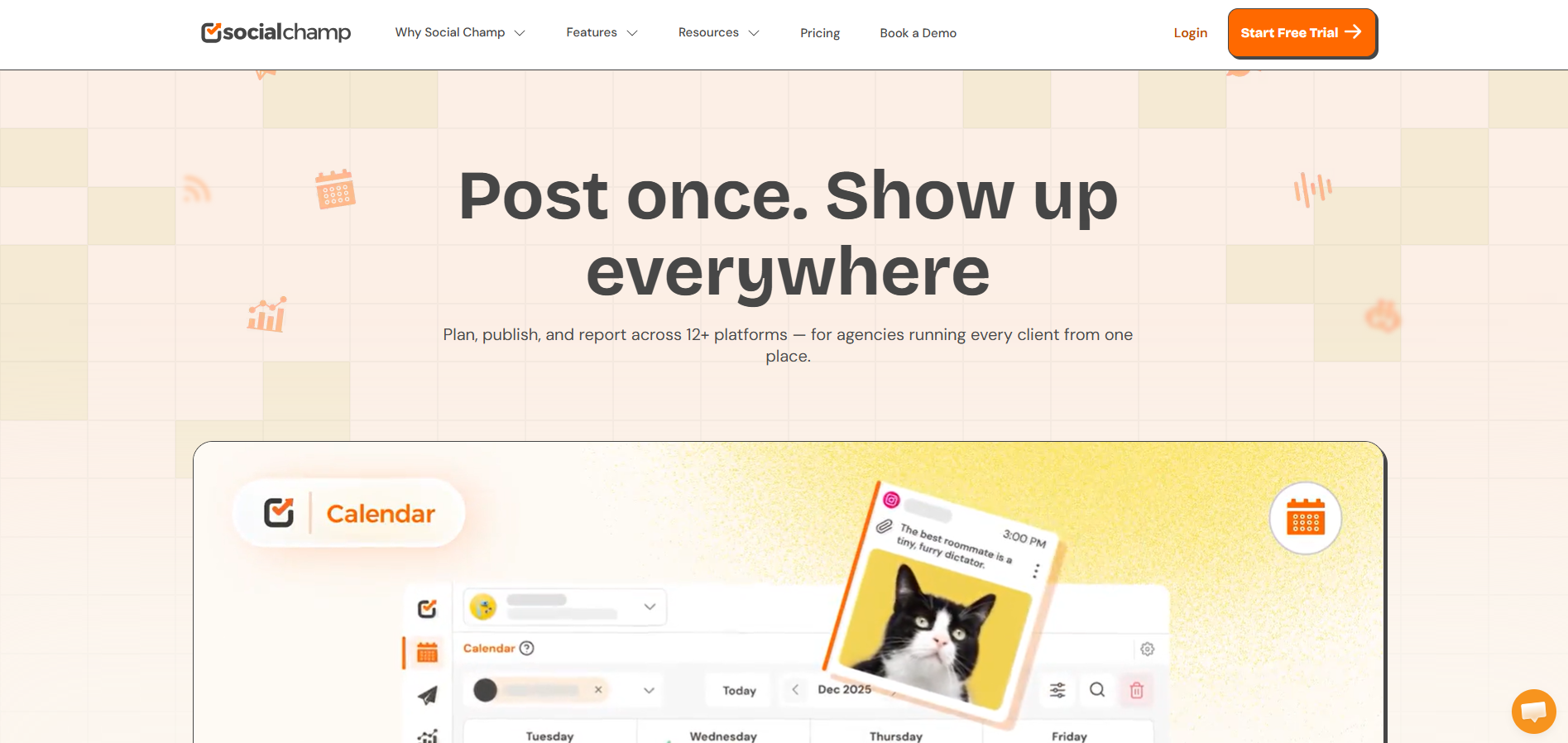
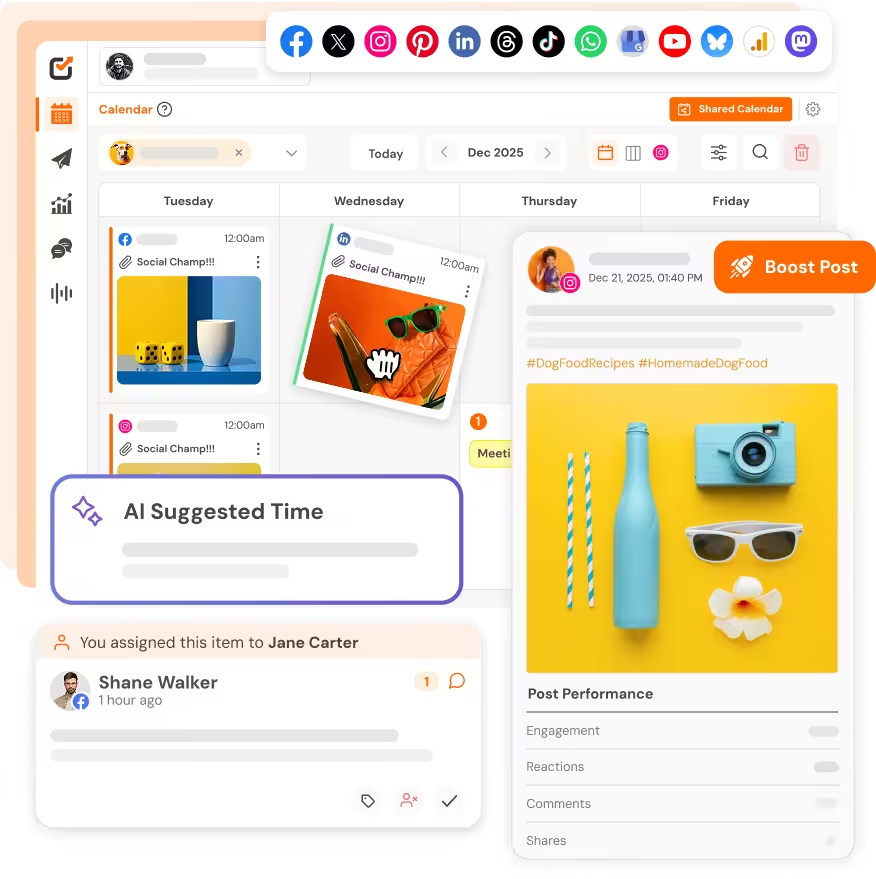
Social Champ’s Homepage If you’re looking for a feature-packed API that caters to both traditional software setups and modern AI automation workflows, Social Champ is a top-tier choice. Aside from its standard REST API for cross-platform scheduling across 12+ networks, it stands out by offering a dedicated Model Context Protocol (MCP) server. This means you can hook LLMs and AI agents (like Claude) directly into your distribution queue without building custom bridge scripts.
- Platforms supported: 12+ networks (Facebook, Instagram, X, LinkedIn, TikTok, YouTube, Pinterest, Google Business Profile, Threads, Bluesky, Mastodon, etc.).
- Key features: REST API with OAuth2 and API key authentication, a 41-tool MCP server for AI agents, interactive in-browser API playground, post queues, and Zapier triggers.
- Pricing: API keys and developer features are available on the Agency plan, which costs $149/month, alongside a free plan to test out the platform.
- Best for: Developers building AI-driven content tools, agencies managing multi-client distribution, and teams wanting native MCP server support.
Ship Multi-Platform Posting Fast!
Social Champ gives you a single unified endpoint to publish, schedule, and manage content across every major channel instantly. -
Post for Me
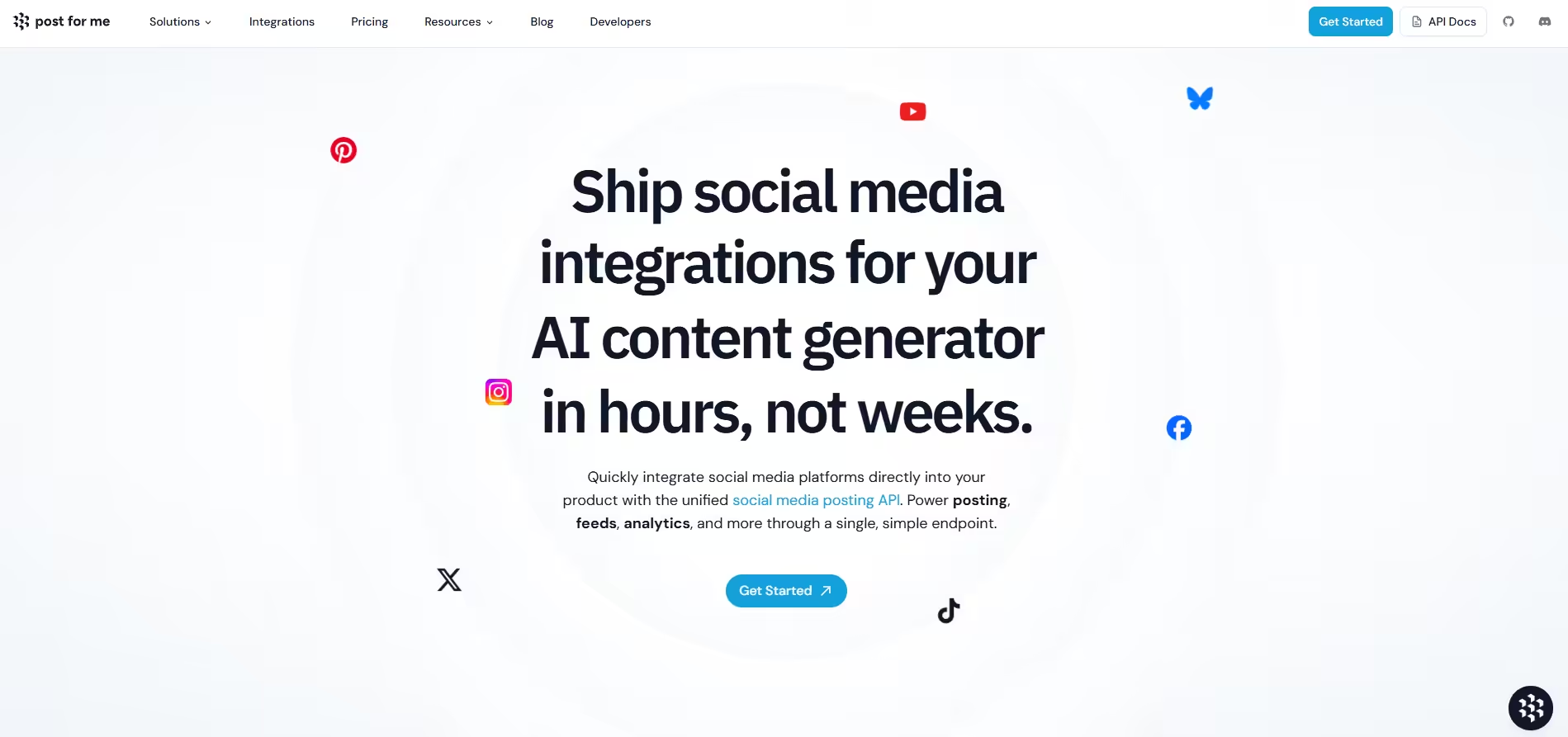
Post For Me’s Homepage Post for Me skips the usual user-account pricing traps. Instead of charging you for every connected profile or team seat, billing is based entirely on post volume. That makes it much easier to connect as many profiles as you need without watching costs jump unpredictably.
- Platforms supported: 9 networks (TikTok, Instagram, Facebook, X, LinkedIn, YouTube, Threads, Pinterest, Bluesky).
- Key features: Single-endpoint multi-posting, post scheduling, analytics fetching, webhooks, and white-label options.
- Pricing: Volume-based, starting at $10/month for 1,000 posts (unlimited profiles/seats).
- Best for: SaaS tools and AI apps that want clear, predictable per-post usage pricing.
-
Zernio
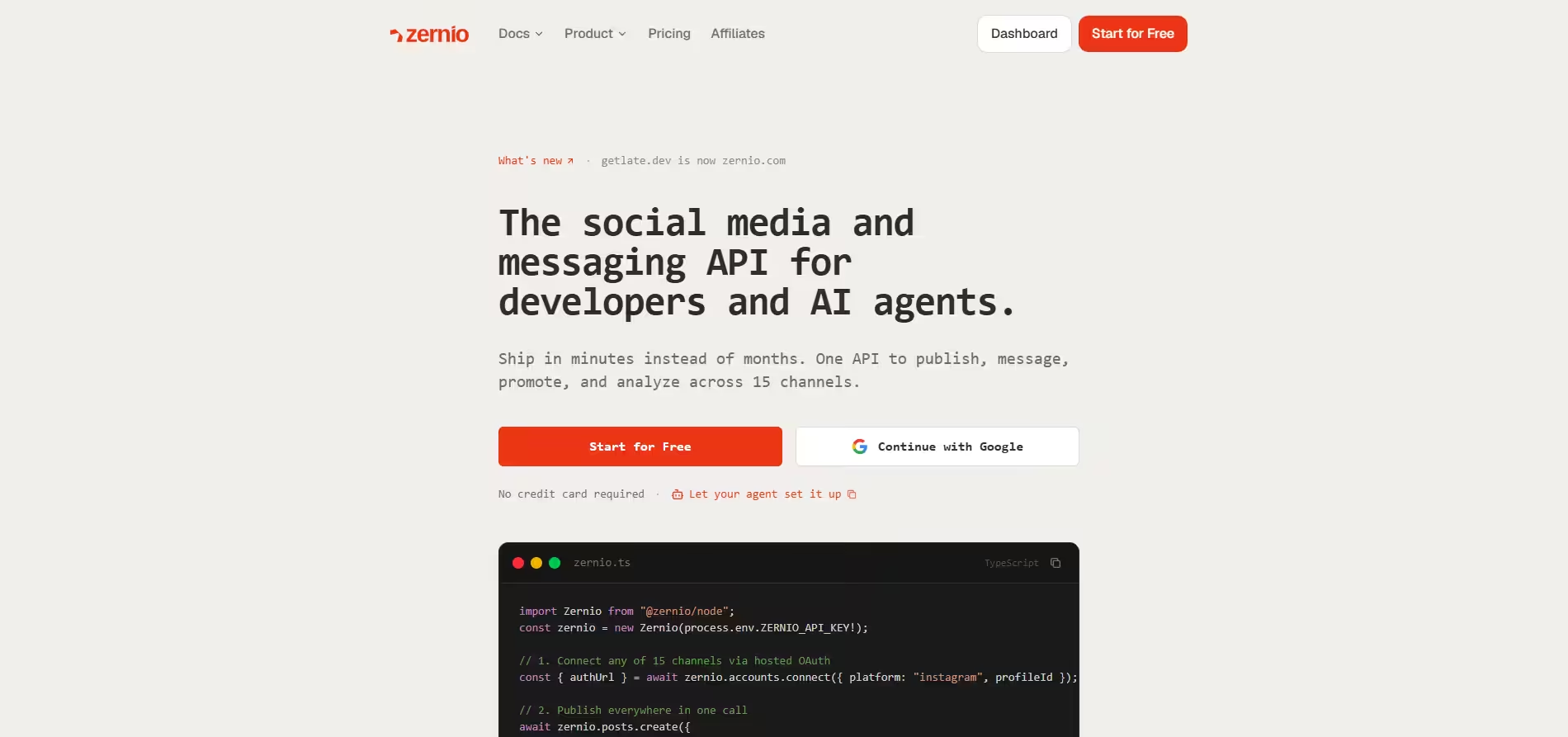
Zernio’s Homepage Zernio is a modern option tailored for AI-driven workflows. It includes native support for the Model Context Protocol (MCP), so you can connect LLMs and AI agents straight to your social accounts. Plus, the usage-based scaling keeps costs manageable as your activity grows.
- Platforms supported: 16 networks (Instagram, TikTok, X, LinkedIn, Facebook, YouTube, Threads, Reddit, Pinterest, Bluesky, Google Business Profile, Telegram, WhatsApp, Discord, etc.).
- Key features: Native MCP server support, unified analytics, client calendar components, and clear rate limits.
- Pricing: Free for 2 accounts; paid tiers scale per connected profile (starting around $6/month).
- Best for: AI agent builders, workflow automation tools, and startups wanting pay-as-you-grow pricing.
Featured Article: Agentic Workflows: Moving Beyond AI Writing
-
Outstand
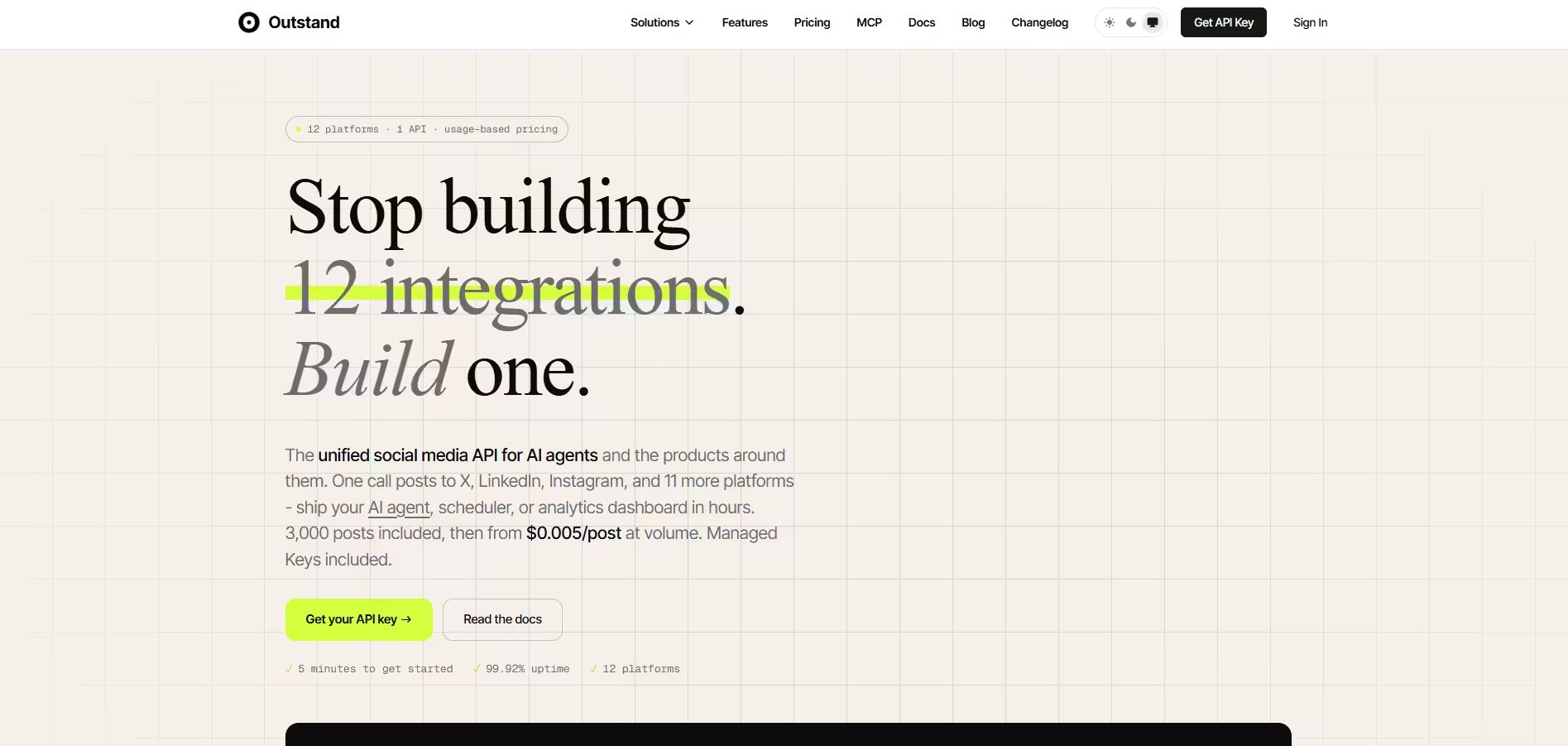
Outstand’s Homepage If you’re launching a side project or running an app with unpredictable posting schedules, Outstand‘s pay-as-you-go setup keeps things risk-free. You pay a small fee per post instead of signing up for a monthly plan, so you only cover what you actually send.
- Platforms supported: 10 networks (X, LinkedIn, Instagram, Facebook, TikTok, YouTube, Threads, Bluesky, Pinterest, Google Business Profile).
- Key features: Lightweight REST API, quick cross-platform delivery, automatic media processing, and status webhooks.
- Pricing: Pure Pay-as-you-go model at $0.05 per post over 10k with no base monthly fee.
- Best for: Early prototypes, side projects, and apps with low or inconsistent posting volume.
-
Blotato
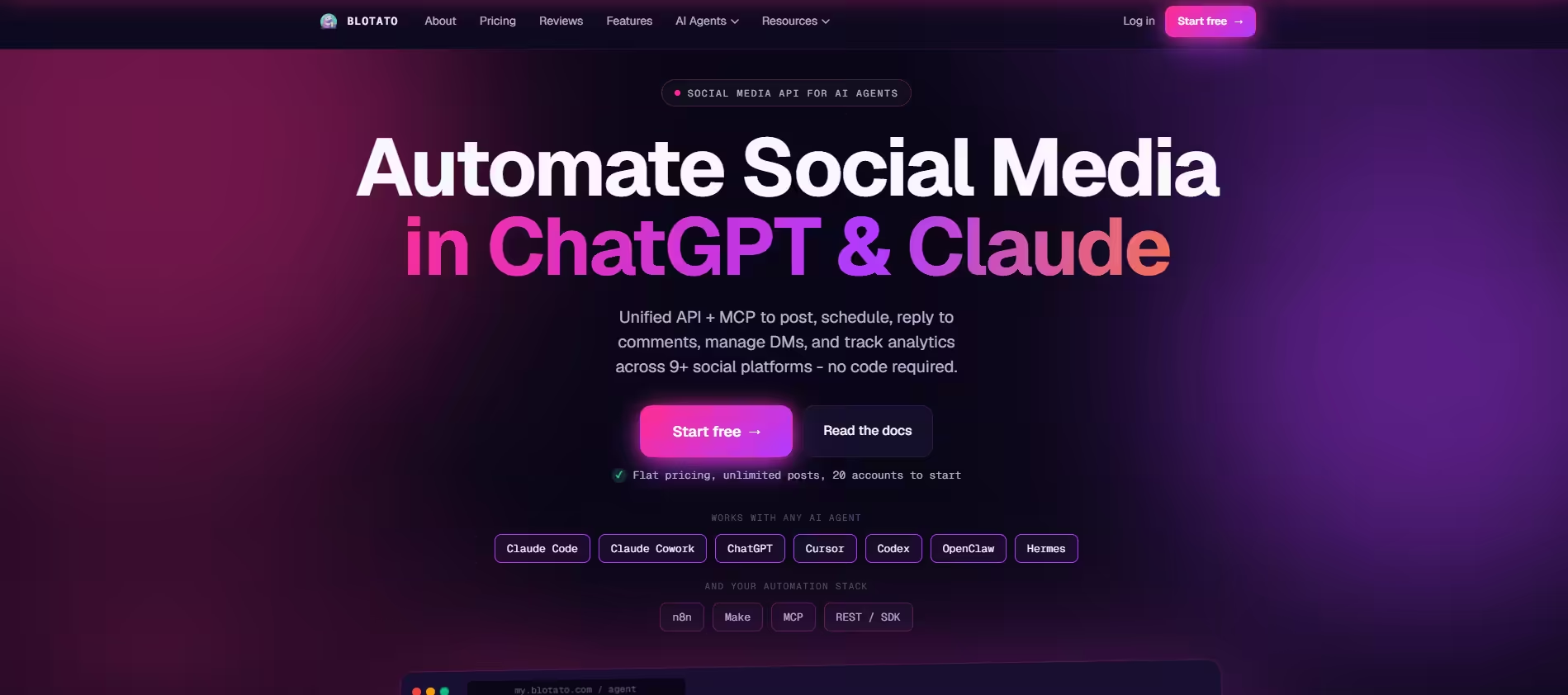
Blotato’s Homepage Publishing short-form videos across TikTok, Reels, and Shorts can get tricky fast due to different encoding requirements. Blotato handles that pipeline for you by tweaking aspect ratios and video settings for each network before pushing content live.
- Platforms supported: Major social networks, with a focus on YouTube Shorts, TikTok, Instagram Reels, X, and LinkedIn.
- Key features: Video-first publishing pipeline, automatic encoding adjustments, AI captioning credits, and multi-channel scheduling.
- Pricing: Tiered subscriptions based on post volume and processing credits (starts at $29/month).
- Best for: Video apps, AI video generators, and automated short-form video setups.
Featured Article: 8 Best Social Media Content Schedulers
Conclusion
Choosing the right social media APIs depends on your build requirements and scaling speed. If you need a balanced solution, Social Champ stands out. It pairs a straightforward REST API for multi-network posting with a 41-tool Model Context Protocol (MCP) server that lets AI agents and LLMs run campaigns, check calendars, and manage queues directly.
Smaller side projects might benefit from pay-as-you-go setups like Outstand, while self-hosters can lean on open-source tools like Postiz. But if you want a reliable, feature-packed API that covers standard publishing alongside native AI integrations, testing out Social Champ is your best path forward.