
What if everything you thought you knew about SEO and social media working separately was holding you back? What if the likes, shares, and comments you’re earning every day could actually push your content up in Google’s rankings, but you just haven’t connected the dots yet?
Short Summary
- SEO and social media perform best as one unified strategy.
- Platforms like YouTube, TikTok, and Pinterest now double as search engines.
- Optimized bios, captions, and keywords make your content discoverable everywhere.
- Social Champ helps you schedule, distribute, and track content from one dashboard.
- Avoid vanity metrics, keyword-less posts, and single-platform strategies.
Here’s a wake-up call. There are now over 5.66 billion social media users worldwide, according to Datareportal’s Global Overview Report. That’s an ocean of attention, engagement, and potential traffic.
Yet most businesses are still running their SEO and social media efforts in completely different directions, wondering why neither is delivering real results.
Sound familiar? Well, the brands crushing it in 2026 are working smarter by turning social visibility into search growth.
If your online marketing strategy still treats these two as strangers, you might be leaving your biggest growth lever untouched. Stick around, by the end of this guide, you’ll know exactly how to change that.
Stop Letting Great Content Go Unseen!
Did You Know?
Over 5.24 billion people now use social media worldwide. If your social content is not optimized for search, you are invisible to more than half the planet.
What Is Social Media SEO?
Let’s start with the basics. Before you can connect SEO and social media, you need to understand what social media SEO actually means and why it matters more in 2026 than ever before.
How Social Platforms Became Search Engines
Social media SEO is the practice of applying search optimization techniques to your social content and profiles. The goal is to make your posts easier to find both inside social apps and on Google.
People don’t just use Google to search anymore.
TikTok has become a primary search engine for Gen Z. Instagram works as a visual product hub. YouTube remains the second-largest search engine globally. And Pinterest SEO plays a huge role as a visual search engine for inspiration and planning.
Google has even started to index public content from Instagram, TikTok, and YouTube. That means every post you publish could show up as a search result.
Optimize Your Profiles and Posts for Search
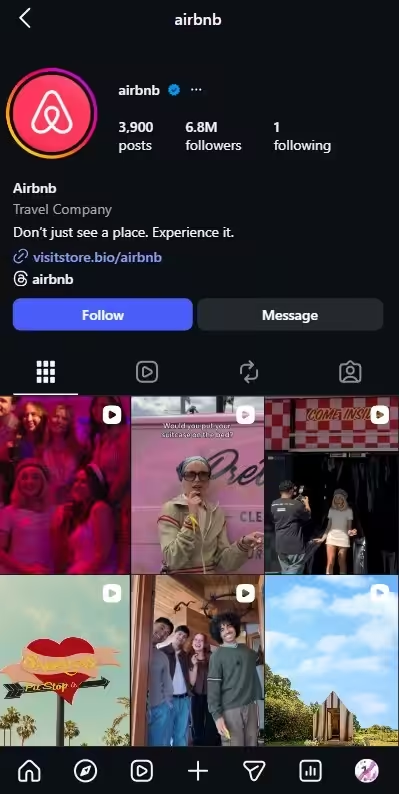
SEO in social media starts with your profile. Use a consistent brand name, write a bio with relevant keywords, add your website link, and complete every available field.
For posts, place primary keywords early in captions and titles. Add descriptive alt text and use specific hashtags. Always include a clear call to action.
Social Signals vs. Social Search
Let’s clear something up. Social signals and Social SEO are not the same thing.
Social signals refer to the likes, shares, saves, and comments your content earns. These aren’t a direct Google ranking factor. But they boost branded searches and earn backlinks indirectly.
Social search is about how users find content within platforms. When someone types “best coffee shops” into TikTok or Pinterest, that’s social search in action. To show up, you need to align your content with how people actually search on each SEO social network.
Both matter for your SEO and social media strategy. But they require different approaches.
The 2026 Shift: Ranking for AI Search
In 2026, search is driven by AI Overviews (SGE) that prioritize “human experience.” Google now looks for social proof and real-world mentions to verify authority. When your brand is consistently tagged and shared on social, it signals to AI models that you are a trusted source. Optimizing for social media today ensures your brand is the one cited in the AI-generated answers tomorrow.
Stop Falling Behind Daily!
Why Is SEO Important in Social Media Marketing?
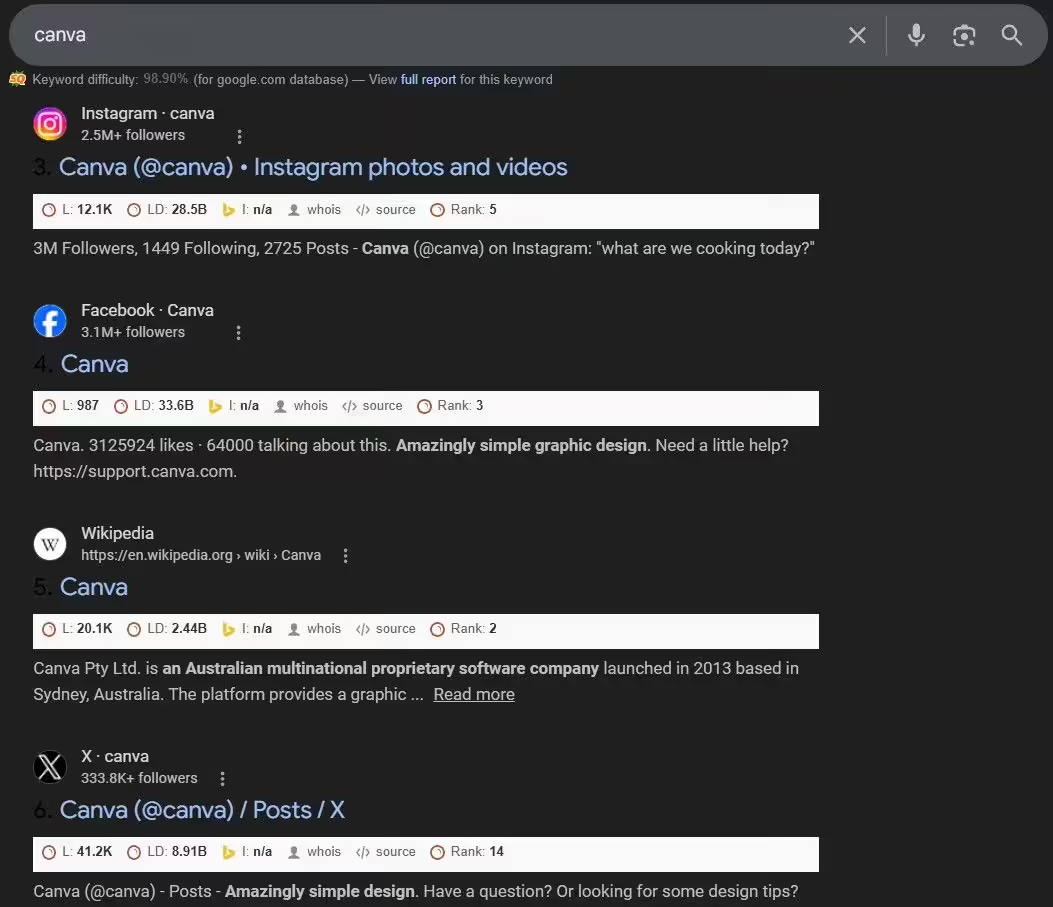
You might wonder: if social media already gives you visibility, why bother with SEO?
Because visibility without discoverability is a missed opportunity. Here’s why SEO and social media need to work together in 2026.
It Makes Your Content Easier to Find
Every social post, profile, and video has the potential to appear in two places: Inside the platform and on Google.
When you optimize captions, titles, and descriptions with the right keywords, you double your exposure from a single piece of content.
Without SEO in social media, your posts only reach existing followers. With it, strangers actively searching for your topic can find you too.
The Benefits Go Beyond Likes
The role of social media in SEO goes deeper than vanity metrics. Here’s what smart optimization actually delivers:
- Better Organic Reach: The social media algorithm on every platform favors content that matches search intent
- Stronger Branded Visibility: Optimized profiles rank in Google, so your brand shows up even outside social apps
- More Qualified Traffic: Search-driven users already have intent, so social media traffic from search converts better than passive scrolling
Traditional SEO vs. Social Media SEO
Traditional SEO focuses on websites, backlinks, and technical structure. Social media in SEO shifts the focus to captions, hashtags, bios, alt text, and platform-specific searchable keywords.
The principles overlap, but execution looks different. Think shorter copy, visual-first content, and platform-specific formatting.
A Quick Example in Action
Let’s say you post an Instagram Reel about email marketing tips. Instead of a vague caption like “Check this out!”, try this:
“5 email marketing tips that doubled our open rates in 2026. Try tip number 3 today.”
That caption includes a searchable keyword, a specific promise, and a call to action. It tells both the algorithm and the user what the content is about. That’s SEO and social media working hand in hand.
Featured Article: Forensic Marketing: Why That One Post Went Viral
10 Social Media Platforms That Matter Most for SEO and Social Media+
Here’s something I see all the time. Brands spread themselves thin across every platform, hoping something sticks. But the truth is, not every platform will move the needle for your brand.
The smart move is to focus on those that align with your audience, content format, and search goals. Let me walk you through the 10 social media platforms that matter most for SEO and social media in 2026.
-
YouTube
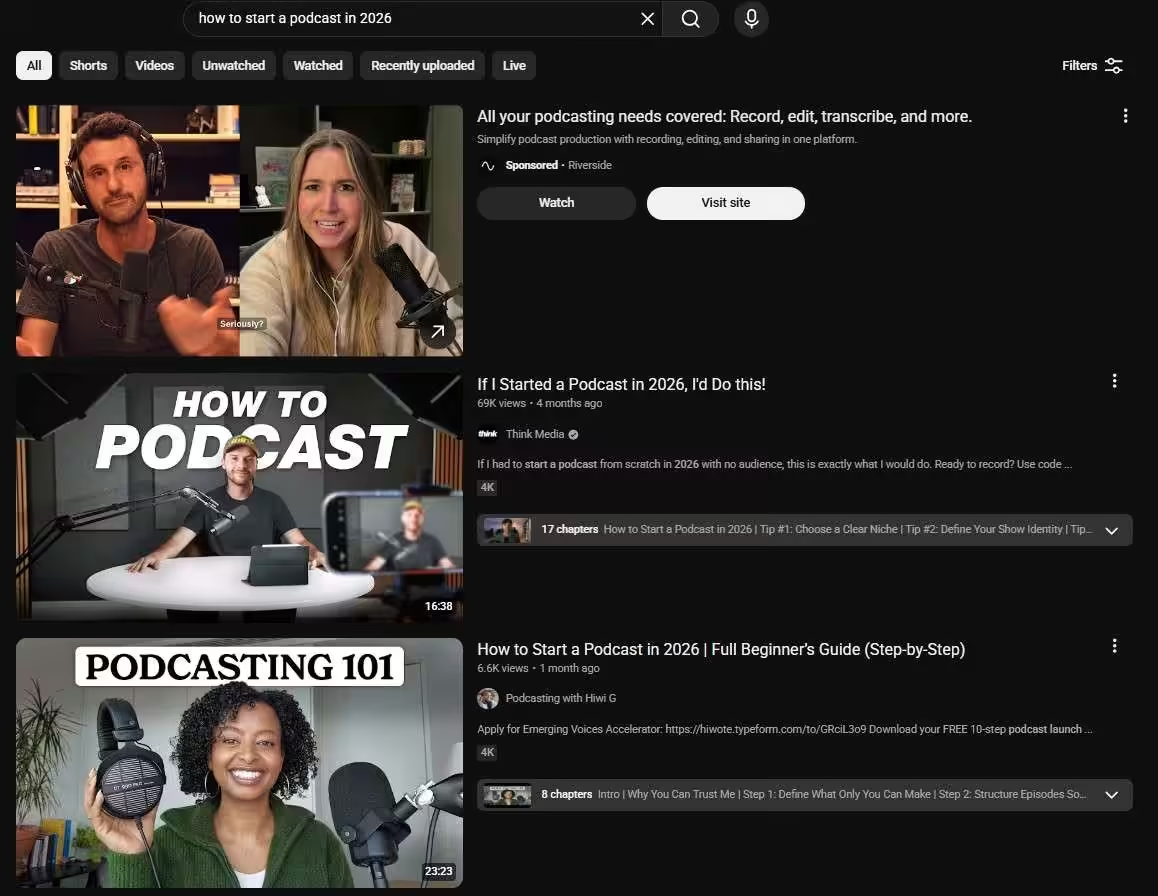
YouTube Search Showing Keyword-Optimized Videos for Long-Tail Query You’ve probably searched “how to fix a leaky faucet” or “best budget cameras” on YouTube at some point. That’s because YouTube is the second-largest search engine in the world. It’s built for long-tail queries and tutorial-style content.
If you create helpful, keyword-rich videos with detailed descriptions and tags, your content can rank both on YouTube and Google. That’s two search engines for the price of one. If you’re not on YouTube yet, you’re missing a massive opportunity.
-
Pinterest
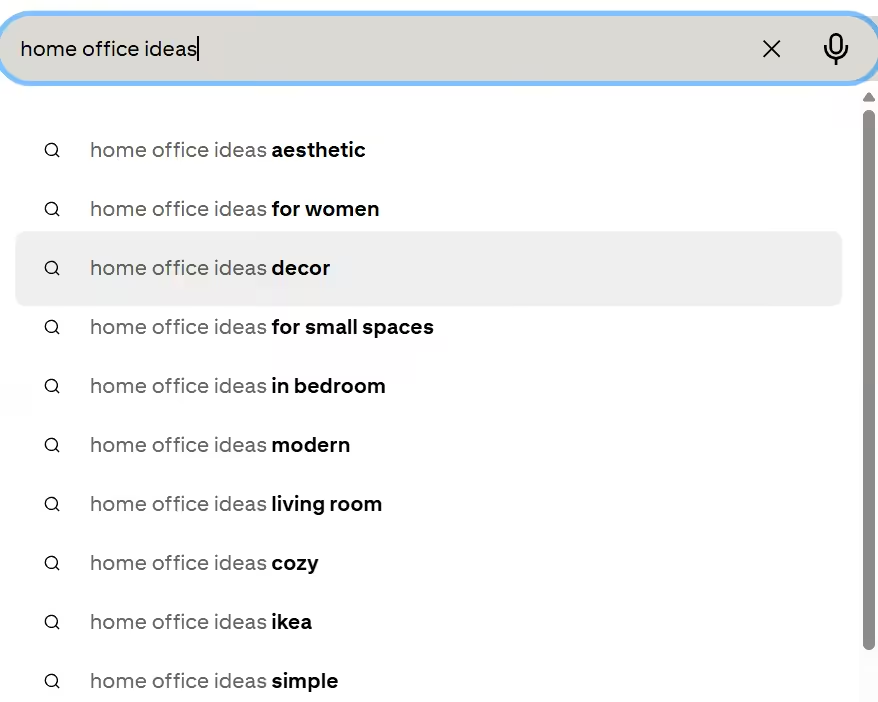
Pinterest Search Showing Auto-Suggested Keywords for User Query I think Pinterest is one of the most underrated platforms out there. It’s not really a social network in the traditional sense. It’s a visual search engine built around intent-driven discovery.
Users come here to plan, shop, and research. If you’re in e-commerce, lifestyle, or DIY, this platform is a goldmine.
High-quality vertical pins with clear calls to action perform best. And your pins can drive traffic for months, sometimes even years after you post them.
-
TikTok
If you think TikTok is just for dance trends, think again. It has quickly become a go-to search tool, especially for Gen Z.
Users type in product reviews, travel tips, recipes, and more directly inside the app. Your job? Write optimized captions with searchable keywords so your content shows up in search results. Short, emotion-led videos and product demos crush it here.
-
Instagram
Instagram has evolved into a visual discovery hub for products, trends, and lifestyle content. Strong social media engagement strategies combined with keyword-optimized captions and alt text can push your Reels and posts into explore pages and search results.
And here’s what a lot of people overlook. Instagram content gets indexed by Google too. So your posts can reach people who’ve never even opened the app.
-
LinkedIn
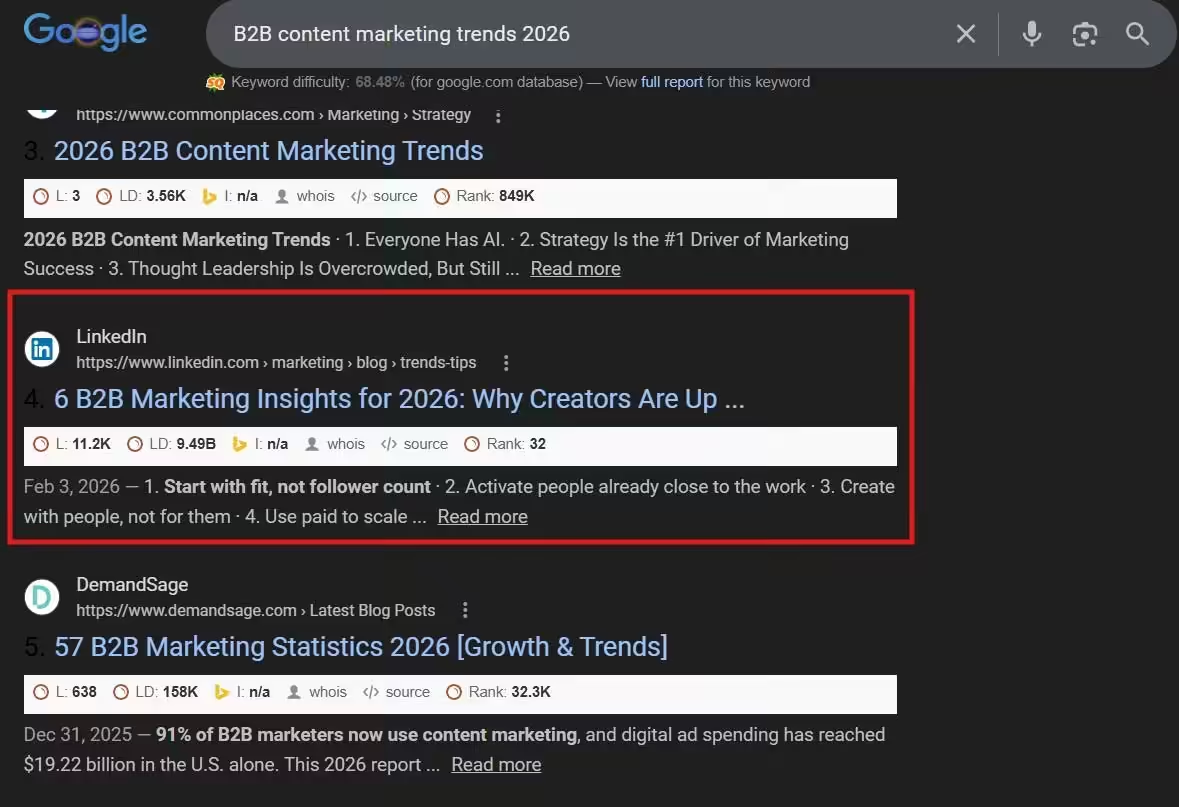
Google Search Showing LinkedIn Article Ranking for Industry Keyword If you’re in the B2B space, pay close attention. LinkedIn SEO is one of the most powerful moves you can make right now.
LinkedIn articles and posts rank surprisingly well on Google, especially for professional and industry-specific queries.
A fully optimized LinkedIn profile can act almost like a second homepage for your brand. It’s one of the strongest SEO social platforms for thought leadership and business visibility. If you’re not treating LinkedIn as a search tool, you’re leaving serious opportunities behind.
-
Reddit
Here’s one that flies under the radar. Reddit is a community-based discovery engine, and Google loves it.
You’ve probably noticed Reddit threads popping up in your search results more often lately. That’s not a coincidence.
If you contribute genuine, valuable answers in relevant subreddits, your posts can rank for niche topics. Just a word of caution, Reddit audiences can spot self-promotion from a mile away. Keep it real.
-
Facebook
I know what you might be thinking, “Is Facebook still relevant?” With nearly 3 billion monthly active users, the answer is yes.
Facebook SEO matters because optimized Pages, posts, and reviews are all indexed by Google.
If you’re a local business or a community-based brand, a complete and keyword-rich Facebook Page can rank for both branded and local searches. Don’t write it off just yet.
-
X
X remains a solid platform for real-time conversations and trending topics. Tweets get indexed by Google fast, which makes it a great channel for newsjacking and timely content.
Short, keyword-focused posts with relevant hashtags can boost your SEO in social media game on this platform. If speed is a priority for your strategy, X is worth your attention.
-
Snapchat
Snapchat isn’t a traditional SEO play, and I’ll be honest about that. But Spotlight content and public stories are gaining more visibility.
If your audience skews younger, it’s worth experimenting with searchable content here. The platform is evolving, and early movers could benefit.
-
Threads
While it started as a newcomer, Threads has solidified its place as a critical text-based search alternative. Its integration into the Fediverse makes your content more discoverable across the decentralized web than ever before.
Meta has optimized Threads for deep indexing, meaning a well-crafted thread with strategic keywords can often outrank traditional web pages for niche, conversational queries.
If you’re looking to build quick authority in a trending topic, Threads is currently one of the most efficient platforms for getting your insights onto the first page of Google.
So Which Platform Should You Pick?
Here’s my honest advice: Don’t try to be everywhere. The right choice depends on your audience’s behavior and the type of content you create.
A hair salon might get more value from Instagram and Pinterest. A SaaS company might see better results on LinkedIn and YouTube.
Use competitor research tools to analyze where your competitors are winning and where gaps exist. Then double down on what works for you.
Platform Comparison Grid
| Platform | Best For | Search Behavior | Content Type |
|---|---|---|---|
| YouTube | Tutorials and long-form | Long-tail keyword search | Video |
| Visual discovery and planning | Intent-driven search | Images and infographics | |
| TikTok | Trend-driven discovery | Short keyword search | Short-form video |
| Product and lifestyle search | Hashtag and keyword search | Reels, carousels, stories | |
| B2B visibility | Professional keyword search | Articles, posts, documents | |
| Community-based answers | Question-based search | Text threads | |
| Local and community search | Brand and local search | Posts, reviews, videos | |
| X | Real-time trends | Trending and hashtag search | Short-form text |
| Snapchat | Young audience engagement | Spotlight discovery | Short-form video, stories |
| Threads | Early-stage text discovery | Keyword search (growing) | Short-form text |
Is Your Content Even Visible?
20 Best Practices to Improve Your SEO Social Media Strategy
Let us get straight to the point. You know why SEO and social media belong together. Now you need to know what to do about it.
I put together 20 practices that actually work right now in 2026. These steps are specific and simple. You can apply them today to see real results. Let us jump right in.
-
Answer Specific Questions
People search for solutions online. Look at your keyword research to find exact questions your audience asks.
Create content that answers those specific questions directly . This approach builds your conversational keyword targets. It also brings interested visitors directly to your page.
-
Listen to Your Audience
You need to know what people talk about online. Use social listening tools to find popular topics. This helps you join conversations naturally.
You can then build content around topics people actually care about. This guarantees a better response rate.
-
Optimize Your Social Bios
Think of your bio as a tiny billboard. Search engines read this text first to understand your page. Include relevant keywords that describe your work perfectly.
A clear bio helps platforms categorize your profile correctly. It tells everyone exactly what you do.
-
Earn Links With Shares
Clicks are great. Links are even better. Create original content that other people want to reference.
When people share your posts, you earn valuable backlinks. These links strengthen your overall strategy and boost your authority. This is a massive win for you.
-
Ask Questions for Engagement
Social platforms want people to talk. Make your posts interesting enough to prompt an emotional response. Ask questions and request feedback from your audience.
This creates conversations that algorithms love. More comments mean better visibility for your brand.
-
Engage With Industry Leaders
You do not have to do this alone. Talk with influencers and thought leaders on platforms like LinkedIn.
Share your insights instead of just promotion for your own brand. As a result, you get on their radar. You also build trust with their followers.
-
Write Captions for Search
Stop the habit of caption writing just for engagement. You must write them for search engines too. Weave the right keywords naturally into your first sentence.
This tells the algorithm exactly what your post covers. It makes your content highly searchable for new users.
-
Use Artificial Intelligence for Timing
Timing matters a lot. Use AI tools to find the best times to post your content. These tools also suggest the best hashtags to include.
This helps you optimize your reach easily. You take the guesswork completely out of the equation.
-
Unify Your Inbox
You waste time when you check five different apps. Social media management tools give you one inbox for all your accounts.
You can engage with followers from a single place. This makes SEO in social media much easier to handle on a daily basis.
-
Track Your Progress
You cannot improve what you ignore. Keep an eye on your SEO metrics to see how your content performs.
Monitor your branded search volume. If people search your name more often, your plan works. Adjust your strategy based on these exact numbers.
Quick Reminder!
You do not need to apply all 20 practices at once. Pick three to five that match your current goals. Master those first. Then add more over time. Small, consistent action always beats overwhelming ambition.
-
Double Down on What Works
Stop guesses about what your audience wants. Identify which content formats drive the most referral traffic.
Additionally, create more of that specific content instead of random tests. Data always tells the truth. Follow the numbers to see actual growth.
-
Include Descriptive Text on Images
Search engines cannot see your photos. You need to include descriptive alternative text on all your images.
Use appropriate keywords when you describe the visual content. This gives platforms more text to read. It improves your chances to appear in image searches.
-
Use Conversational Keywords
People speak differently from how they type. Build out your conversational keyword targets to match voice searches.
Apropos to this, voice search is a massive part of social media in SEO today. Write as you speak. Answer questions clearly and naturally.
-
Optimize for Business Growth
Your profile should clearly communicate who you serve. Optimize your page for social media marketing for business by addition of a clear call to action.
Make it incredibly easy for a prospect to become a customer. Tell them exactly what to click next.
-
Foster Team Collaboration
A disjointed team creates disjointed content. You need efficient team collaboration to succeed.
Make sure your search team and your social team share the same goals and keywords. When everyone works together, your campaigns perform much better across the board.
-
Publish Consistently
I cannot state this enough. Consistency is a strict requirement. If you post randomly, the algorithm forgets you exist.
Set a realistic schedule. Stick to it every single week. Show up regularly to build trust with your audience and the search engines.
-
Cross-Promote Your Content
Do not let a good post die on one platform. Turn a popular blog post into a short video or an image carousel.
This expands your reach across every SEO social network you use. It saves you time and maximizes your results.
-
Monitor Your Brand Mentions
You need to know when people talk about you. Set up alerts that notify you when someone mentions your brand or your niche.
This lets you hop on conversations quickly. You can then tailor your content to actual search behavior.
-
Review Your Data Regularly
Social platforms change fast. Set a monthly reminder to review your SEO statistics. Drop the tactics that fail.
Keep the ones that bring you real traffic and sales. The best marketers constantly review their data and adapt their plans accordingly.
-
Focus On User Intent
People use search bars to solve problems. Use trends to shape your content around those exact problems. Answer their questions clearly.
The brands that win at social media SEO always put the user first. Solve problems, and the traffic will follow naturally.
Featured Article: What Are Buyer Personas? Guide, Examples & How to Create One
How to Put SEO and Social Media Into Action With Social Champ
So you have the knowledge. You understand the connection between SEO and social media. You know which platforms to focus on. You have 20 actionable tactics ready to go.
But here is the real question: How do you actually execute all of this without losing your mind?
That is exactly where Social Champ fits in.
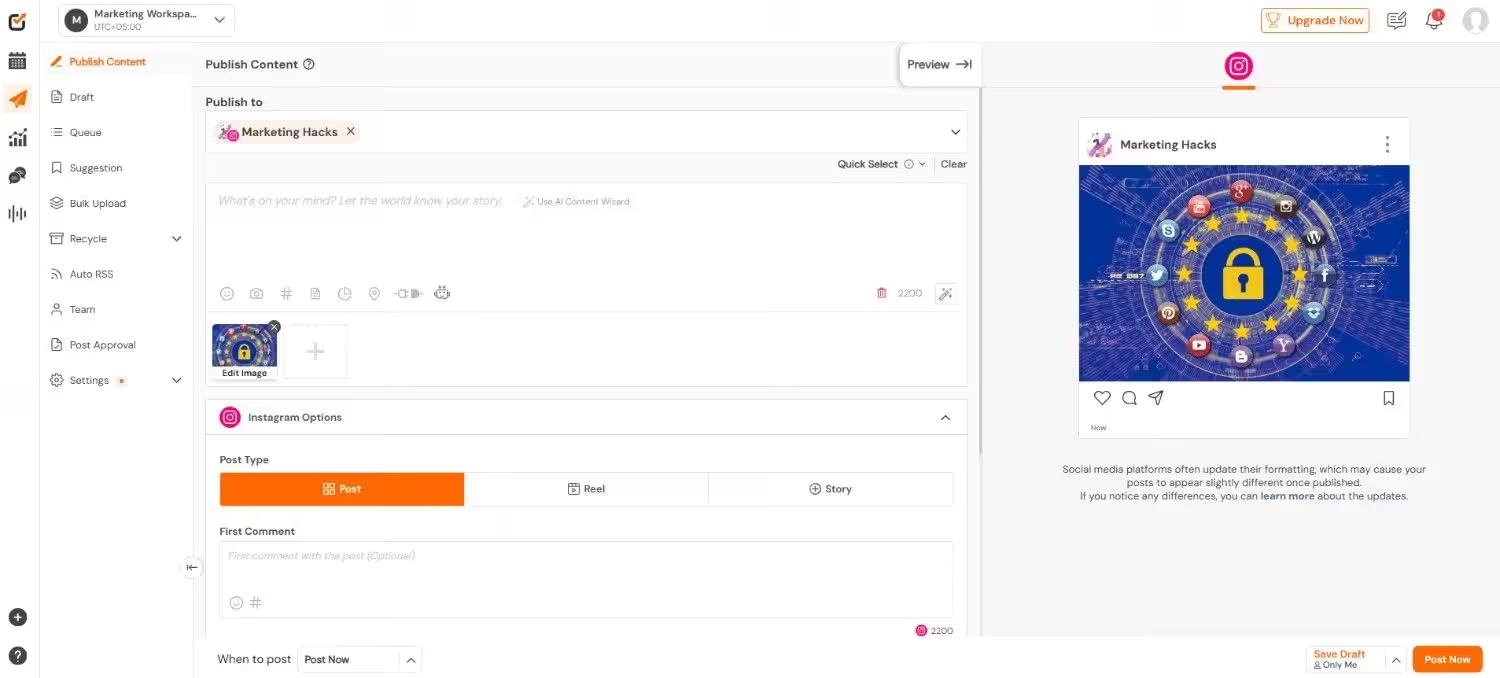
Schedule Content That Aligns With Your SEO Goals
Consistency matters. We covered that already. But the hard part is actually showing up every day across multiple platforms.
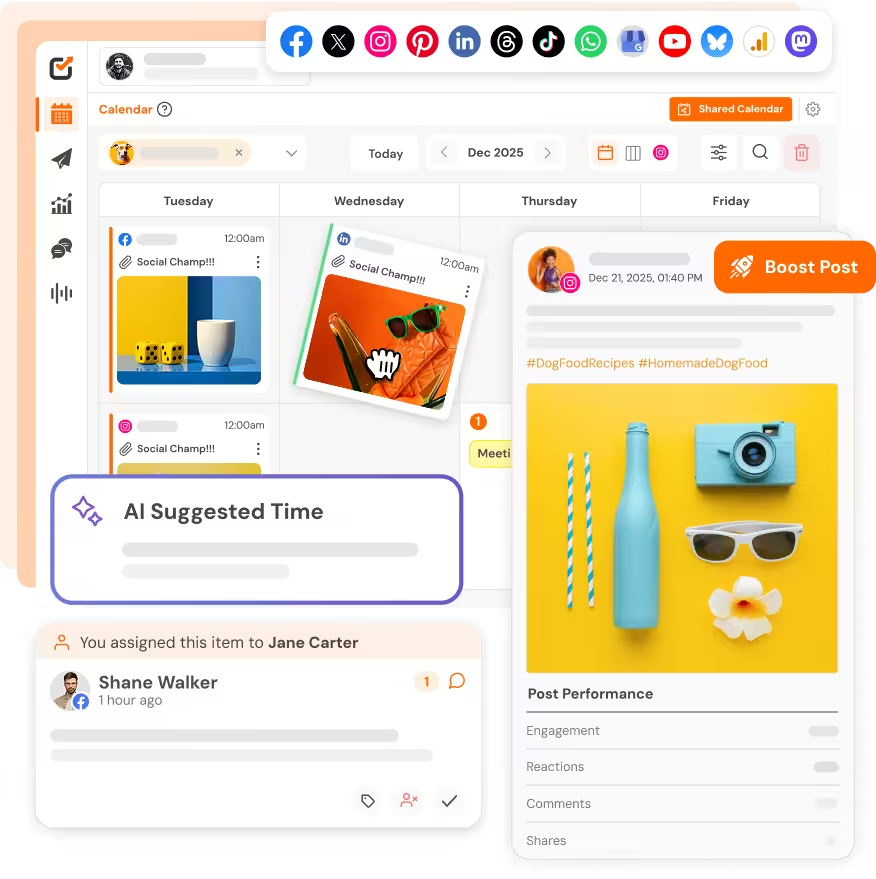
Social Champ lets you plan and schedule your content in advance across all your accounts from one single dashboard.
You can batch-create a full week of keyword-optimized posts in one sitting. Then the tool handles the rest.
Here is what that looks like in practice:
- Map out your content calendar around target keywords for the week
- Write keyword-rich captions and titles for each platform
- Schedule posts at peak engagement times based on audience data
- Let Social Champ auto-publish while you focus on other priorities
The best part? You can time your posts based on when your audience is most active. That means more eyes on your content, more engagement signals, and more chances for your posts to get indexed.
Distribute Content Across Every Platform
Remember how we talked about cross-platform visibility? Social Champ makes that simple.
You create one piece of content and distribute it across Facebook, Instagram, LinkedIn, TikTok, Pinterest, and more. You can customize each post to match the format and culture of every platform.
With Social Champ, you can:
- Tailor captions and hashtags for each individual platform
- Adjust image sizes and video formats without extra tools
- Maintain a consistent brand voice while respecting platform differences
- Reach audiences on every channel from a single workspace
This is how you turn a single SEO insight into multiple touchpoints across your entire SEO social network presence.
Track What Actually Works
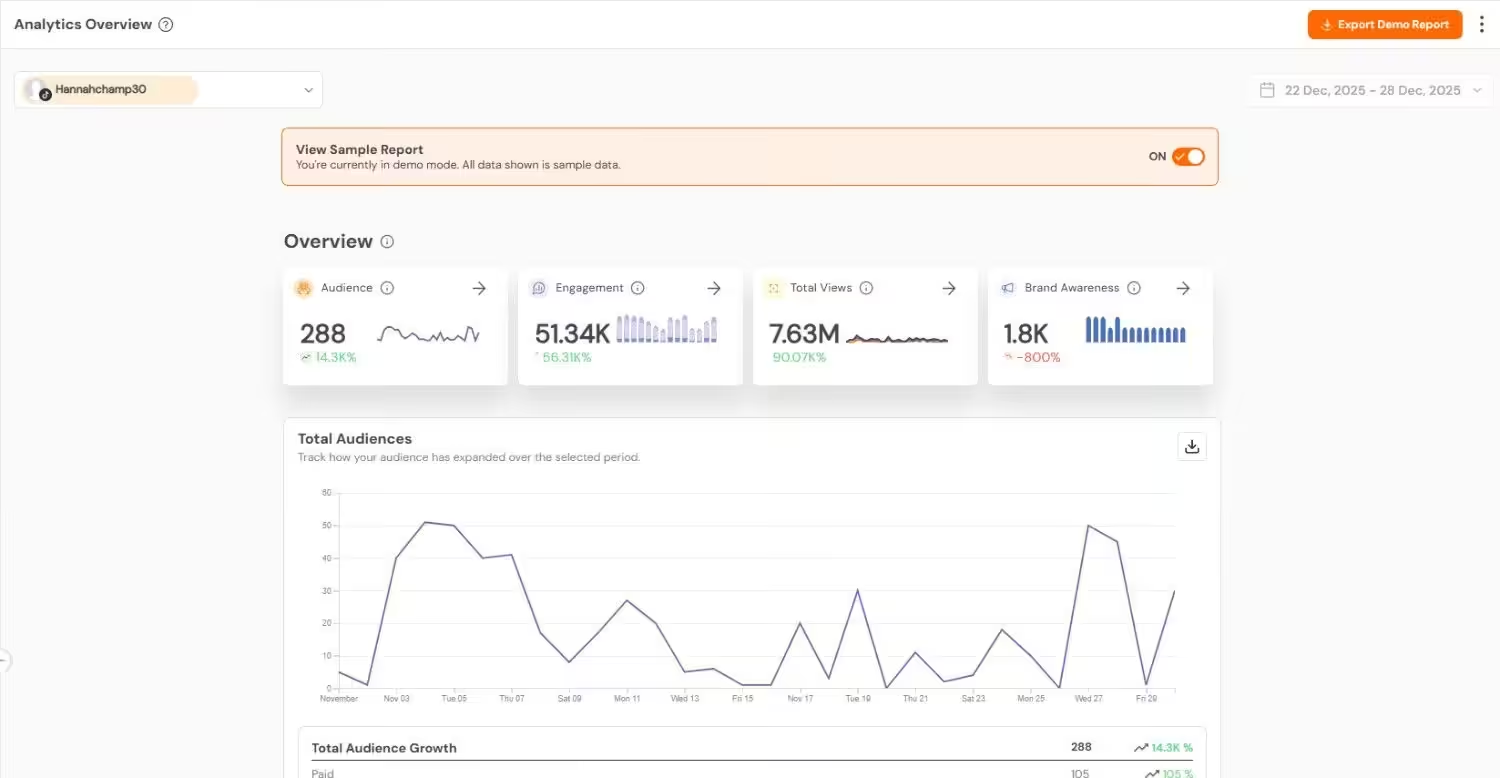
Data should drive your decisions. Social Champ gives you clear analytics that show exactly how your content performs across platforms.
This is not about vanity numbers. It is about understanding how your social media SEO efforts connect to real results.
You get visibility into metrics that actually matter:
- Which posts drive the most saves, shares, and comments
- Which content formats does your audience engage with most
- Where does your referral traffic comes from
- How your engagement trends change over time
When you spot a post that performs well, double down. Repurpose it. Repost it. Build on the topic. That is how smart teams turn social data into smarter SEO content planning.
Listen to What Your Audience Talks About
Here is something most teams overlook. Your audience tells you exactly what they care about every single day.
Social Champ’s social listening capabilities help you monitor conversations, trending topics, and brand mentions across platforms.
This gives you a direct window into the questions people ask and the problems they face.
Social listening helps you:
- Spot trending topics before your competitors do
- Identify common questions your audience asks repeatedly
- Find content gaps you can fill with optimized posts
- Track brand sentiment to understand how people feel about you
Capturing Trends Before the Tools
Social listening in 2026 gives you a “first-mover” advantage. Traditional SEO tools often lag behind real-time conversations. By using Social Champ to track what your audience is asking right now, you can identify high-intent keywords weeks before they show up in search reports. This allows you to publish optimized content while the competition is still catching up.
Turn Insights Into Execution
Most tools give you either scheduling or analytics. Social Champ brings everything together. You go from insight to action without switching between five different apps.
The cycle looks like this:
- Plan your content calendar around SEO keywords
- Schedule it for optimal times across all platforms
- Track performance through detailed analytics
- Listen to your audience for fresh content ideas
- Refine your approach and repeat
That is the cycle that separates brands that talk about social media in SEO from the ones that actually make it work. And Social Champ makes that cycle easy to maintain week after week.
Ready to Connect the Dots?
Common Mistakes Brands Make With SEO and Social Media
You can follow every best practice in the book. But if you keep making these common mistakes, your results will suffer.
I see brands repeat these errors all the time. The frustrating part? Most of them are easy to fix once you know what to look for. Let me walk you through the biggest ones so you can avoid them.
Warning!
Treating social media as a direct Google ranking hack is the fastest way to waste your time. Social drives visibility, not rankings. The rankings follow when visibility turns into branded searches, backlinks, and referral traffic.
-
Treating Social Media as a Direct SEO Shortcut
Let me be blunt. Posting on Instagram will not magically boost your Google rankings overnight.
SEO and social media work together, but social is not a direct ranking factor. It is a visibility multiplier. When you treat it as a quick hack, you set yourself up for disappointment.
The real value comes from the indirect benefits, brand searches, backlinks, and referral traffic. Play the long game here.
-
Posting Without Any Keyword Intent
This one hurts to watch. Some brands pour effort into creating quality content, but they never think about what their audience actually searches for. Every caption, title, and description is an opportunity to match a search query.
If you post without keyword intent, your content floats in the void. Nobody finds it. Nobody shares it. Start every post by asking yourself, “What would someone type to find this?”
-
Ignoring How People Search on Each Platform
Here is a mistake that costs brands serious reach. People search differently on TikTok than they do on YouTube or Pinterest.
A strategy that works on one platform can completely flop on another. You need to understand the specific search behavior of each platform you use.
Study how your audience searches on each app. Then create content that matches those exact patterns.
-
Optimizing for One Platform Only
I get it. You found one platform that works, and you want to go all in. But that is a risky bet. Algorithms change. Trends shift. Audiences move.
If you only optimize for one platform, you lose all your momentum the moment something changes.
That’s why it’s best to spread your presence across at least two or three platforms. This protects your brand and gives you multiple entry points for search.
-
Keeping SEO and Social Teams Completely Separate
This is one of the most common problems I see with larger teams.
The SEO team focuses on website rankings. The social team focuses on engagement. They never talk to each other. That disconnect kills your SEO and social media potential.
Your SEO team knows which keywords drive traffic. Your social team knows which content resonates with audiences. When they share those insights, both sides win.
-
Chasing Vanity Metrics
Likes look nice on a dashboard. But do they drive revenue? Probably not.
Too many brands obsess over follower counts and like totals while ignoring the metrics that actually matter.
Focus on saves, shares, referral traffic, and branded search volume instead. These tell you how your social presence impacts your bottom line.
-
Never Auditing or Adjusting the Strategy
The worst mistake of all? Set it and forget it. Social platforms evolve constantly. What worked three months ago might already be outdated.
If you never review your data or adjust your approach, you fall behind fast. Schedule regular audits. Look at the numbers. Cut what fails. Scale what works.
That simple habit separates good marketers from great ones.
Conclusion
If you take one thing away from this blog, let it be this: SEO and social media are no longer separate strategies. They are two sides of the same coin.
The brands that win in 2026 are those that connect social visibility with search growth, rather than treating them as isolated efforts.
You now have the knowledge, the tactics, and the tools to make this work. You know which platforms matter. You know which mistakes to avoid. And you know how Social Champ can help you execute it all without the chaos.
The only question left is “Are you going to act on it?” Your competitors already are. Every day you wait is a day they pull further ahead.
Start small. Pick three practices from this guide and apply them this week. Then build from there. The results will speak for themselves.








Akhil
That’s an amazing article.
David Gonzales
All online marketers have social media accounts and Google is right to rule out signals as rank boosters in the SEO system. If Google didn’t do this social media sites will likely on top of SERP every day because people talk about everything and share everything on social media sites.