
There is a version of AI-powered marketing that most brands are currently running. It looks like faster content, quicker emails, and a growing list of tools that promise to do more with less. It feels productive. And according to Roisin Bennett, CEO of Marketing Mentors, it is missing the point almost entirely.
The mistake is not using AI, it is using it only at the surface level. The same thing happened when social media arrived. Businesses jumped straight into tactics because suddenly they could. They could post, design, and build websites without needing a team. And in doing so, most of them skipped the foundations that would have made any of it actually work.
AI in 2026 is following the same pattern. The brands treating it as a content machine are getting content. The ones treating it as a new operating system, built around customer intelligence, real data, and deliberate strategy, are getting something far more valuable.
In this episode of Beyond the Feed, Aiman sits down with Roisin to get into what that actually looks like in practice.
Key Takeaways
- Why an AI-powered marketing strategy is a system, not a content tool
- How to use AI without producing content that looks and sounds like everyone else’s
- Why marketing fundamentals matter more in the age of AI, not less
- The simple filter for deciding which AI tools are actually worth adding to your stack
- What AI agents are, why they matter, and how they differ from chatbots
- How customers are now discovering brands differently and what that means for SEO and visibility
- Why small businesses now have access to marketing capability that was previously out of reach
What Is an AI-Powered Marketing Strategy And How Is It Different From What Brands Are Currently Doing?
Most brands approach AI as a production tool. It speeds up content creation, generates copy variations, automates scheduling. That is a legitimate use of the technology, but it is not a strategy.
An AI-powered strategy uses artificial intelligence at the foundation to understand customers more deeply, to process data that would previously have taken weeks to analyse, and to build systems that allow marketers to operate at a level of strategic quality that was simply not achievable before.
What that looks like in practice:
Using AI for deep market research and audience analysis, not just content drafts
Building systems around existing customer data whether the organisation is a two-person startup or a large enterprise
Freeing marketers from repetitive, administrative work so they can focus on strategy, creative direction, and customer relationships
The goal is not to replace marketing thinking with AI output. It is to remove the friction that prevents marketers from doing their best thinking in the first place.
Featured Talks: Why Creator Campaigns Fail And What Brands Need to Do Differently ft. Tara Knight
Is a Marketing Degree Still Relevant Or Can Anyone Be a Marketer With AI?
The arrival of accessible AI tools has given rise to a specific assumption that the barriers to entry in marketing have effectively disappeared, and that the discipline no longer requires formal training or deep expertise. Roisin pushes back on this directly.
Businesses with small marketing teams are increasingly using AI to do more themselves and while that is not inherently problematic, it becomes damaging when they skip the fundamentals in favour of execution.
- AI makes it easy to produce content, build websites, and generate visuals at speed
- What it cannot replace is the strategic foundation: deep customer research, positioning, brand architecture, and the ability to connect tactics to a coherent long-term plan
- The marketers who will remain most valuable are the ones who understand how to use AI to build those foundations properly, not the ones who use it to bypass them
The tools have changed. The discipline has not.
How Do You Use AI Without Your Marketing Looking Like Everyone Else’s?
Content produced without strategic intent is one of the defining problems of the current marketing environment. The volume of AI-generated material across every platform has made it significantly harder to stand out — not because AI content is inherently poor, but because generic content produced at scale looks identical regardless of who produced it.
Roisin identifies the core issue clearly:
“If we’re just creating content, it’s just in a sea of other content. What’s going to make the difference is when it’s aligned to your strategy, that it is speaking your customer’s language.” — Roisin
The framework for avoiding the generic:
Align every piece of content to a specific strategy and customer need
content that exists purely to fill a calendar serves no one
Know your customer deeply
AI is an exceptional tool for audience research, but that research has to actually inform what gets created
Add genuine human input
personal experience, real case studies, and specific expertise are the elements that AI cannot replicate and that audiences are actively seeking out
Train your AI tools on your brand
custom instructions, brand voice documentation, and process context mean what comes out requires far less editing and feels far more like you
On LinkedIn specifically, Roisin notes that AI-generated commenting is already being deprioritised by the platform’s algorithm. The shortcut is not just ineffective, it can actively damage a brand’s presence.
How Much Pressure Does AI Place on Marketers to Produce More Human Content?
The expectation that AI would reduce the pressure on marketing teams has not played out in the way many anticipated. If anything, the unexpected increase of automated content has raised the bar for what genuine human input needs to deliver.
The marketers who will stand out are the ones who use AI for research and brainstorming, then apply real human judgement, experience, and perspective to the output
- Tools like Perplexity, which aggregate responses across multiple large language models simultaneously are powerful for research and synthesis, but they produce raw material, not finished strategic thinking
The human who collates that material, applies professional expertise to it, and adds authentic personal experience is providing something that cannot be replicated by the tool alone
Use AI for the process. Keep the human for the perspective.
With Thousands of AI Tools Available, Where Should Marketers Actually Start?
Tool overload is one of the most common sources of paralysis for marketers entering the AI space. New platforms launch constantly, existing ones update their capabilities weekly, and the pressure to stay current creates a cycle of adoption and abandonment that consumes time without producing results.
You can use these three practical filters to cut through the noise:
Does it connect to your CRM?
Tools that integrate with existing systems compound in value. Tools that sit in isolation rarely get used consistently.
Does it solve a genuine bottleneck?
The question is not whether a tool is impressive, but whether it addresses a specific constraint that is currently slowing your operation down.
Will your team use it every day?
Nice-to-have tools are the most expensive kind. The stack that works is the one that gets used.
Featured Talks: How to Do Mission-Driven Marketing for Non-Profits ft. Tiffany Simmons
What AI Tools Is Roisin Actually Using for Marketing Right Now?
Rather than recommending a generic stack, Roisin shares the specific tools she is currently working with and why:
Perplexity
Her primary research tool, valued for its ability to synthesise across multiple large language models simultaneously. She was made a Perplexity Fellow and uses it at the Max enterprise level for market research and brainstorming
Claude
She recently moved from ChatGPT to Claude as her primary working model, citing its capability across the full marketing spectrum.
Claude Code
Described as deceptively named, since it is not limited to developers. Roisin sees it as one of the most powerful tools currently available and is diving deep into it alongside Claude agents.
Gemini
Recommended specifically for Google Workspace users, where it functions as a deeply integrated research and productivity layer across the entire suite.
The underlying principle across all of these: the tool should fit the operating system, not the other way around.
What Are AI Agents And Why Do They Matter for Marketers?
The distinction between AI assistants and AI agents is one of the most important and most misunderstood, developments in the current AI world.
Roisin draws the comparison clearly:
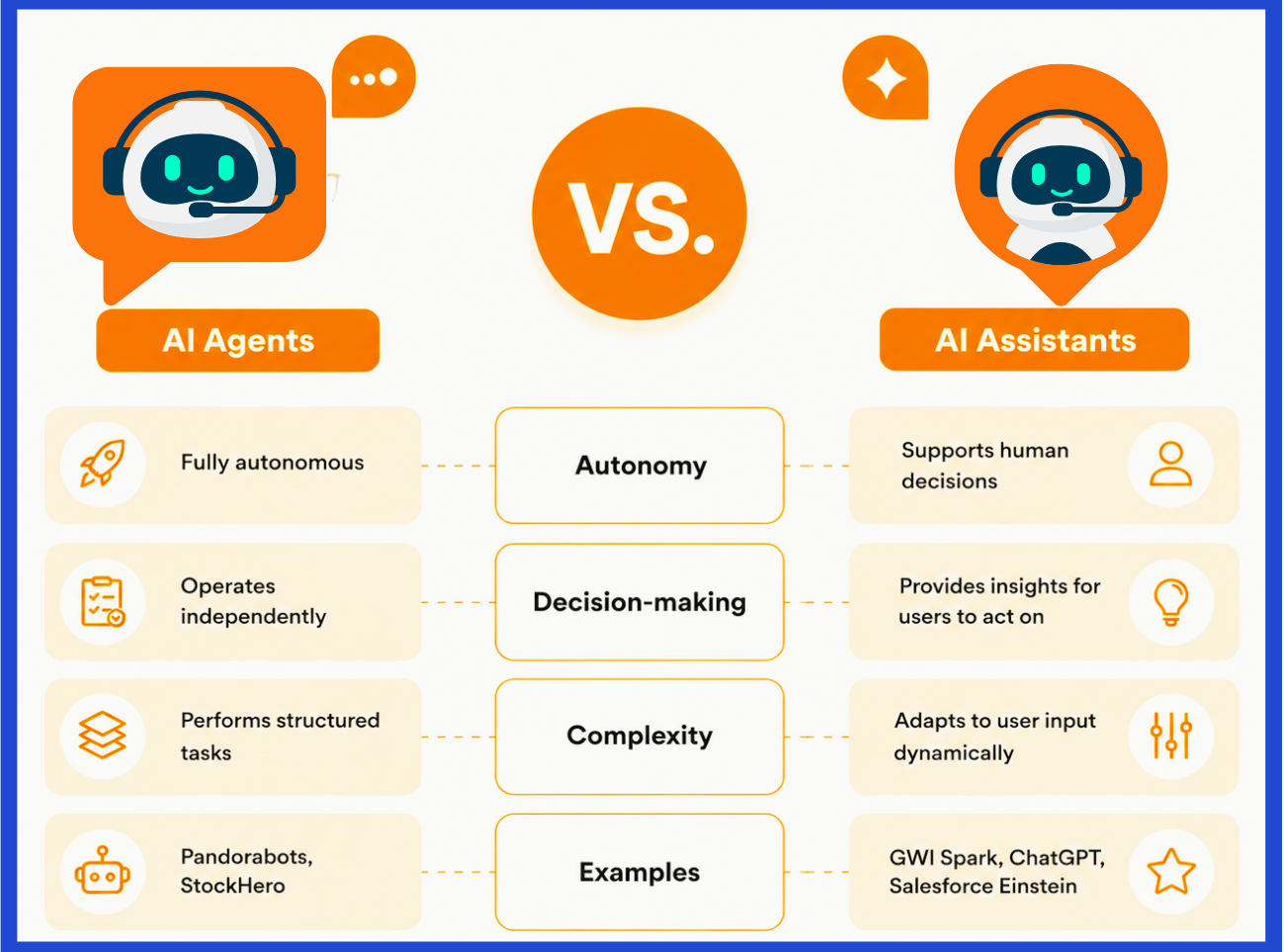
- An AI assistant is like a well-briefed intern you give it information, assign a task, and it completes that task
- An AI agent operates more like a department head it can carry out a series of tasks independently, reason through decisions, and work within a defined brief without requiring constant input.
What this means practically for marketing teams:
Individual agents are already working effectively for specific functions, content management, research, outreach workflows
Orchestration of multiple agents working together is still developing, but advancing rapidly
The human role shifts from execution to management, directing, evaluating, and steering the agent team rather than performing the underlying tasks
The guardrails are still human. The leverage is now significant.
Will Marketing Become a One-Person Job Because of AI?
The question of whether AI will reduce marketing to a solo function is one Roisin hears regularly. Her answer is nuanced and ultimately more optimistic than the framing suggests.
Marketing teams will almost certainly become leaner. But the more significant shift is not in headcount — it is in what the role looks like.
The title of social media manager may give way to something closer to systems manager or marketing operations lead
The skill set that will be most valuable is not content production. It is the ability to build, manage, and continuously improve a team of agents
The knowledge and methodology a marketer builds into their agent systems travels with them and becomes a portable, compounding professional asset
For small businesses and startups, Roisin sees this as an unambiguously positive development:
Businesses that previously could not afford a full marketing function can now build one. That is not a threat to the profession, it is an expansion of what is possible.
How Are Customers Using AI to Discover Brands And What Does That Mean for Marketers?
The shift in how customers find and evaluate brands is perhaps the most consequential and most underappreciated — change AI has introduced to the marketing landscape.
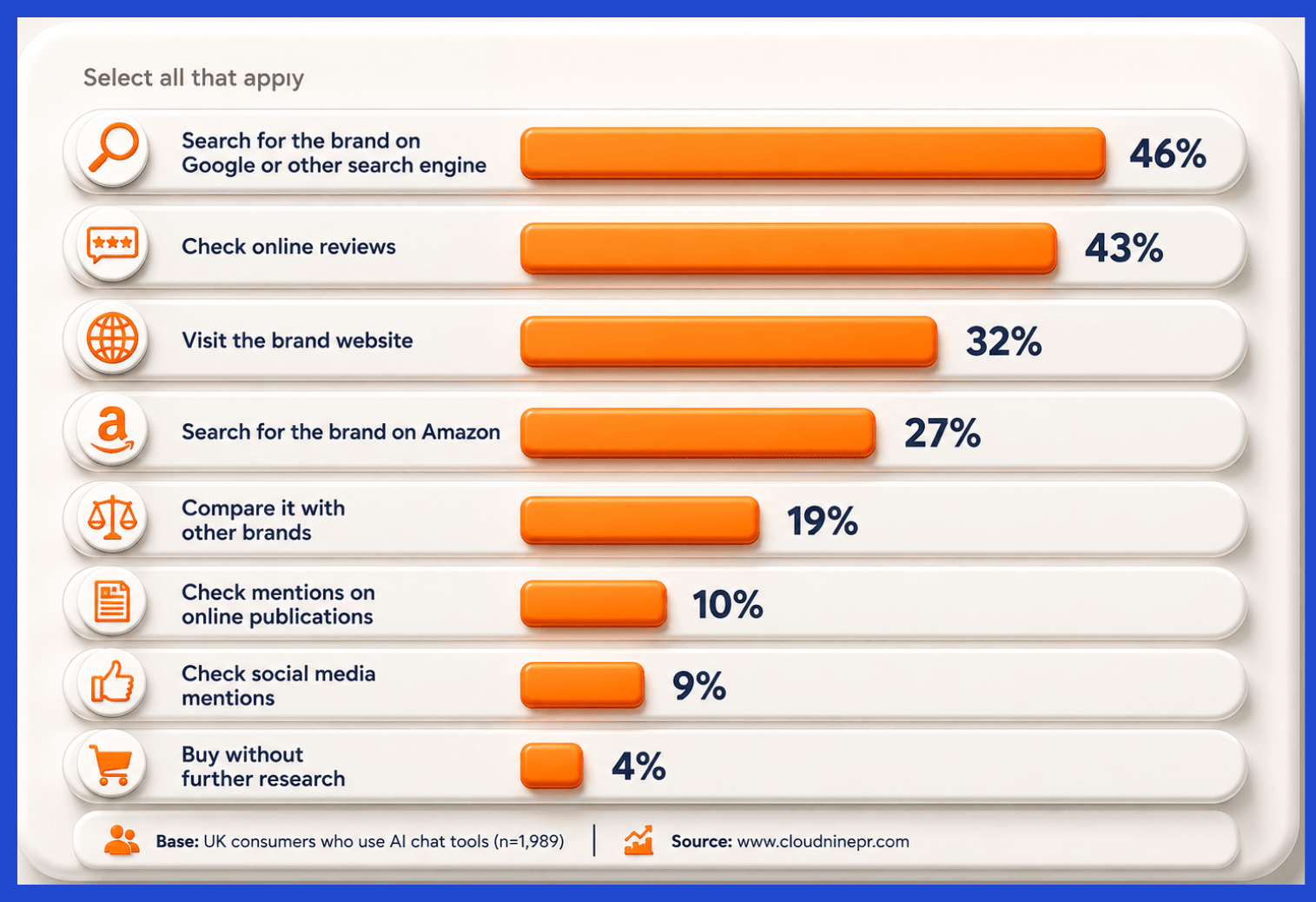
Search behaviour is changing fundamentally. Rather than receiving a list of results to evaluate, customers increasingly receive a direct answer. The implication for how brands need to present themselves is significant.
According to a survey by Cloud Nine PR, 46% of consumers would search for an unfamiliar AI-recommended brand on Google, while 43% would check online reviews before considering it.
What this means for marketing strategy:
Content quality matters more than ever
AI search systems surface content that genuinely answers questions, not content optimised around keyword density.
Authority and expertise are the new ranking signals
Becoming a recognised expert in a specific area makes your content more likely to be surfaced by AI-driven search
Websites need to be written for AI comprehension, not just human readers
Clarity, structure, and direct answers to specific questions become increasingly important.
Agents will be discovering brands on behalf of humans
A reality that requires marketers to think about how their content reads to an AI system, not just a person
The shift from keyword SEO to what Roisin describes as intent and answer-based visibility is not coming. It is already here.
Featured Talks: How Can Founders Build a LinkedIn Growth Strategy That Drives Leads? ft. Niall Ratcliffe
Final Word from Roisin
The marketers who will define this era are not the ones who adopted the most tools fastest. They are the ones who understood that AI is infrastructure that its real value lies in what it enables when it is built into a coherent system, not dropped into an existing workflow as a shortcut.
The opportunity is significant. The foundation still has to be built deliberately. And the human still has to be in the room.