
Are you exploring Marketing 360 alternatives this year?
You may be looking for a platform that better aligns with your current goals.
With numerous tools now offering features for planning, publishing, and tracking content, it’s a good time to explore what’s available.
Short Summary
- Marketing 360 often falls short due to platform limitations, poor scalability, and slow support.
- Social Champ tops the list with multi-platform support, AI tools, and standout customer service.
- Other strong alternatives include Later and Sendible.
- You can select the right tool based on your budget, platform requirements, and team size.
- Alternatives offer better ROI, cleaner workflows, and faster content management.
Marketing 360 remains a strong choice for many. At the same time, some teams are opting for different platforms that better align with their workflow, budget, or priorities in new ways.
Maybe you’ve outgrown your current tool. Perhaps you’re just curious what else is out there.
Either way, having more choices never hurts.
This list compiles 7 Marketing 360 alternatives worth exploring this year.
Each one offers something different, so you can pick what fits best for your goals right now.
Why Users Seek Marketing 360 Alternatives
If you’ve used Marketing 360 for a while, you might start thinking about what’s next.
Not that there’s anything wrong, but because your own needs change.
Maybe your team has grown. Maybe your goals have shifted. Or maybe you just want to find out what other options there are this year.
Whatever the explanation, exploring other alternatives is one of the many ways to find the best fit.
Here are a few things that any team might consider when looking around:
-
Clarity Around Pricing
When you’re choosing a new tool, clear pricing helps make decisions easier.
Your team may prefer having all the details upfront, especially when comparing multiple platforms and evaluating Marketing 360 pricing alongside other alternatives.
If you’re looking for something that shows plan features and pricing on the spot, without the need to book a call, this can be a deciding factor.
-
Plans That Adapt as You Grow
As your team takes on more work or brings in more collaborators, flexibility becomes essential.
That could mean you need more profiles, users, or specific roles to keep things organized.
Some platforms offer different ways to scale, and many teams often explore those options to find something that fits their current setup better.
-
Support That’s Easy to Reach
Fast, reliable support can make a significant difference, especially when you have to manage multiple tasks simultaneously.
For some, it’s important to know help is available when they need it, through live chat, onboarding support, or quick answers to everyday questions.
My Top Alternatives to Marketing 360 at a Glance
| Marketing 360 Alternative | Best For |
|---|---|
| Social Champ | Teams of any size, solo, agency, or enterprise, wanting an all-in-one platform that balances features, ease of use, and pricing |
| Later | Creators, influencers, and e-commerce brands focused primarily on Instagram |
| Sendible | Agencies that need client-friendly features for scheduling, reporting, and collaboration |
| Zoho Social | Businesses already using the Zoho suite, or small businesses wanting an affordable, feature-packed tool |
| Agorapulse | Teams managing a high volume of messages who need strong collaboration and ROI reporting |
| Metricool | Content creators and small businesses wanting a budget-friendly tool with solid analytics |
| CoSchedule | Marketing teams managing full campaigns across social, email, and content calendars in one place |
Top 7 Marketing 360 Alternatives for 2026
If you’re exploring new social media tools, you’re in the right place.
Many marketers are doing the same and for a good reason.
With more platforms now offering useful features and flexible pricing, it makes sense to take a fresh look at what actually works for your team’s tasks and long-term goals.
To help you get started, here are ten solid Marketing 360 alternatives that you can try.
Let’s walk through them one by one.
-
Social Champ
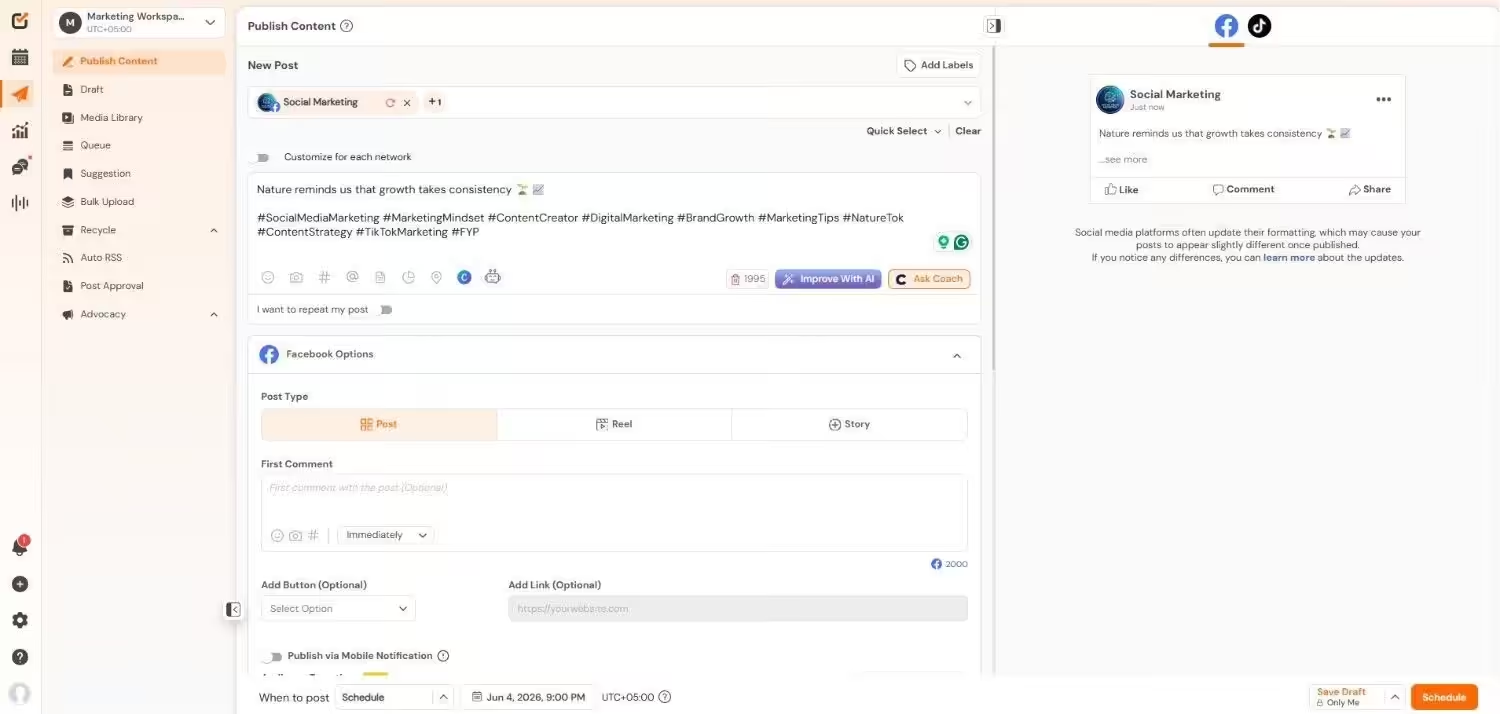
Social Champ’s Dashboard If you’re looking for a smarter way to manage your social media, you can’t go wrong with Social Champ.
It is an all-in-one platform that brings everything you need under one roof.
No matter what your team size is- solo, agency, or enterprise- Social Champ combines content creation, scheduling, analytics, collaboration, customer support, and AI tools into one platform.
What makes it one of the best Marketing 360 alternatives is that it strikes that rare balance between powerful features, ease of use, and pricing that actually makes sense.
Key Features
- Social Champ lets you post across 11+ networks, including Instagram, LinkedIn, YouTube, Facebook, Google Business Profile, TikTok, Pinterest, X (Twitter), Threads, Mastodon, and Bluesky.
- You can use the Champ AI Suite to auto-generate captions, content ideas, and images.
- It allows you to plan months ahead with bulk uploads, recurring posts, and an easy drag-and-drop calendar.
- You can download white-label reports with your own branding.
- It lets you manage DMs, mentions, and comments from every platform in one place, which makes it great for customer support teams.
- With team collaboration features, you can set up approval workflows, assign tasks, and manage roles across your team.
- You can keep an eye on competitors and adjust your strategy based on what’s working in your industry.
Pricing
Social Champ comes with two pricing models, including a Pay-Per-Profile and a Flat-Rate model.
Here’s what you get in the Pay-Per-Profile:
- Starter, which costs $4 and has 1 user. In this plan, you can manage 1 social account.
- Growth, which costs $8 and has unlimited users. In this plan, you can manage 1 social account.
These plans also offer discounts as you scale. Here’s how much you can save in the Starter:
- For 1-10 social accounts: $4
- For 11-20 social accounts: $3
- For 21-40 social accounts: $2
- For 41+ social accounts: $0.50
Here’s how much you can save in the Growth:
- For 1-10 social accounts: $8
- For 11-20 social accounts: $3.50
- For 21-40 social accounts: $2.50
- For 41+ social accounts: $1
With Social Champ, you also get Flat-Rate bundles, which are:
- Free, which costs $0 and has 1 user. In this plan, you can manage 3 social accounts.
- Standard, which costs $23 and has 2 users. In this plan, you can manage 6 social accounts. This plan also comes with add-ons for accounts. You can add another account for $5/account.
- Professional, which costs $47 and has 5 users. In this plan, you can manage 12 social accounts. This plan also comes with add-ons for accounts. You can add another account for $4/account and pay $8/user for another user.
- Agency, which costs $119 and has unlimited users. In this plan, you can manage 30 social accounts. This plan also comes with add-ons for accounts. You can add another account for $3/account.
- Enterprise, which is Custom and has unlimited users. In this plan, you can manage unlimited social accounts.
Social Champ also supports: Instagram, Facebook, TikTok, LinkedIn, YouTube, Threads, Pinterest, X, Google Business Profile, Bluesky, Mastodon, and WhatsApp Business
Still Switching Between Different Tools?
-
Later
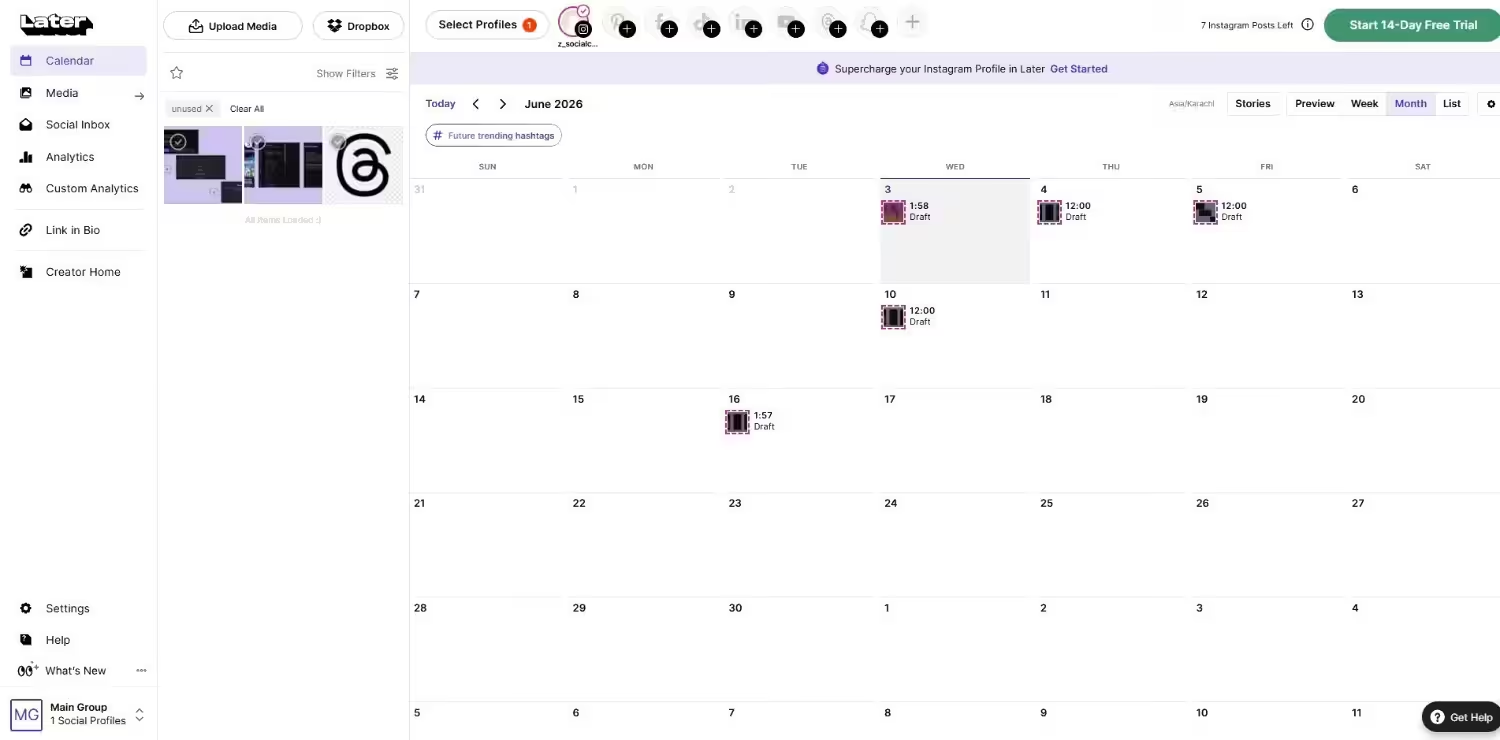
Later’s Dashboard If Instagram is your main focus, Later might be right up your alley.
It’s a social media management tool that’s built specifically with creators, influencers, and e-commerce brands in mind, especially those who live and breathe Instagram.
With its clean drag-and-drop calendar and visual planner, you can map out your grid, schedule Stories and Reels, and keep your content looking polished and on-brand.
Key Features
- It offers a visual planner with a drag-and-drop calendar for scheduling posts
- There are AI tools to help repurpose and refine content ideas faster
- You get a built-in media library and editing tools for seamless content creation
- You can track your post performance with basic analytics across different platforms
- It comes with simple team collaboration features for reviewing and approving content smoothly
- There’s a social inbox that lets you manage all your comments and messages in one place
- You can stay in the loop with social listening tools that help you track mentions and conversations
- It offers a customizable Link in Bio feature to drive more traffic and easily track clicks
Pricing
The plans start at $18.75/month, which offers flexibility for users ranging from casual content creators to growing e-commerce brands.
-
Sendible
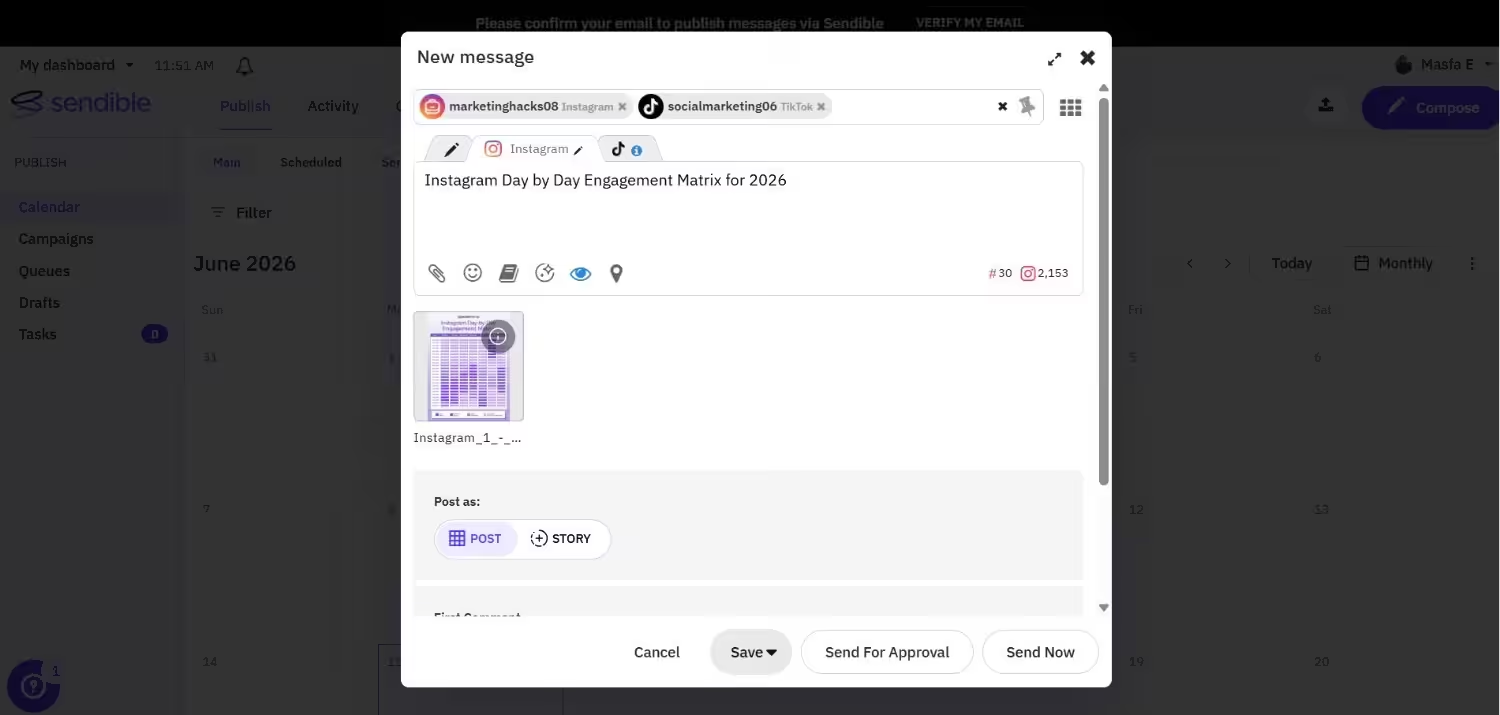
Sendible’s Dashboard Sendible is an excellent choice for agencies seeking Marketing 360 alternatives, with a focus on client-friendly features.
It’s built with agencies in mind, which makes it easy to stay organized, collaborate with your team, and keep clients in the loop without jumping through hoops.
With tools for scheduling, reporting, and content planning, you can simplify your workflow and focus on delivering results.
Key Features
- You can schedule content with smart queues, a drag-and-drop calendar, and recurring post options
- There are content suggestions and RSS feeds to help you find fresh, relevant ideas quickly
- You get built-in team collaboration features, including approval workflows and custom user permissions
- There’s a unified inbox to stay on top of messages, comments, and mentions in one place
- You can generate detailed performance reports to show clients exactly how things are going
Pricing
Plans start at $35/month, which offers a cost-effective solution for agencies managing multiple clients. You can also see our Sendible pricing review for clarity.
-
Zoho Social
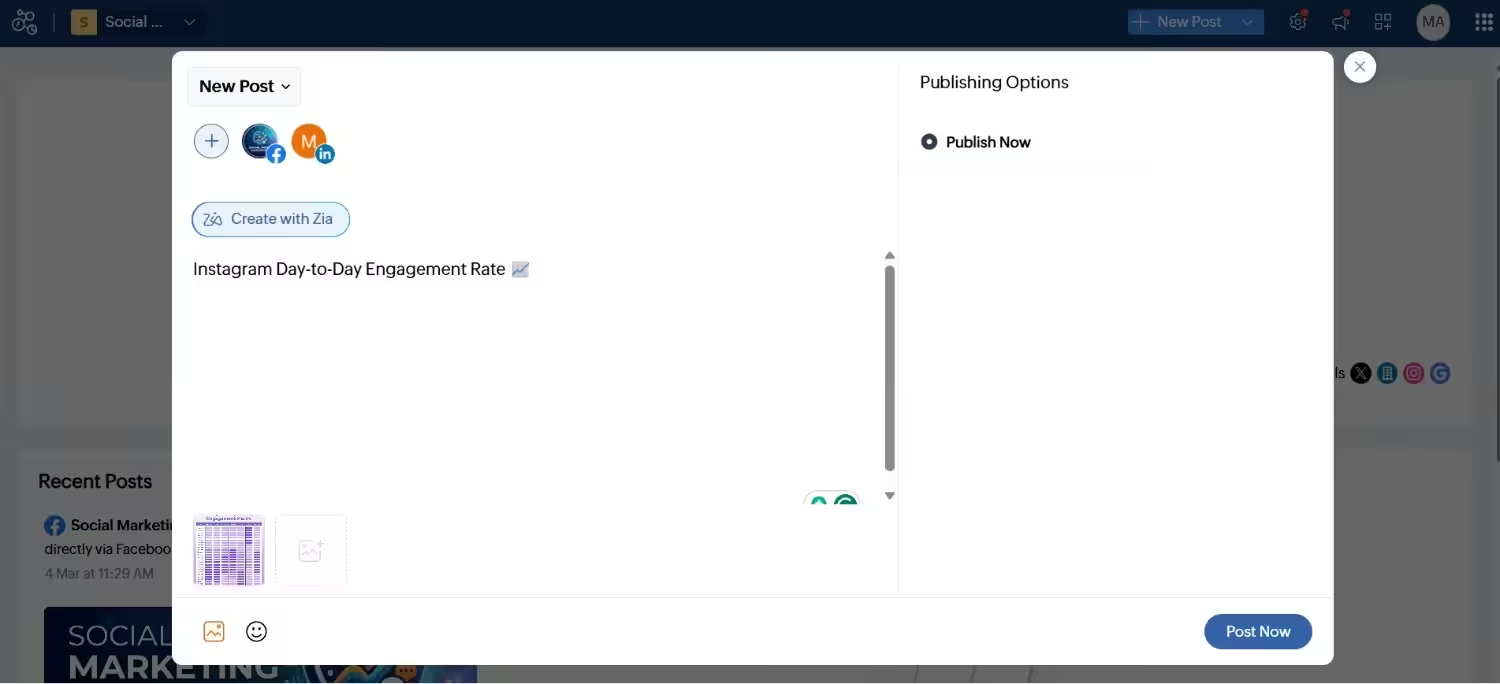
Zoho Social’s Dashboard Already using Zoho for other parts of your business?
Then Zoho Social might feel like a natural extension of your workflow.
It fits in seamlessly with the broader Zoho suite and gives you a unified space to manage your social media and customer data together.
Even if you’re not deep into the Zoho suite, it’s still a solid option, especially if you’re after something that’s affordable but still packed with useful features.
Key Features
- You can schedule posts ahead of time and manage them through an easy-to-use content calendar
- It offers real-time monitoring so you can keep an eye on brand mentions and trending keywords
- You get helpful team collaboration tools, including approval workflows and internal chat for feedback
- There’s a unified inbox to manage all your social messages and comments in one place
- If you’re using Zoho CRM, you can directly connect your social efforts to customer data and insights
Pricing
A free plan is available, with paid plans starting at just $10/month. It offers excellent value for small businesses or brands looking to integrate with Zoho’s suite.
-
Agorapulse
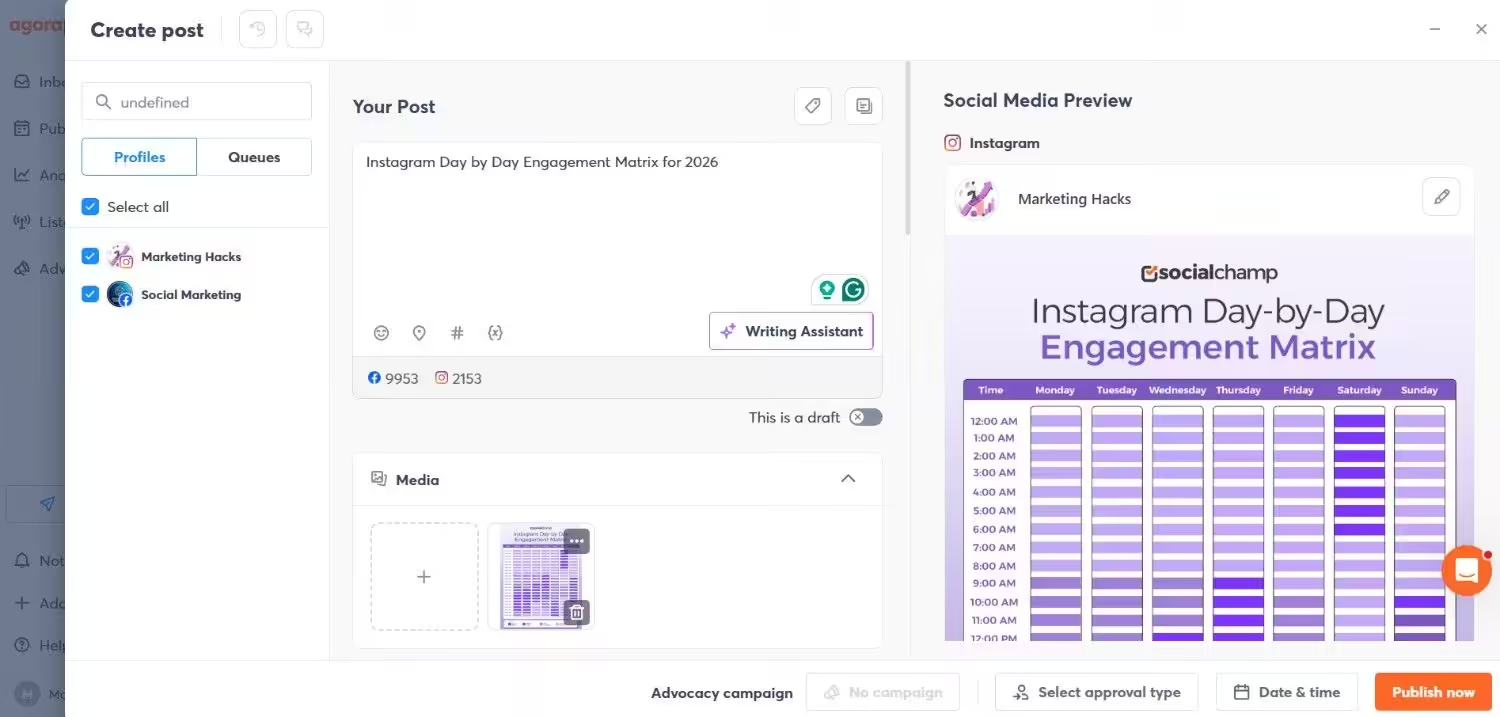
Agorapulse’s Dashboard Agorapulse is a go-to platform for teams that want to stay on top of conversations and track results.
It’s especially great if your focus is on managing a high volume of messages, simplifying team collaboration, and proving ROI with detailed reports.
No matter if you’re handling support, scheduling content, or analyzing performance, you can do it all in one place.
Key Features
- You can schedule and publish posts using a clean, intuitive calendar view
- It comes with shared content calendars and approval workflows to keep your team aligned
- There are popular productivity tools like bulk publishing, saved replies, and even Slack integration
- You get a unified social inbox to easily manage all your incoming messages and comments
- It offers social listening features to track mentions, hashtags, and key industry terms
- You can generate customizable reports to break down your performance in a way that makes sense
Pricing
A free trial is available, with paid plans starting at $79/month, which makes it a mid-range option for teams looking for advanced features.
Featured Article: 10+ Best SocialPilot Alternatives for Brands & Agencies
-
Metricool
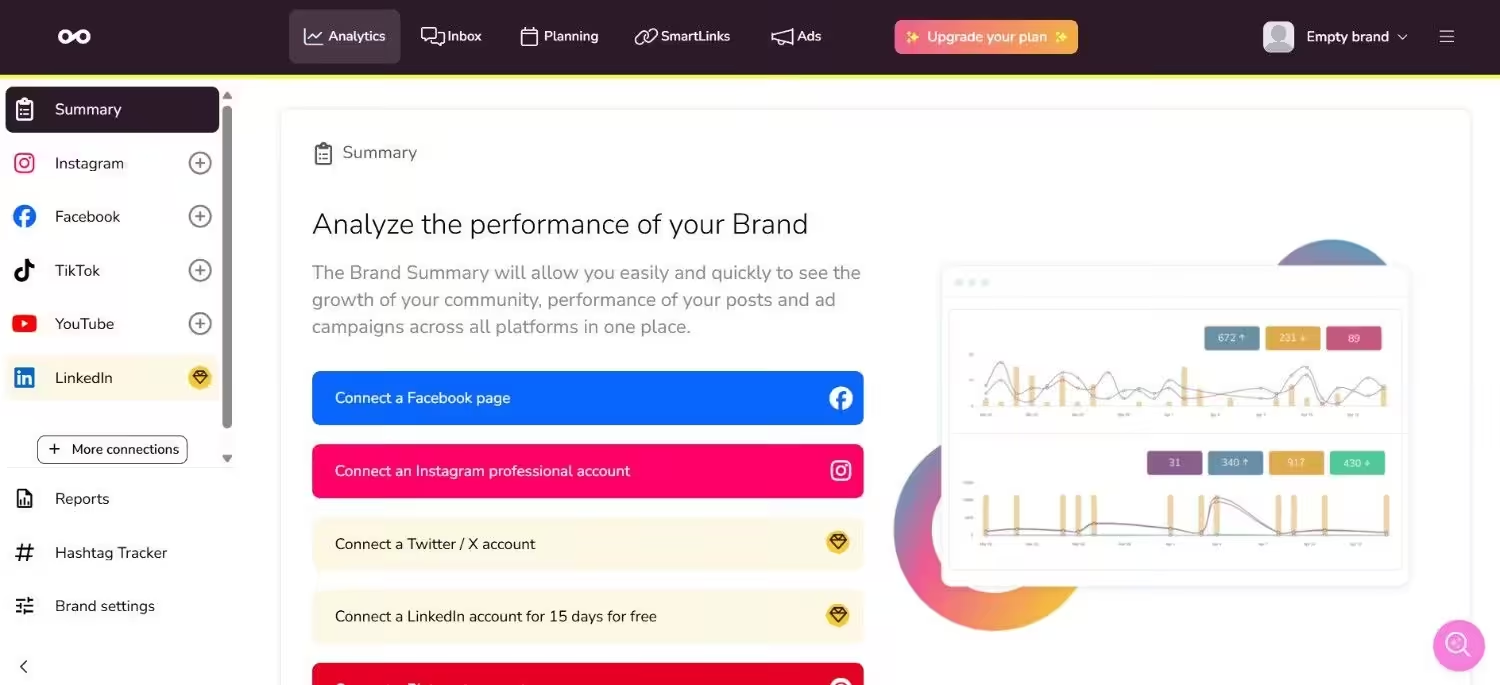
Metricool’s Dashboard Metricool is a favorite among content creators and small businesses looking to do more without spending a fortune.
It packs a surprising number of useful features into a budget-friendly tool, from automation and scheduling to analytics and competitor tracking.
While the interface might feel a bit clunky to some, the value it offers is hard to ignore.
Key Features
- You can use a visual planner to schedule and organize posts across all your channels
- It offers in-depth analytics to track your content, audience behavior, and even competitors
- You can build customizable reports to help you make smarter, data-driven decisions
- There’s a unified inbox to keep all your messages and comments in one place
- It includes SmartLinks to track how your links perform in bios and posts
- You get team collaboration tools along with integrations to streamline your workflow
- It also has a handy hashtag tracker so you can monitor trends and performance easily
Pricing
A free plan is available, with paid plans starting at $20/month, which makes it an affordable option for creators and small businesses.
-
CoSchedule
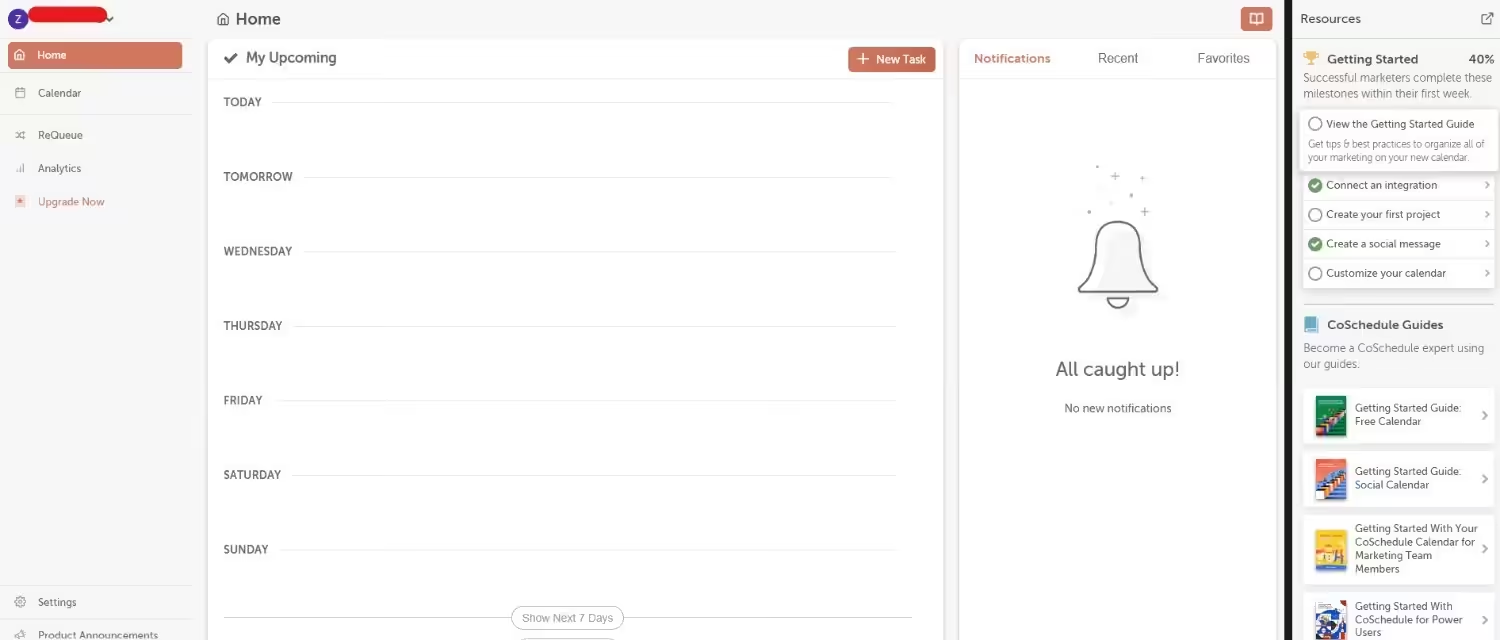
CoSchedule’s Dashboard CoSchedule is a solid pick for marketing teams that want everything, from social media to email and content calendars, which are organized in one place.
It’s especially useful if you’re managing full campaigns across different channels and need a high-level view of all your moving parts.
That said, if you’re only looking for a tool focused purely on social media, it might feel a bit rigid.
Key Features
- You can use the marketing calendar to plan, organize, and align your entire campaign workflow
- It includes social publishing tools to schedule posts efficiently across platforms
- You get performance analytics and reporting to track what’s working and where to improve
- There are built-in AI tools to help you write stronger headlines and boost engagement
Pricing
The paid plans start at $19/month per user, which makes it a solid choice for teams that need an integrated marketing solution.
Featured Article: 13+ Best Free Social Media Management Tools Every Marketer Should Know
Choosing the Right Marketing 360 Alternative for Your Needs
Not every platform fits every business, and that’s okay.
The right social media management tool depends on your current needs, how your team operates, and where you see your marketing growing in the next year.
Here are a few things to consider before making the switch:
-
Know Where You’ll Be Posting
Are you focused on Instagram and TikTok, or managing multiple platforms at once?
Some tools specialize in visuals and short-form video. Later, for example, is built with Instagram creators in mind.
But if you manage Facebook, LinkedIn, X, and YouTube, you’ll want something more cross-functional like Social Champ and Sendible.
-
Think About What You Can Spend
Budgets vary, and so do pricing models.
For smaller teams or solopreneurs, tools like Metricool and Social Champ provide solid features with more flexibility at a more affordable price point.
-
Pinpoint the Must-Have Features
Not every platform needs the same toolkit.
Are you after advanced scheduling, deep analytics, or a unified inbox?
Agorapulse, Sprout Social, and their alternatives handle listening and reporting well.
Meanwhile, CoSchedule keeps things light with strong publishing and planning features.
And if you’re after an all-in-one setup with collaboration, AI tools, and post recycling, Social Champ checks a lot of boxes.
-
Keep Team Dynamics in Mind
Solo creators require different tools from those used by agencies or marketing departments.
If your team collaborates on content, look for approval flows, shared calendars, or comment threads.
Sendible and CoSchedule excel in this area, while Agorapulse supports productivity with queues, saved replies, and bulk publishing.
Social Champ also supports roles, notes, and real-time collaboration, all without making things overly complicated.
-
Match the Tool to Your Long-Term Goals
Are you aiming for better engagement, smarter automation, or faster scaling?
Your needs today might be basic, but it’s wise to pick a platform that grows with you.
For a flexible middle ground, Social Champ strikes the perfect balance, which makes it ideal for both growing brands and agencies managing multiple clients.
Tired of Manual Tasks Stealing Your Day?
Conclusion
Exploring Marketing 360 alternatives can open up new possibilities for teams who seek more flexibility, transparency, or a better feature-to-cost ratio.
The right platform depends on your specific needs, such as collaboration tools, cross-platform support, or deeper analytics.
It doesn’t matter if you manage content for a small brand, a growing agency, or a large enterprise.
The good news is, there’s no shortage of capable tools offering scalable features and simplified workflows.
As your team evolves, so should your software.
By understanding what each alternative offers, you can easily choose a solution that aligns with your current goals while also supporting long-term growth.
